How to Finance a New Construction Condo Before Completion
the National Association of Realtors (NAR), the supply of existing homes remains well below the levels needed to satisfy buyer demand. This scarcity has pushed investors and primary residents alike toward a compelling alternative: pre-construction condos.
In high-growth hubs like Miami, Fort Lauderdale, and West Palm Beach, the skyline is a constant rotation of cranes. For many, buying “off-plan”—purchasing a unit before the building is even finished—is the only way to secure a prime piece of real estate in a competitive market. However, financing a property that doesn’t technically exist yet is a vastly different beast than a traditional resale purchase.
Understanding the mechanics of developer deposits, mortgage timing, and capital leverage is essential for any buyer looking to capitalize on the new construction boom.
Why Buyers Choose Pre-Construction Condos
The primary draw of pre-construction is the “early bird” advantage. Unlike the resale market, where you are competing with multiple offers on an aging asset, pre-construction allows you to lock in a price based on today’s market values for a product that won’t be delivered for two to four years.
1. Built-In Appreciation
In a healthy real estate market, a condo often appreciates significantly during its construction phase. Industry data suggests that pre-construction units in Tier-1 cities like Miami can see a 10% to 25% increase in value between the time the contract is signed and the day the keys are handed over. Essentially, you are “buying” the future equity.
2. Customization and Modern Incentives
Developers often offer incentives to early-stage buyers, including the ability to select finishes, floorings, and appliances. Furthermore, new buildings are constructed to the latest Florida Building Codes, which significantly reduces long-term maintenance costs and insurance premiums—a major factor in today’s high-cost insurance environment.
3. Favorable Entry Pricing
During the “friends and family” or “first tier” of sales, developers frequently price units lower to hit the sales quotas required to trigger their construction financing.
The Most Common Ways to Finance a Pre-Construction Condo
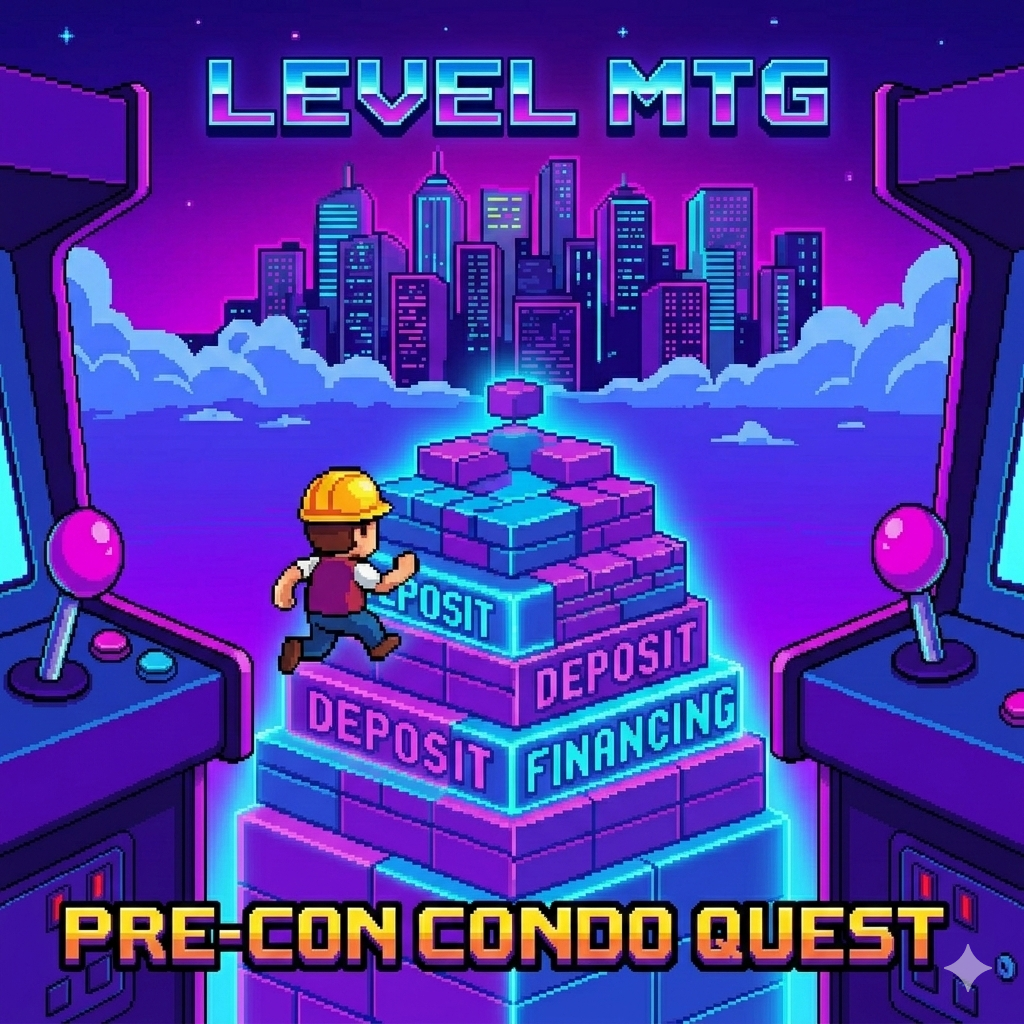
Because a bank cannot place a lien on a property that isn’t finished, you cannot get a standard mortgage on day one. Instead, financing a pre-construction condo is a two-phase process: the Deposit Phase and the Closing Phase.
Developer Deposit Structure
In most U.S. markets, and specifically in Florida, developers follow a “staggered” deposit schedule. Instead of a 20% down payment at the start, you pay in installments. A typical structure looks like this:
10% at Reservation: Held in escrow while you review the offering plan.
10% at Contract Execution: Totaling 20% down to secure the unit.
10% at Groundbreaking: When the foundation work begins.
10% at “Top-Off”: Once the building reaches its highest structural point.
Remaining 60% (Balance) at Closing: Typically covered by a traditional mortgage.
Developers require these deposits to secure their own construction loans and ensure buyer commitment.
Traditional Mortgage at Closing
The actual “financing” through a lender typically happens only when the building receives its Certificate of Occupancy (CO).
The Pre-Approval: You should be pre-approved at the time of contract to ensure you can afford the unit.
The Final Loan: You will apply for the formal mortgage 60 to 90 days before the building is finished.
Lender Requirements: The lender will evaluate the building’s health, ensuring at least 50% of units are under contract and the condo association has adequate reserves (often 10% of the total budget).
Using a HELOC or Home Equity Loan
Many savvy investors do not use their “cash on hand” for the initial deposit phase. Instead, they leverage the equity in their current primary residence or other investment properties.
Strategy: By opening a Home Equity Line of Credit (HELOC), an investor can draw the 10% increments needed for the developer deposits.
Benefit: This allows the investor to keep their liquid cash working in other investments while using a lower-interest credit line to secure the new condo.
Private or Portfolio Lenders
If a building is “non-warrantable” (meaning it doesn’t meet Fannie Mae or Freddie Mac standards, often due to high investor concentration), traditional banks might shy away. In these cases, portfolio lenders or private lenders step in. These entities keep the loans on their own books, allowing for more flexible debt-to-income (DTI) requirements and lending to foreign nationals—a massive demographic in the Miami luxury condo market.
Key Financial Requirements Buyers Should Prepare
Lenders treat new construction condos with a higher level of scrutiny. To ensure your financing goes smoothly at the finish line, you should aim for the following benchmarks:
Credit Score: While FHA loans allow lower scores, most condo lenders prefer a 720 or higher to secure the best interest rates.
Debt-to-Income (DTI) Ratio: Lenders generally want your total monthly debt payments (including the new mortgage, HOA fees, and taxes) to be under 43% of your gross monthly income.
Liquid Reserves: Be prepared to show 6 to 12 months of “PITI” (Principal, Interest, Taxes, and Insurance) in a liquid account after the down payment is made.
Appraisal: The property must appraise for the purchase price at the time of completion. If the market dips and the appraisal comes in low, the buyer is responsible for covering the gap in cash.
Risks Buyers Should Understand Before Financing
While the rewards are high, pre-construction carries unique risks that aren’t present in the resale market.
Interest Rate Volatility: You sign a contract today, but you won’t get a mortgage for two years. If interest rates rise from 6% to 8% in that time, your monthly payment could increase significantly.
Construction Delays: According to the U.S. Census Bureau, large-scale residential projects can face delays of 6 to 12 months due to labor shortages or supply chain issues. You must ensure your financial situation is stable enough to wait.
Market Fluctuations: While appreciation is expected, it is not guaranteed. If the market oversupplies units in a specific neighborhood, value growth may stagnate.
Why Pre-Construction Financing Can Be a Powerful Investment Strategy
Despite the risks, the data favors the long-term investor. Florida’s population grew by over 365,000 people between 2023 and 2024, maintaining its status as one of the fastest-growing states. This influx of residents creates a “floor” for demand.
By financing a pre-construction unit, you are essentially “locking in” a price in a high-inflation environment. If the cost of raw materials (lumber, steel, concrete) continues to rise, the replacement cost of the building goes up, naturally lifting the value of your unit before you’ve even moved in.
How Level Mortgage Can Help Buyers Finance New Construction Condos
Navigating the gap between a developer contract and a bank closing requires a sophisticated mortgage partner. At Level Mortgage, we specialize in bridge strategies and long-term financing for pre-construction buyers.
Pre-Approval for Future Deliveries: We help you understand your borrowing power years in advance.
Investor-Specific Products: Including DSCR (Debt Service Coverage Ratio) loans that focus on the property’s future rental income rather than your personal income.
HELOC Coordination: We can help you tap into existing equity to cover those initial developer deposits.
Guidance on “Non-Warrantable” Buildings: We have access to a wide network of portfolio lenders who specialize in luxury condo projects that traditional banks may avoid.
Final Thoughts
Financing a new construction condo is a marathon, not a sprint. Success depends on understanding the developer’s deposit timeline, maintaining a strong financial profile during the construction years, and choosing a lender who understands the nuances of the Florida market.
With the right strategy, buying pre-construction isn’t just a way to get a home—it’s a powerful vehicle for wealth creation.
Want personalized assistance? Visit our 'Contact Us' tab and leave your information with one of our experts.
About Us
A group of like-minded seasoned veterans came together to create a company with an employee-focused culture. A culture that values its members both personally and professionally and a company built on the idea that the customer comes first!
We do not share data with third parties for marketing/promotional purposes.
By submitting your phone number to Level Mortgage, you are authorizing a representative of our company to send you text messages and notifications. Message frequency may vary. Message/data rates apply. Reply STOP to unsubscribe to a message sent from us, and HELP to receive help.