Buying a Vacation Home: What You Need to Know Before You Invest
Purchasing a vacation home is an exciting milestone. Whether you dream of a peaceful mountain cabin, a sunny beachside retreat, or a vibrant resort condo, owning a second property offers both lifestyle flexibility and long-term financial potential. However, financing and managing a vacation home is different from buying your primary residence.
Navigating today’s housing market requires a clear understanding of mortgage requirements, ownership costs, and market trends. Level Mortgage is here to help you break down everything you need to know before making your investment.
Why Vacation Homes Are Becoming More Popular in 2026
The demand for second homes remains resilient. National Vacation Home Market Report indicates that hybrid work models and flexible schedules continue to empower buyers to split their time between urban centers and scenic destinations. Families are prioritizing lifestyle and long-term wealth preservation through real estate.
Additionally, many buyers view vacation properties as dual-purpose assets. They provide personal getaway spaces while offering lucrative short-term rental opportunities when unoccupied. Based on recent housing market research, buyers are increasingly looking at vacation real estate as a stable hedge against inflation.
What Qualifies as a Vacation Home?
Lenders and the IRS have specific definitions for what constitutes a second home versus an investment property. To qualify for standard vacation home financing, a property generally must:
Be occupied by the borrower for a portion of the year.
Be located a reasonable distance from your primary residence, usually at least 50 to 100 miles away.
Not be part of a mandatory rental pool or managed by a hotel chain that restricts your personal use.
Understanding these distinctions ensures you secure the correct loan type and avoid compliance issues.
Financing a Vacation Home
Mortgage Requirements
Securing a mortgage for a second home is typically more rigorous than buying a primary residence. Lenders assume higher risk because borrowers facing financial hardship are more likely to default on a second property before their primary home. Requirements typically include:
Higher Down Payments: Expect to put down anywhere from 10% to 20% or more, depending on your credit profile and loan program.
Interest rates for vacation homes are often slightly higher than those for primary residences. This is due to risk-based pricing models used across the mortgage industry. Mortgage Rate Statistics highlights how economic fluctuations and market conditions impact second-home pricing differently than primary home loans. To explore your choices, check out our Second Home Mortgage Options.
Understanding the True Cost of Ownership
Purchasing a vacation home involves ongoing expenses that go beyond the monthly mortgage payment. Proper budgeting is essential.
Property Taxes
Depending on the destination, property taxes can vary significantly. Popular resort areas often feature higher municipal assessments.
Homeowners Insurance
Properties located near beaches, coastal areas, or wildfire-prone mountain regions may require specialized hazard or flood insurance, which can increase monthly overhead.
HOA Fees
Many vacation destinations are located within planned communities or resorts governed by homeowners associations, which carry monthly or annual dues.
Maintenance, Repairs, and Utilities
Keeping up a second home requires budgeting for regular upkeep, lawn care, utilities, and emergency repairs, especially if the home sits vacant for weeks at a time.
Property Management
If you plan to rent out your vacation home when you are not using it, professional property management companies typically charge between 20% and 40% of rental revenue.
Can a Vacation Home Generate Rental Income?
Renting out your vacation property can help offset ownership costs, but it requires careful planning. Tourism and Vacation Rental Data shows that short-term rental demand remains strong in premier travel markets. However, local regulations, municipal zoning laws, and HOA rules can restrict short-term rentals. Always research local ordinances before assuming you can list a property on rental platforms.
Best Locations for Vacation Home Investments in 2026
Market intelligence indicates that buyers are focusing on specific geographical sectors. Coastal beach destinations in Florida and the Carolinas, mountain communities in Colorado and Utah, and lakefront retreats across the Midwest continue to attract high interest. Housing Market Outlook suggests that these regions maintain steady tourism demand and long-term appreciation potential.
Market Trends Shaping Vacation Home Purchases
Current housing market research shows that inventory in prime vacation markets remains relatively balanced. Second Home Financing Research notes that while mortgage rates have fluctuated, serious buyers are utilizing creative financing structures, such as Adjustable-Rate Mortgages Explained, to manage initial costs.
Common Mistakes Buyers Should Avoid
Underestimating Ownership Costs: Failing to budget for taxes, insurance, and maintenance can strain your finances.
Buying Without a Long-Term Strategy: Ensure the property aligns with your family goals or retirement plans.
Ignoring Financing Options: Working with a specialized lender ensures you find competitive Investment Property Loans.
Overestimating Rental Income: Build your budget around conservative rental projections rather than peak season estimates.
Not Understanding Local Regulations: Always verify short-term rental rules with local municipalities.
Is Buying a Vacation Home Right for You?
Evaluating your readiness involves balancing personal lifestyle goals with financial reality. If your budget accommodates the dual expenses of maintaining two properties, and your timeline supports long-term ownership, a vacation home can be an exceptional addition to your portfolio.
Want personalized assistance? Visit our 'Contact Us' tab and leave your information with one of our experts.
About Us
A group of like-minded seasoned veterans came together to create a company with an employee-focused culture. A culture that values its members both personally and professionally and a company built on the idea that the customer comes first!
We do not share data with third parties for marketing/promotional purposes.
By submitting your phone number to Level Mortgage, you are authorizing a representative of our company to send you text messages and notifications. Message frequency may vary. Message/data rates apply. Reply STOP to unsubscribe to a message sent from us, and HELP to receive help.
Multifamily Property Investing: Benefits, Risks, and Financing Explained
Investing in real estate has always been a cornerstone of wealth building, but as we move through 2026, the landscape has shifted. While single-family homes were once the default entry point for many, multifamily property investing has taken center stage. This asset class offers a unique blend of stability and scalability that is hard to match in today’s economy. Whether you are looking at a small duplex or a large apartment complex, understanding the mechanics of multifamily deals is essential for any serious investor.
What Is Multifamily Property Investing?
At its core, multifamily property investing involves purchasing a single building or a collection of buildings that contain more than one housing unit. These properties are designed to house multiple separate tenants, each with their own kitchen and living space.
Investors generally categorize these properties into two distinct groups:
Residential Multifamily (2 to 4 Units)
This category includes duplexes, triplexes, and fourplexes. These are unique because they are still governed by residential lending rules. This means you can often secure financing with lower down payments and more flexible terms, especially if you plan to live in one of the units.
Commercial Multifamily (5+ Units)
Once a property reaches five units or more, it is considered commercial real estate. This includes everything from small five-unit walk-ups to massive high-rise apartment buildings. Financing for these properties is based more on the income the building generates rather than the personal income of the borrower.
Why Multifamily Investing Is Growing in 2026
The investment climate in 2026 is defined by a significant supply-demand imbalance. While the volatile interest rate environment of previous years has stabilized, the cost of homeownership remains high for many individuals. According to recent market reports, the demand for rental housing is at a ten-year high because many aspiring homeowners are staying in the rental market longer.
Industry data shows that multifamily occupancy rates are hovering around 95 percent in major metropolitan areas. Additionally, rent growth trends remain steady, with an average annual increase of 3 to 5 percent in high-growth corridors. With interest rates currently sitting in the 6 percent range, investors are finding that the spread between borrowing costs and rental yields is becoming increasingly attractive. This environment has led to a notable increase in investor activity, particularly among those looking for a hedge against inflation.
Key Benefits of Multifamily Property Investing
The reason so many investors are pivoting to multifamily units is simple. The math often works better than single-family rentals.
Stronger Cash Flow Potential
With multiple tenants under one roof, you have multiple streams of income. If one tenant moves out of a single-family home, your vacancy rate is 100 percent. In a fourplex, a single vacancy only reduces your income by 25 percent. This significantly reduces the risk of being unable to cover your mortgage during a transition period.
Easier Scalability
Buying ten single-family homes requires ten separate closings, ten inspections, and ten different insurance policies. Buying one ten-unit building is a much more efficient way to scale. You can grow your portfolio significantly faster by focusing on larger assets.
Long-Term Appreciation
Multifamily properties appreciate in two ways. First, there is the natural market appreciation of the land and structure. Second, there is “forced appreciation.” Since commercial multifamily value is tied to net operating income, any improvement you make that increases rent or decreases expenses directly increases the property’s market value.
Tax Advantages
Real estate remains one of the most tax-advantaged investments available. Investors can utilize depreciation to offset their rental income. Furthermore, interest deductions and expense write-offs for repairs and management can often lead to a scenario where you are cash-flow positive but show a loss for tax purposes.
Risks Investors Should Understand
No investment is without risk, and multifamily properties come with their own set of challenges that require careful management.
Higher Maintenance Costs
More units mean more toilets, more appliances, and more HVAC systems that can fail. Maintenance on a large building is often more complex and expensive than on a single-family home. It is vital to budget for a healthy capital expenditure reserve from day one.
Tenant and Vacancy Risk
Managing multiple personalities can be difficult. High turnover rates can lead to increased costs for cleaning, painting, and marketing. Investors in 2026 must be diligent in their tenant screening processes to ensure long-term stability.
Financing Complexity
While residential multifamily is straightforward, commercial financing involves more moving parts. Lenders will scrutinize the building’s profit and loss statements, environmental reports, and the local sub-market’s economic health.
Market and Interest Rate Risk
The 2026 lending environment is more stable than in years past, but investors are still sensitive to rate fluctuations. A shift in interest rates can impact your cap rate and your eventual exit strategy.
Financing Options for Multifamily Properties in 2026
Choosing the right loan is just as important as choosing the right property. At Level Mortgage, we see a wide variety of structures that help investors meet their goals.
Conventional Loans
Ideal for 2 to 4 unit properties, these loans offer some of the lowest interest rates and are backed by Fannie Mae or Freddie Mac. They typically require a 20 to 25 percent down payment for investment properties.
FHA Loans for Owner-Occupied Multifamily
This is a favorite for “house hackers.” You can buy a property with up to 4 units, live in one, and rent out the others while putting down as little as 3.5 percent. This is one of the most powerful ways to start a real estate empire with limited capital.
DSCR Loans
Debt-Service Coverage Ratio loans are the breakout star of 2026. These loans do not require tax returns or debt-to-income checks for the borrower. Instead, the lender looks at whether the property’s rental income covers the mortgage payment. It is a streamlined way for seasoned investors to close deals quickly.
Commercial Multifamily Loans
For properties with 5 or more units, commercial loans are the standard. These can be structured as bridge loans for value-add projects or long-term permanent financing for stabilized assets.
What Lenders Look for in 2026
Lending standards in 2026 remain disciplined. To secure the best terms, you generally need a credit score of 700 or higher, though some programs exist for scores in the 660 range. Lenders also want to see that you have cash reserves, often six to twelve months of mortgage payments, to handle any unexpected vacancies or repairs. For DSCR loans, the property typically needs to generate 20 percent more income than the total debt service.
Is Multifamily Investing Right for You?
If you are looking for long-term wealth building and a steady stream of income, the answer is likely yes. However, you must decide if you want to be an active investor, managing the property yourself, or a passive investor who hires professional management. Multifamily investing is a business, and it requires a strategic mindset to succeed in the 2026 market.
How Level Mortgage Helps Multifamily Investors
Navigating the complexities of multifamily financing requires more than just a lender. You need a strategic advisor. At Level Mortgage, we act as your partner in every deal. We don’t just look for a loan, we look for the financing structure that optimizes your cash flow and helps you scale your portfolio. From analyzing your first duplex to restructuring a large apartment portfolio, our team provides the guidance and problem-solving expertise needed to thrive in today’s market.
Want personalized assistance? Visit our 'Contact Us' tab and leave your information with one of our experts.
About Us
A group of like-minded seasoned veterans came together to create a company with an employee-focused culture. A culture that values its members both personally and professionally and a company built on the idea that the customer comes first!
We do not share data with third parties for marketing/promotional purposes.
By submitting your phone number to Level Mortgage, you are authorizing a representative of our company to send you text messages and notifications. Message frequency may vary. Message/data rates apply. Reply STOP to unsubscribe to a message sent from us, and HELP to receive help.
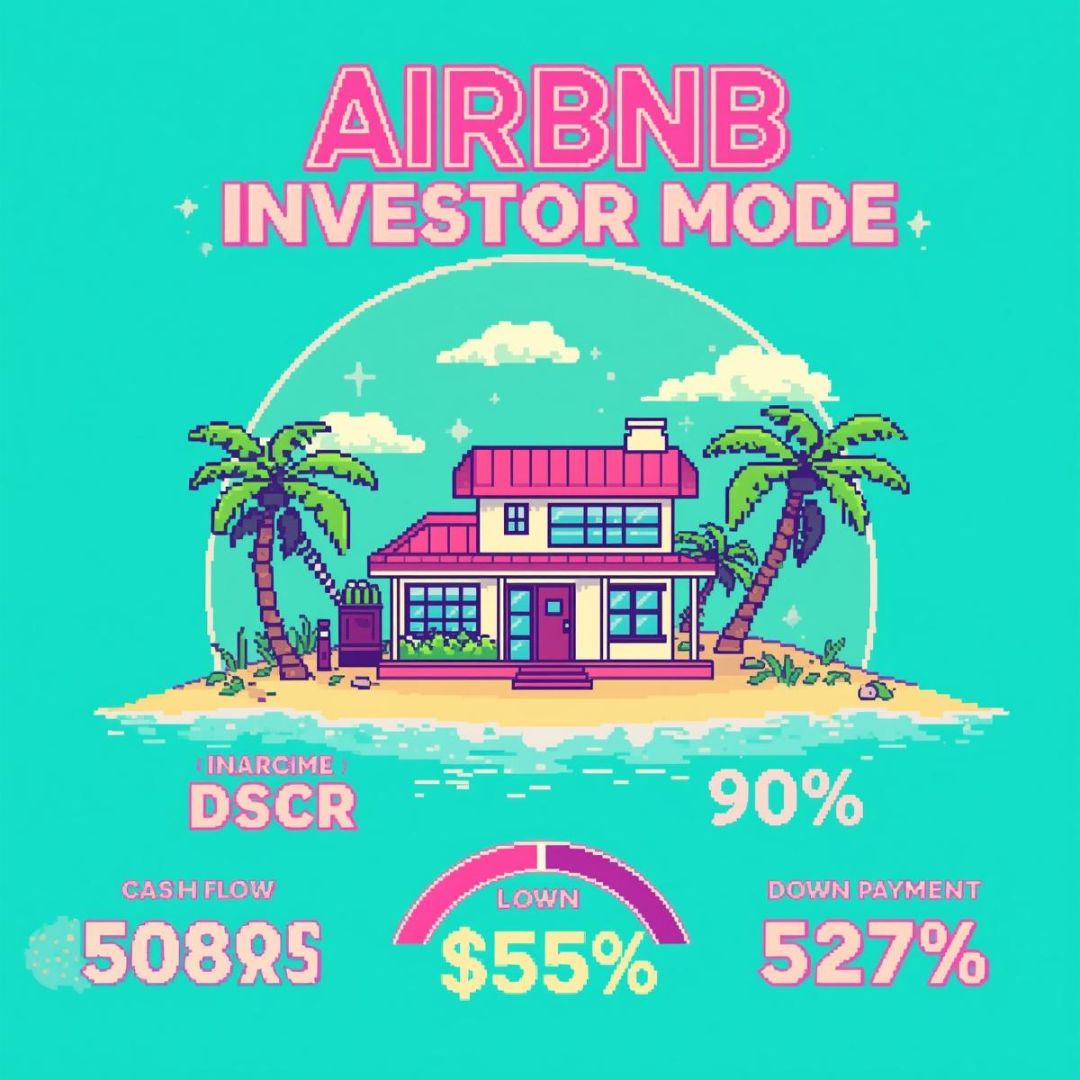
Airbnb investing financing has become one of the most important topics for real estate investors heading into 2026. With short‑term rentals (STRs) continuing to outperform many traditional long‑term rentals, investors are increasingly looking for mortgage strategies that support cash‑flow‑positive Airbnb acquisitions. Understanding how lenders evaluate STR properties—and how financing impacts returns—is essential before making a purchase.
Why Airbnb Investing Continues to Grow in 2026
Despite regulatory shifts in some cities, the short‑term rental market remains strong. According to AirDNA’s 2025 U.S. Short‑Term Rental Outlook, national STR demand grew 7.8% year‑over‑year, and average daily rates increased 3.2% heading into 2026. Investor interest remains high because:
STRs often generate 20–40% higher gross rental income than comparable long‑term rentals in the same market.
Remote work and flexible travel trends continue to support year‑round occupancy.
Many secondary and tertiary markets have seen rising tourism and fewer regulatory restrictions.
However, higher potential returns also come with more complex financing requirements.
Why Mortgage Financing Matters More for Airbnb Investors
Financing an Airbnb is not the same as financing a primary residence or even a traditional rental. Lenders view STRs as higher‑risk assets because income can fluctuate seasonally and depends on market demand. This means:
Higher down payment requirements
Stricter underwriting
More emphasis on projected rental income
Different loan programs compared to long‑term rentals
Choosing the right mortgage structure can significantly impact cash flow, break‑even occupancy, and long‑term ROI.
How Lenders Evaluate Airbnb Properties
Property Use Classification
Lenders classify STR properties as:
Second homes (borrower uses the property part‑time)
This classification affects interest rates, down payments, and underwriting standards.
Income Analysis
Airbnb income is variable, so lenders may use:
Historical STR income (Airbnb/Vrbo statements)
Appraiser‑generated STR income schedules
Market‑based projections from tools like AirDNA
DSCR calculations based on projected monthly income
Most DSCR lenders in 2025–2026 require a minimum DSCR of 1.0–1.1.
Risk-Based Pricing
Because STRs carry higher perceived risk, Airbnb‑friendly loans typically have interest rates 0.5%–1.25% higher than standard investment property loans.
How Interest Rates, Down Payments, and Terms Affect Cash Flow
Interest Rates
As of early 2026, average investment property mortgage rates range from 7.1% to 8.4%, depending on credit score, loan type, and DSCR strength. Even a 0.25% rate change can shift monthly cash flow significantly.
Down Payments
Typical requirements include:
Second home loans: 10–15% down
Conventional investment loans: 20–25% down
zDSCR loans: 15–30% down
Higher down payments often improve DSCR and increase approval odds.
Loan Terms
Common loan structures for Airbnb investors:
30‑year fixed loans for predictable payments
Interest‑only DSCR loans for maximum cash flow
Interest‑only periods can improve DSCR by 20–35%, making qualification easier.
Traditional Investment Loans vs. Airbnb-Friendly Loan Programs
Conventional Loans
Pros:
Lower rates
Lower fees
Cons:
Harder to qualify using STR income
Stricter DTI requirements
DSCR Loans
Pros:
Qualification based on property income
Airbnb income allowed
Faster approvals
Cons:
Higher rates
Larger down payments
Possible prepayment penalties
Second Home Loans
Pros:
Lower down payments
Lower rates than DSCR loans
Cons:
Borrower must occupy the property part‑time
Some lenders restrict STR usage
How Rental Income Is Evaluated for Mortgage Qualification
Lenders may use:
Actual Airbnb statements (12–24 months preferred)
Appraiser‑generated STR income schedules
Market rent estimates (for DSCR loans)
Most lenders apply a 10–25% vacancy factor to STR income to account for seasonality.
Key Risks Investors Must Understand Before Financing an Airbnb
Airbnb investing can be lucrative, but investors must understand:
Regulatory volatility: Over 200 U.S. cities updated STR rules between 2024–2025.
Seasonal income swings: Occupancy can vary 20–50% between peak and off‑peak seasons.
Higher operating costs: Furnishing, cleaning, utilities, and management fees can reduce net income by 30–45%.
Financing risk: DSCR loans may require higher reserves if income projections fall short.
Regulatory, Zoning, and Market Factors That Impact Loan Approval
Lenders increasingly review:
Local STR ordinances
Permit requirements
HOA restrictions
Market saturation
Zoning compliance
A property in a restricted or oversaturated market may face stricter underwriting or reduced loan amounts.
Internal Linking Opportunities
This article naturally supports internal links to:
Want personalized assistance? Visit our 'Contact Us' tab and leave your information with one of our experts.
About Us
A group of like-minded seasoned veterans came together to create a company with an employee-focused culture. A culture that values its members both personally and professionally and a company built on the idea that the customer comes first!
We do not share data with third parties for marketing/promotional purposes.
By submitting your phone number to Level Mortgage, you are authorizing a representative of our company to send you text messages and notifications. Message frequency may vary. Message/data rates apply. Reply STOP to unsubscribe to a message sent from us, and HELP to receive help.
What to Know About Single Unit vs. Multifamily Investing
Florida’s real estate market continues to attract investors nationwide, but choosing between single-unit and multifamily properties requires a strategic understanding of mortgage financing, rental dynamics, and long-term wealth potential. This guide breaks down the key differences, benefits, and risks of each investment type—backed by 2025 data and mortgage loan insights.
Single-Unit vs. Multifamily: What’s the Difference?
– Single-unit properties refer to standalone homes, townhouses, or condos designed for one household.
– Multifamily properties include duplexes, triplexes, quadplexes, and apartment buildings with two or more rental units.
Both asset classes offer income potential, but they differ significantly in financing structure, scalability, and risk exposure.
Mortgage Loan Structures: Key Differences
1. Single-Unit Financing
Loan Type: Conventional, FHA, VA, and USDA loans are widely available.
Down Payment: Typically 3%–20% depending on loan type and credit profile.
Interest Rates: Slightly lower than multifamily loans due to reduced risk.
Florida’s population surged 8.5% between 2020 and 2024, driven by retirees, remote workers, and international migration. This growth fuels rental demand across both single and multifamily sectors.
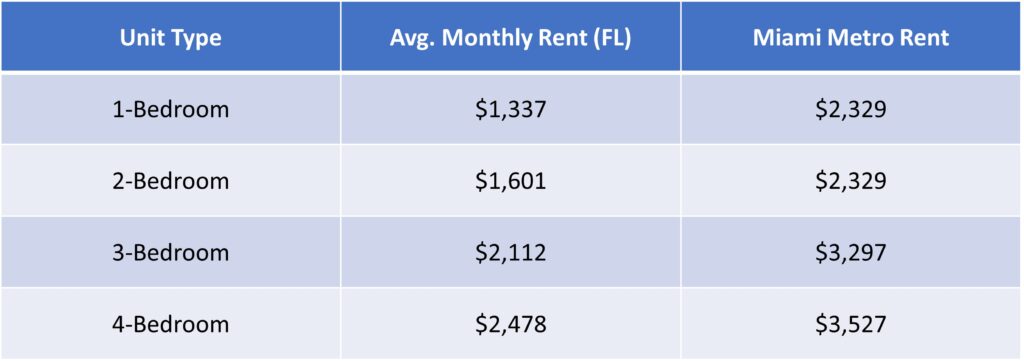
Rental Rates:
Median Home Price (FL): $410,400
Investment Performance & Wealth Building
Multifamily Advantages
– Economies of Scale: One roof, multiple rents. A quadplex renting at $2,000/unit generates $8,000/month. With $5,500 debt service, DSCR = 1.45.
– Risk Diversification: Vacancy in one unit doesn’t eliminate income.
– Institutional Appeal: Easier to scale portfolios and attract capital.
Single-Unit Advantages
– Lower Entry Barriers: Easier for first-time investors.
– Appreciation Potential: Strong in suburban areas with limited inventory.
– Simpler Financing: More lenders, lower rates, and easier underwriting.
– Resale Flexibility: Easier to sell to owner-occupants.
DSCR Loans: A Game-Changer for Multifamily
DSCR (Debt Service Coverage Ratio) = Gross Rental Income ÷ Debt Obligations
– Most lenders require DSCR > 1.1 or 1.2.
– Example: Triplex renting at $1,800/unit = $5,400/month. Debt service = $4,000 → DSCR = 1.35.
– Benefits:
– No personal income verification.
– Ideal for self-employed investors.
– Strong cushion against vacancies.
Regional Investment Hotspots
North Florida (e.g., Jacksonville, Pensacola)
– Lower purchase prices.
– High rent-to-price ratios.
– Rent growth: 4%–6% annually.
Central Florida (e.g., Orlando)
– Balanced appreciation.
– Tourism-driven rental demand.
South Florida (e.g., Miami, Fort Lauderdale)
– High rents.
– Strong demand from international tenants.
Final Thoughts
Choosing between single-unit and multifamily investing in Florida depends on your financial goals, risk tolerance, and mortgage strategy. Single-family homes offer simplicity and appreciation, while multifamily properties deliver scalability and income stability—especially when paired with DSCR loans.
For investors seeking long-term cash flow and portfolio growth, multifamily assets in Florida’s thriving rental markets may offer the edge in 2025.
Want personalized assistance? Visit our 'Contact Us' tab and leave your information with one of our experts.
About Us
A group of like-minded seasoned veterans came together to create a company with an employee-focused culture. A culture that values its members both personally and professionally and a company built on the idea that the customer comes first!
We do not share data with third parties for marketing/promotional purposes.
By submitting your phone number to Level Mortgage, you are authorizing a representative of our company to send you text messages and notifications. Message frequency may vary. Message/data rates apply. Reply STOP to unsubscribe to a message sent from us, and HELP to receive help.