Buying a home is one of the most significant financial decisions most people will ever make. Yet many potential buyers choose to “wait for the right time,” hoping for lower prices or better mortgage rates. But in today’s evolving real estate landscape, waiting often comes with a real financial cost.
Recent data from late 2025 and early 2026 shows that affordability is shifting, mortgage rates are adjusting, and home prices continue to evolve—making timing more important than ever. Below is a comprehensive breakdown of what waiting could cost you based on the latest market information.
Inventory increased in many major metros, giving buyers more options.
Home prices stabilized but did not significantly decline.
Mortgage rates remained elevated compared to pre‑2022 levels.
Homes stayed on the market longer, giving buyers more negotiation power.
Even with these improvements, affordability remained a challenge. Zillow reported that by the end of 2025, mortgage payments were still consuming 32.6% of the median household income, despite being $177 lower than their October 2023 peak.
2. What’s Changing in 2026?
The 2026 housing market is expected to bring slightly better conditions for buyers. Zillow forecasts that 20 of the 50 largest U.S. metros will become affordable by the end of 2026, the highest number since 2022.
2026 Forecast Highlights:
Home values are expected to rise 1.9% in 2026—not a crash, but a moderate increase.
More inventory is entering the market, especially new construction.
Some cities may even see price declines due to increased supply.
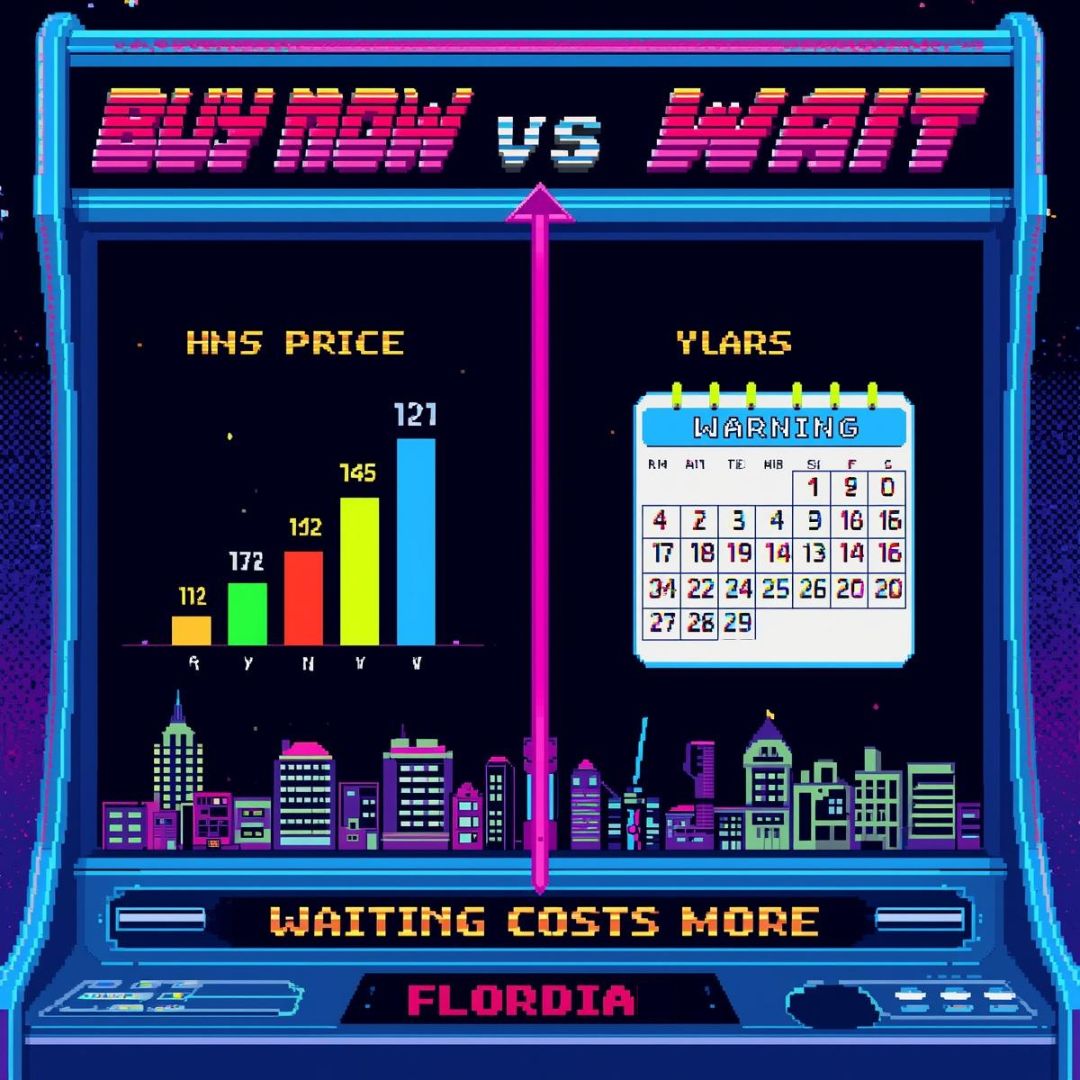
However, even with improved affordability, waiting may still cost buyers more in the long run due to rising home values and the compounding effect of mortgage interest.
3. The Real Cost of Waiting: Price Appreciation
Even modest price increases can significantly impact affordability.
Example:
If a $400,000 home appreciates by Zillow’s projected 1.9% in 2026, the same home would cost:
400,000×1.019=407,600
That’s $7,600 more in just one year.
If appreciation continues at similar rates, waiting two years could cost buyers $15,000–$20,000 or more—before even factoring in mortgage interest.
4. Mortgage Rates: The Silent Cost Multiplier
Mortgage rates are one of the biggest factors affecting the cost of waiting.
While rates have eased slightly from their 2023–2024 highs, they remain elevated historically. Even a 0.5% increase in mortgage rates can add tens of thousands of dollars in interest over the life of a loan.
Impact of a 0.5% Rate Increase on a $400,000 Loan:
Difference:
+$133/month
+$48,000 over 30 years
Even if home prices stay flat, rising rates alone can make waiting significantly more expensive.
5. Inventory Growth Doesn’t Always Mean Lower Prices
CNBC reported that by late 2025, homes were sitting longer on the market and builders were offering discounts in some areas due to increased supply. However, this does not guarantee widespread price drops.
Why?
New construction often targets higher‑income buyers.
Demand remains strong due to demographic pressure (Millennials + Gen Z).
Many homeowners are still “locked in” with ultra‑low pre‑2022 mortgage rates, limiting resale inventory.
This means that while buyers may have more choices, prices are unlikely to fall dramatically nationwide.
6. Affordability Is Improving—But Slowly
Zillow’s January 2026 report shows that affordability is improving due to:
Slower price growth
Slightly lower mortgage rates
Rising incomes
However, affordability improvements do not necessarily mean homes will become cheaper. Instead, they mean buyers may be better able to handle current prices.
Waiting for a “big crash” is not supported by current data. In fact, Zillow expects home values to increase in 41 of the 50 largest metros in 2026.
7. The Opportunity Cost of Delayed Homeownership
Waiting to buy a home also means missing out on:
Equity Growth
If a home appreciates even 2% annually, a $400,000 home gains:
400,000×0.02=8,000 per year
That’s $40,000 in equity over five years.
Tax Benefits
Homeowners may deduct:
Mortgage interest
Property taxes
Certain closing costs
Renters receive none of these benefits.
Fixed Housing Costs
Rent typically increases 3–7% per year in many markets. A fixed mortgage payment does not.
8. Florida Market Considerations
While the data above reflects national trends, Florida has unique dynamics:
Strong population growth
High demand from out‑of‑state buyers
Limited land in coastal metros
Strong new construction pipeline
These factors often lead to above‑average price appreciation, making waiting even more costly for Florida buyers.
Final Thoughts: Should You Wait to Buy a Home?
Based on late‑2025 and early‑2026 data, waiting to buy a home can cost you through:
Higher home prices
Higher mortgage rates
Lost equity
Lost tax benefits
Rising rents
While the market is becoming more balanced, the long‑term trend still points toward rising home values and steady demand.
For most buyers—especially in high‑growth states like Florida—the cost of waiting outweighs the potential benefits.
If you’re financially ready, 2026 may be one of the best windows to buy before prices and rates shift again.
Want personalized assistance? Visit our 'Contact Us' tab and leave your information with one of our experts.
About Us
A group of like-minded seasoned veterans came together to create a company with an employee-focused culture. A culture that values its members both personally and professionally and a company built on the idea that the customer comes first!
We do not share data with third parties for marketing/promotional purposes.
By submitting your phone number to Level Mortgage, you are authorizing a representative of our company to send you text messages and notifications. Message frequency may vary. Message/data rates apply. Reply STOP to unsubscribe to a message sent from us, and HELP to receive help.