


Understanding Homeowners Insurance & the 4-Point Inspection

Understanding Homeowners Insurance and the 4-Point Inspection in Florida

Buying or refinancing a property in the Sunshine State involves navigating several specialized steps, and few are as critical to closing on time as securing property coverage. Understanding how homeowners insurance and the 4-point inspection in Florida work together helps prospective buyers, current homeowners, and refinancers avoid unexpected delays during the lending process. Because insurance providers closely evaluate property condition before issuing a policy, knowing what underwriters look for can save both time and money.

Why Homeowners Insurance Matters in Florida

Florida properties face unique weather exposure, including hurricanes, tropical storms, severe wind events, and heavy seasonal rainfall. Because of these environmental risks, insurance carriers evaluate structural integrity far more strictly than in many other states.

For anyone financing a home, insurance is also a strict lending requirement. Mortgage lenders require borrowers to maintain active, adequate homeowners insurance coverage before closing and throughout the life of the loan to protect the underlying collateral. Furthermore, borrowers should distinguish standard homeowners insurance from flood insurance. A standard policy covers wind and structural perils but does not cover rising floodwaters. If a property sits in a designated high-risk flood zone, lenders will require a separate flood insurance policy. Understanding how these premiums impact your monthly housing budget is essential when exploring Florida mortgage financing options or using a mortgage payment calculator to estimate total escrow expenses

What Is a 4-Point Inspection?

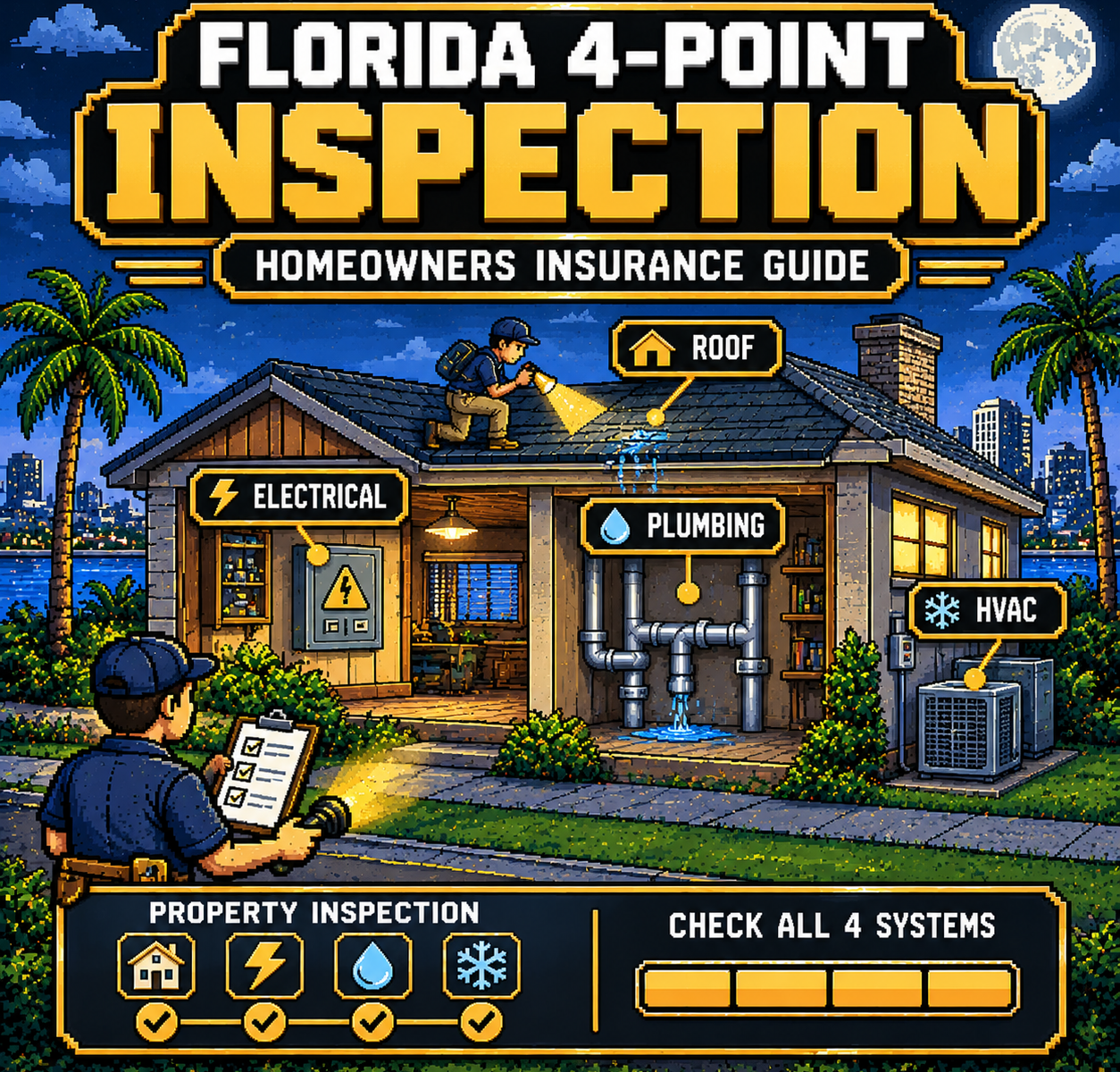
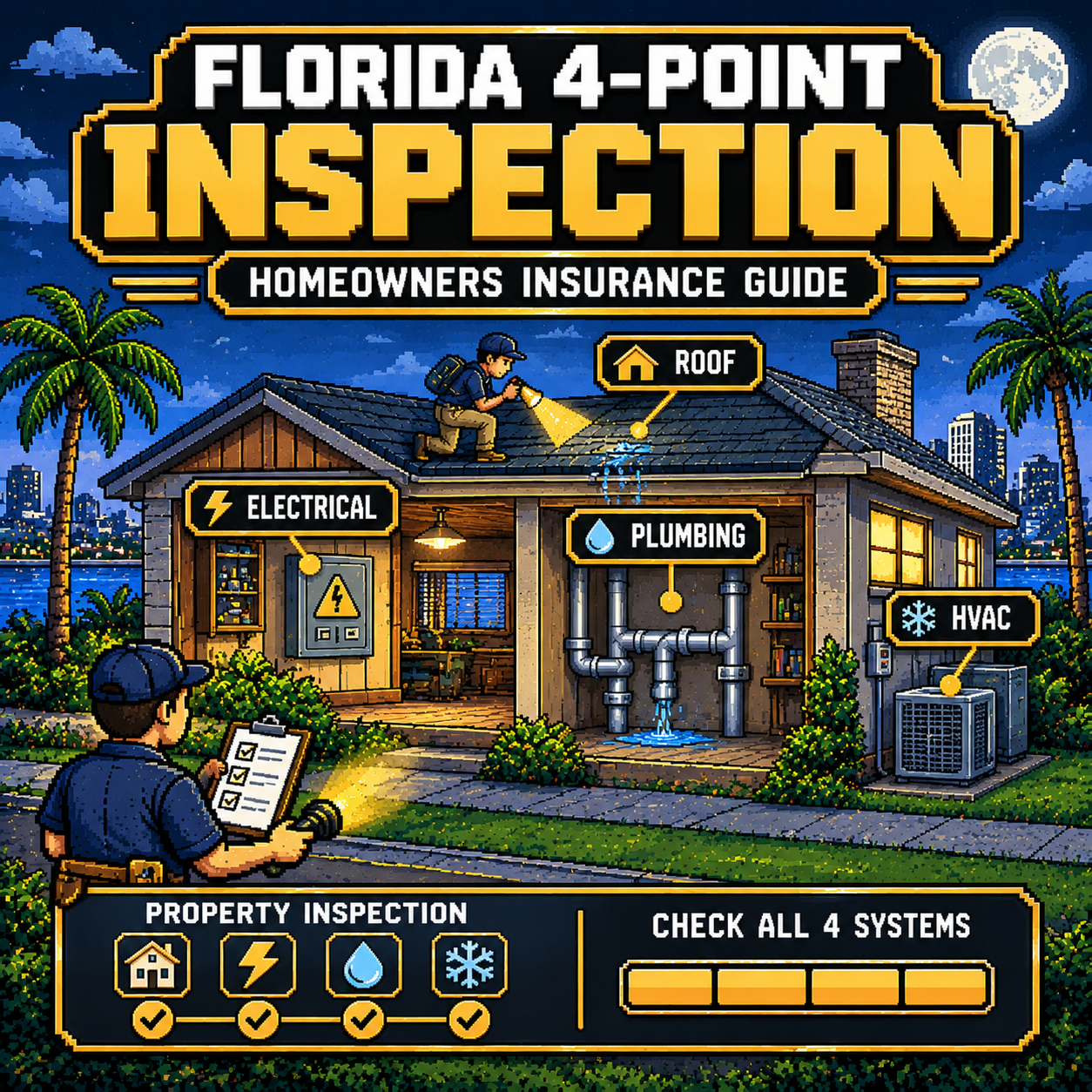
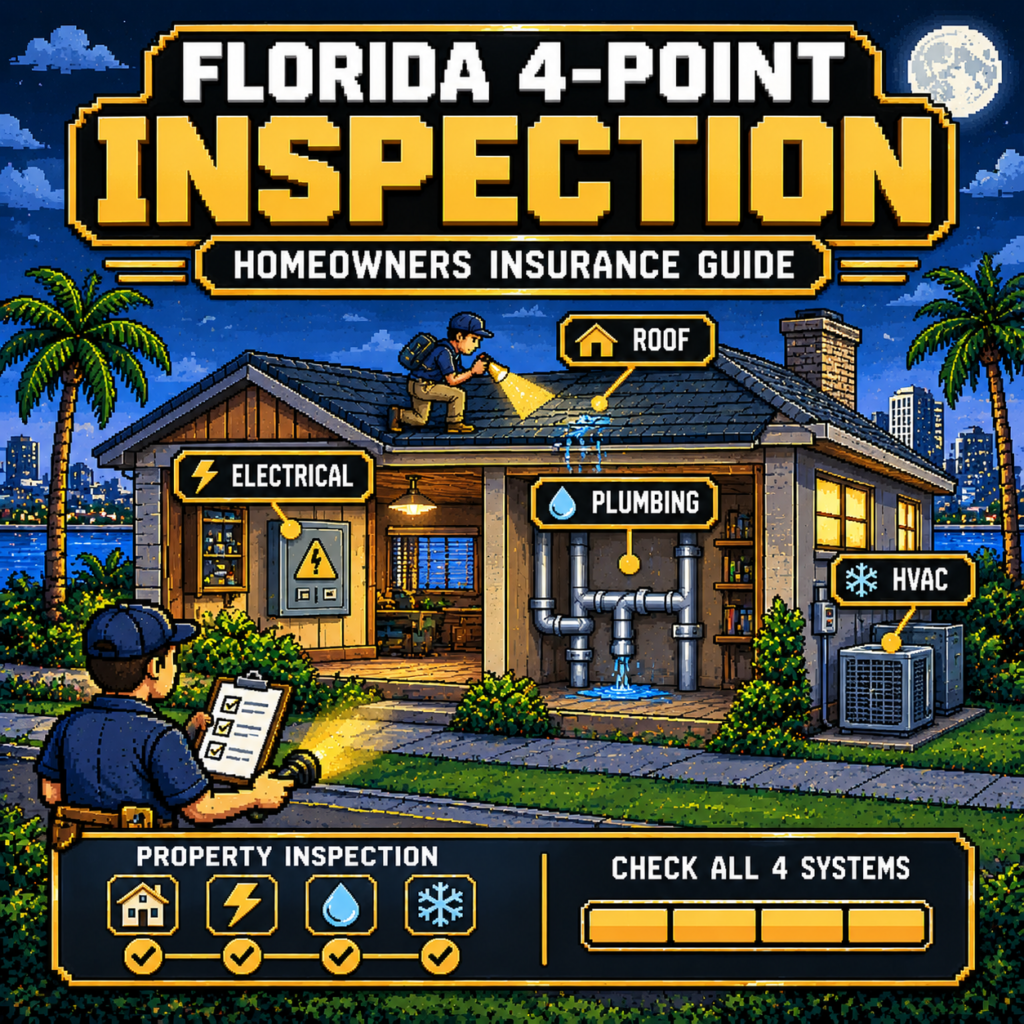
A 4-point inspection is a limited insurance underwriting evaluation focused strictly on the age, type, and visible condition of a home’s four major systems: the roof, electrical, plumbing, and heating, ventilation, and air conditioning (HVAC). Unlike a full buyer’s home inspection, which examines cosmetic details, appliances, and structural components from top to bottom, a 4-point inspection is designed solely to help insurance underwriters assess the risk of major claims.

Florida statutes do not mandate a 4-point inspection for every home sale. Instead, individual insurance companies require the report under their own underwriting guidelines, typically when a property reaches a certain age threshold. While private carriers set their own rules (often requesting the inspection for homes 20 to 30 years old or older), Citizens Property Insurance inspection guidelines require a completed 4-point inspection form for new-business applications on single-family homes more than 20 years old.

The Four Systems Evaluated During a 4-Point Inspection

To be accepted by insurers, the inspection must be completed and signed by an eligible Florida-licensed professional, such as a licensed home inspector, building code inspector, general contractor, or professional engineer, accompanied by clear photographs of each system.

Roof

The roof receives the heaviest scrutiny from underwriters. Inspectors document the covering material, age, visible damage, leaks, and remaining useful life. Under Section 627.7011(5) of the Florida Statutes, an insurer cannot refuse to issue or renew a homeowners policy solely because a roof is less than 15 years old. If a roof is 15 years or older, the insurer must allow the homeowner to obtain an inspection from an authorized inspector; if the report certifies at least five years of remaining useful life, the carrier cannot deny coverage based strictly on age. However, insurers can still decline coverage based on poor physical condition, active leaks, or missing shingles regardless of age.

Electrical System

Inspectors examine the main and secondary electrical panels, total amperage, and wiring materials. Insurers look closely for outdated or hazardous components such as active knob-and-tube wiring, cloth wiring, or unmitigated single-strand aluminum branch wiring, as well as double-tapped breakers or exposed wires that elevate fire risks.

Plumbing System

The plumbing review assesses supply and drain pipe materials, water heater age, and visible signs of leaks or deterioration. Older pipe materials, such as polybutylene or galvanized steel, often trigger underwriting restrictions due to higher burst and water-damage probabilities, whereas updated copper or PEX piping is viewed more favorably.

Heating, Ventilation, and Air Conditioning (HVAC)

Inspectors verify that central heating and cooling units are present, operational, and properly maintained. They check the system’s age, look for blockages or leaks around the air handler and condensate drain lines, and note any unsafe auxiliary heating sources.

What Happens If a Home Does Not Meet Insurance Requirements?

A 4-point inspection is not a simple pass-or-fail test; rather, it is an informational risk report. If an inspector documents deficiencies such as an active roof leak, an aging water heater, or double-tapped breakers, an insurance carrier may pause underwriting, issue a conditional binder, or decline coverage until the issues are resolved.

When deficiencies are flagged, homeowners typically need to hire a licensed contractor to complete repairs, pull any required municipal permits, and provide paid invoices, photographs, and a reinspection addendum to the insurer. Keeping detailed maintenance records and permit histories streamlines this process significantly.

How Homebuyers Can Prepare Before Purchasing a Florida Property

Prospective buyers can avoid last-minute closing hurdles by taking proactive steps early in the transaction:

    • Request Seller Disclosures and Permits: Ask the seller for the dates of the last full roof replacement, re-piping, electrical panel updates, and HVAC installation, along with county permit records.

    • Schedule Inspections Early: Order your 4-point inspection alongside your general home inspection during the contract contingency period.

    • Consult an Insurance Agent Promptly: Share the inspection reports with a licensed Florida insurance agent early to confirm carrier eligibility and accurate premium quotes, keeping in mind that statewide market stabilization reported by the Florida Office of Insurance Regulation still varies widely by property age and location.

    • Factor Insurance Into Your Budget: Review our first-time homebuyer financing guide and homebuying transition checklist to see how insurance premiums and potential repairs fit into your overall purchasing power.

Frequently Asked Questions About 4-Point Inspections in Florida

Is a 4-point inspection required by law in Florida?

No. Florida law does not require a 4-point inspection to buy or sell a house. However, most private insurers and Citizens Property Insurance require one under their underwriting rules before insuring older homes.

How old does a home have to be to require a 4-point inspection?

There is no single statewide rule. Citizens Property Insurance requires a 4-point inspection for single-family homes over 20 years old, while private insurance carriers set their own thresholds, commonly ranging between 15 and 30 years of age.

How long is a 4-point inspection valid?

Validity periods are determined by individual insurance companies, though most Florida carriers, including Citizens Property Insurance, require the inspection report to be dated within 12 months prior to the policy application date.

Can a home receive homeowners insurance if it has deficiencies identified during the inspection?

It depends on the severity of the issue and the insurer’s underwriting standards. Minor maintenance items may be accepted or given a short window for repair after closing, while major safety hazards, active leaks, or roofs with fewer than five years of useful life generally must be repaired or replaced before coverage is bound.

Final Thoughts

Navigating property insurance and underwriting inspections is a foundational step in securing a Florida home. By understanding how roof age statutes, system conditions, and carrier guidelines affect insurability, buyers can evaluate properties more accurately and avoid unexpected closing delays.

If you are planning to buy or refinance a home in Florida and want clarity on how total housing costs fit your financing goals, contact Level Mortgage today to speak with an experienced lending professional about your personalized mortgage solutions.

Read More

Let's Find the Right Mortgage for You!

Let's Find the Right Mortgage for You

A few quick questions so our team can understand your goals and follow up with options that fit.

Step 1 of 14

No credit check. No SSN required. Your information is sent securely. Level Mortgage LLC · NMLS #2703136 · Equal Housing Opportunity

About Us​

A group of like-minded seasoned veterans came together to create a company with an employee-focused culture. A culture that values its members both personally and professionally and a company built on the idea that the customer comes first!

Follow Us

Location

United States

We do not share data with third parties for marketing/promotional purposes.

By submitting your phone number to Level Mortgage, you are authorizing a representative of our company to send you text messages and notifications. Message frequency may vary. Message/data rates apply. Reply STOP to unsubscribe to a message sent from us, and HELP to receive help.

Copyright © 2025 Level Mortgage LLC | NMLS # 2703136 An Equal Housing Lender​