How to Finance a New Construction Condo Before Completion
the National Association of Realtors (NAR), the supply of existing homes remains well below the levels needed to satisfy buyer demand. This scarcity has pushed investors and primary residents alike toward a compelling alternative: pre-construction condos.
In high-growth hubs like Miami, Fort Lauderdale, and West Palm Beach, the skyline is a constant rotation of cranes. For many, buying “off-plan”—purchasing a unit before the building is even finished—is the only way to secure a prime piece of real estate in a competitive market. However, financing a property that doesn’t technically exist yet is a vastly different beast than a traditional resale purchase.
Understanding the mechanics of developer deposits, mortgage timing, and capital leverage is essential for any buyer looking to capitalize on the new construction boom.
Why Buyers Choose Pre-Construction Condos
The primary draw of pre-construction is the “early bird” advantage. Unlike the resale market, where you are competing with multiple offers on an aging asset, pre-construction allows you to lock in a price based on today’s market values for a product that won’t be delivered for two to four years.
1. Built-In Appreciation
In a healthy real estate market, a condo often appreciates significantly during its construction phase. Industry data suggests that pre-construction units in Tier-1 cities like Miami can see a 10% to 25% increase in value between the time the contract is signed and the day the keys are handed over. Essentially, you are “buying” the future equity.
2. Customization and Modern Incentives
Developers often offer incentives to early-stage buyers, including the ability to select finishes, floorings, and appliances. Furthermore, new buildings are constructed to the latest Florida Building Codes, which significantly reduces long-term maintenance costs and insurance premiums—a major factor in today’s high-cost insurance environment.
3. Favorable Entry Pricing
During the “friends and family” or “first tier” of sales, developers frequently price units lower to hit the sales quotas required to trigger their construction financing.
The Most Common Ways to Finance a Pre-Construction Condo
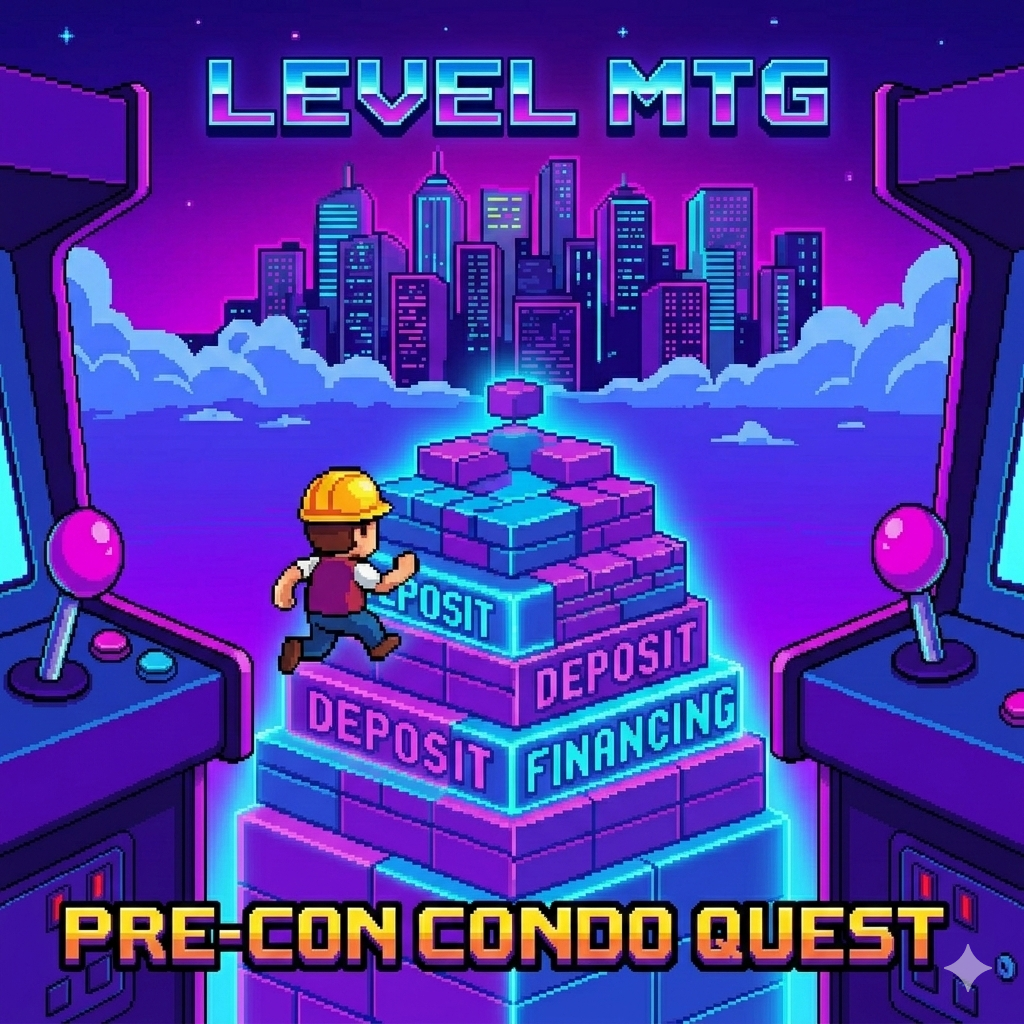
Because a bank cannot place a lien on a property that isn’t finished, you cannot get a standard mortgage on day one. Instead, financing a pre-construction condo is a two-phase process: the Deposit Phase and the Closing Phase.
Developer Deposit Structure
In most U.S. markets, and specifically in Florida, developers follow a “staggered” deposit schedule. Instead of a 20% down payment at the start, you pay in installments. A typical structure looks like this:
10% at Reservation: Held in escrow while you review the offering plan.
10% at Contract Execution: Totaling 20% down to secure the unit.
10% at Groundbreaking: When the foundation work begins.
10% at “Top-Off”: Once the building reaches its highest structural point.
Remaining 60% (Balance) at Closing: Typically covered by a traditional mortgage.
Developers require these deposits to secure their own construction loans and ensure buyer commitment.
Traditional Mortgage at Closing
The actual “financing” through a lender typically happens only when the building receives its Certificate of Occupancy (CO).
The Pre-Approval: You should be pre-approved at the time of contract to ensure you can afford the unit.
The Final Loan: You will apply for the formal mortgage 60 to 90 days before the building is finished.
Lender Requirements: The lender will evaluate the building’s health, ensuring at least 50% of units are under contract and the condo association has adequate reserves (often 10% of the total budget).
Using a HELOC or Home Equity Loan
Many savvy investors do not use their “cash on hand” for the initial deposit phase. Instead, they leverage the equity in their current primary residence or other investment properties.
Strategy: By opening a Home Equity Line of Credit (HELOC), an investor can draw the 10% increments needed for the developer deposits.
Benefit: This allows the investor to keep their liquid cash working in other investments while using a lower-interest credit line to secure the new condo.
Private or Portfolio Lenders
If a building is “non-warrantable” (meaning it doesn’t meet Fannie Mae or Freddie Mac standards, often due to high investor concentration), traditional banks might shy away. In these cases, portfolio lenders or private lenders step in. These entities keep the loans on their own books, allowing for more flexible debt-to-income (DTI) requirements and lending to foreign nationals—a massive demographic in the Miami luxury condo market.
Key Financial Requirements Buyers Should Prepare
Lenders treat new construction condos with a higher level of scrutiny. To ensure your financing goes smoothly at the finish line, you should aim for the following benchmarks:
Credit Score: While FHA loans allow lower scores, most condo lenders prefer a 720 or higher to secure the best interest rates.
Debt-to-Income (DTI) Ratio: Lenders generally want your total monthly debt payments (including the new mortgage, HOA fees, and taxes) to be under 43% of your gross monthly income.
Liquid Reserves: Be prepared to show 6 to 12 months of “PITI” (Principal, Interest, Taxes, and Insurance) in a liquid account after the down payment is made.
Appraisal: The property must appraise for the purchase price at the time of completion. If the market dips and the appraisal comes in low, the buyer is responsible for covering the gap in cash.
Risks Buyers Should Understand Before Financing
While the rewards are high, pre-construction carries unique risks that aren’t present in the resale market.
Interest Rate Volatility: You sign a contract today, but you won’t get a mortgage for two years. If interest rates rise from 6% to 8% in that time, your monthly payment could increase significantly.
Construction Delays: According to the U.S. Census Bureau, large-scale residential projects can face delays of 6 to 12 months due to labor shortages or supply chain issues. You must ensure your financial situation is stable enough to wait.
Market Fluctuations: While appreciation is expected, it is not guaranteed. If the market oversupplies units in a specific neighborhood, value growth may stagnate.
Why Pre-Construction Financing Can Be a Powerful Investment Strategy
Despite the risks, the data favors the long-term investor. Florida’s population grew by over 365,000 people between 2023 and 2024, maintaining its status as one of the fastest-growing states. This influx of residents creates a “floor” for demand.
By financing a pre-construction unit, you are essentially “locking in” a price in a high-inflation environment. If the cost of raw materials (lumber, steel, concrete) continues to rise, the replacement cost of the building goes up, naturally lifting the value of your unit before you’ve even moved in.
How Level Mortgage Can Help Buyers Finance New Construction Condos
Navigating the gap between a developer contract and a bank closing requires a sophisticated mortgage partner. At Level Mortgage, we specialize in bridge strategies and long-term financing for pre-construction buyers.
Pre-Approval for Future Deliveries: We help you understand your borrowing power years in advance.
Investor-Specific Products: Including DSCR (Debt Service Coverage Ratio) loans that focus on the property’s future rental income rather than your personal income.
HELOC Coordination: We can help you tap into existing equity to cover those initial developer deposits.
Guidance on “Non-Warrantable” Buildings: We have access to a wide network of portfolio lenders who specialize in luxury condo projects that traditional banks may avoid.
Final Thoughts
Financing a new construction condo is a marathon, not a sprint. Success depends on understanding the developer’s deposit timeline, maintaining a strong financial profile during the construction years, and choosing a lender who understands the nuances of the Florida market.
With the right strategy, buying pre-construction isn’t just a way to get a home—it’s a powerful vehicle for wealth creation.
Want personalized assistance? Visit our 'Contact Us' tab and leave your information with one of our experts.
About Us
A group of like-minded seasoned veterans came together to create a company with an employee-focused culture. A culture that values its members both personally and professionally and a company built on the idea that the customer comes first!
We do not share data with third parties for marketing/promotional purposes.
By submitting your phone number to Level Mortgage, you are authorizing a representative of our company to send you text messages and notifications. Message frequency may vary. Message/data rates apply. Reply STOP to unsubscribe to a message sent from us, and HELP to receive help.
Using a HELOC to Buy a Second Home: Pros, Cons & Mortgage Insights
For many homeowners in 2026, the greatest financial asset isn’t sitting in a savings account—it’s locked within the walls of their primary residence. As home values have maintained a steady upward trajectory over the last several years, tappable equity has reached record highs. If you are looking to expand your real estate portfolio or secure a vacation getaway, using a HELOC to buy a second home has emerged as a premier strategy for savvy investors and families alike.
Leveraging equity allows you to bypass the hurdles of liquidating cash reserves or selling off stocks in a volatile market. However, navigating the mortgage landscape in 2026 requires a nuanced understanding of interest rate trends and debt-to-income ratios. This guide explores how a Home Equity Line of Credit (HELOC) works and whether it is the right engine to power your next property purchase.
What Is a HELOC and How It Works
Despite regulatory shifts in some cities, the short‑term rental market remains strong. According to AirDNA’s 2025 U.S. Short‑Term Rental Outlook, national STR demand grew 7.8% year‑over‑year, and average daily rates increased 3.2% heading into 2026. Investor interest remains high because:
STRs often generate 20–40% higher gross rental income than comparable long‑term rentals in the same market.
Remote work and flexible travel trends continue to support year‑round occupancy.
Many secondary and tertiary markets have seen rising tourism and fewer regulatory restrictions.
However, higher potential returns also come with more complex financing requirements.
HELOC Basics
Loan Against Home Equity: Your credit limit is based on the appraised value of your home minus what you still owe on your primary mortgage.
Line of Credit vs. Lump Sum: You have the freedom to spend only what you need for a down payment or closing costs, leaving the rest of the credit line available for emergencies or renovations.
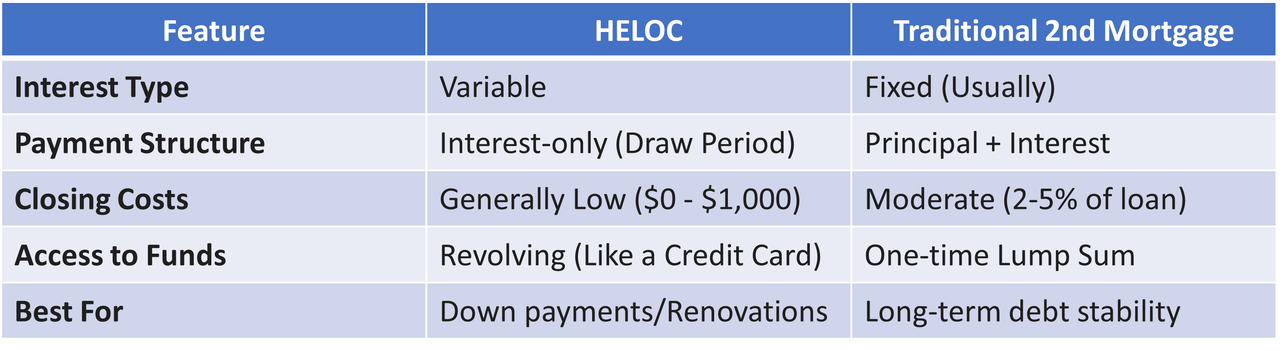
Interest-Only Draw Period: Most HELOCs offer a 10-year “draw period.” During this time, you typically only have to pay interest on the amount you’ve borrowed, which keeps initial monthly costs low while you manage a new second home.
Why Buyers Consider a HELOC for a Second Home Purchase
With the 2026 market showing signs of increased competition in the “second home” sector—driven by the continued normalization of remote work—buyers need to move fast. A HELOC provides “ready-to-go” capital that acts like cash in the eyes of a seller.
Financial Leverage & Timing
Using a HELOC allows you to maintain your liquidity. Instead of selling off stocks or dipping into a high-yield savings account (which may be earning 4-5% in today’s environment), you leverage the “dead equity” in your home. This strategy is particularly effective when you need to act quickly on a property listing before other buyers can secure traditional financing. It also allows you to bypass the need for a “home sale contingency” if you were planning to sell a different asset to fund the purchase.
Pros of Using a HELOC to Buy a Second Home
Leveraging your primary residence comes with distinct advantages that traditional second-home mortgages often lack:
Minimal Upfront Costs: HELOCs often have little to no closing costs. Many lenders in 2026 offer “no-cost” setups where they cover the appraisal and origination fees.
Borrow up to 85% CLTV: Most lenders allow a Combined Loan-to-Value (CLTV) of 80% to 85%. If your home is worth $1,000,000 and you owe $500,000, you could potentially access up to $350,000 in credit.
Tax Advantages: Per current IRS guidelines, the interest on a HELOC may be tax-deductible if the funds are used specifically to “buy, build, or substantially improve” the home that secures the loan.
Flexibility: You only pay interest on what you use. If you only need $50,000 for a down payment on a $250,000 condo, you aren’t forced to pay interest on a full $250,000 loan.
Cons & Risks of Using a HELOC for a Second Home
Despite the benefits, this strategy is not without significant risk. In the 2026 economy, borrowers must be wary of “rate creep” and equity volatility.
Variable Interest Rates: HELOCs are almost always tied to the Prime Rate. If the Federal Reserve raises rates to combat inflation, your HELOC payment will climb immediately.
Collateral Risk: Your primary home is the collateral. If you experience a financial hardship and cannot pay the HELOC, you risk losing the roof over your head.
Future Payment Shock: Once the 10-year draw period ends, the loan enters the “repayment period” (usually 20 years). At this point, you must pay both principal and interest, which can cause your monthly payment to double or even triple.
Rate Volatility & Market Conditions
Over the last 5 to 10 years, we have seen the Prime Rate move from near-zero to over 8%. While 2026 forecasts suggest a period of relative stability, a 2% increase in the Prime Rate can add significant stress to a household budget that is already managing two properties. Borrowers should always calculate their “break-even” point—the highest interest rate they could afford before the second home becomes a financial burden.
How Lenders Evaluate HELOC Usage
Securing a HELOC in 2026 is a more rigorous process than it was a decade ago. Lenders are looking for “pristine” borrowers who can weather economic shifts.
Credit Score: A FICO score of 720+ is typically required for the best rates, though some lenders will go down to 680 with higher interest margins.
Debt-to-Income (DTI): Most lenders want to see a DTI of 43% or lower. This calculation includes your primary mortgage, the new HELOC payment, and the projected costs of the second home (taxes, insurance, and HOA).
Home Equity: You usually need at least 15-20% equity remaining in the home after the HELOC is taken out.
Occupancy Type: Lenders will ask if the second home is a “vacation home” or an “investment property.” Investment properties often carry stricter requirements and slightly higher rates.
Smart Strategies for Using a HELOC to Buy Your Second Home
The Down Payment Bridge: Use the HELOC only for the 20% down payment. This allows you to avoid Private Mortgage Insurance (PMI) on your second home mortgage while keeping your cash reserves intact.
The “Fix and Refi”: Use the HELOC to buy a property that needs work. Once the renovations are complete and the value of the second home has increased, perform a “cash-out refinance” on the second home to pay off the HELOC on your primary home.
Aggressive Principal Reduction: During the 10-year draw period, don’t just pay the interest. Treat it like a fixed loan and pay down the principal monthly to reduce your long-term interest exposure.
HELOC vs. Traditional Second Mortgage
Real-World Example (Hypothetical)
magine a homeowner in 2026 with the following profile:
Primary Residence Value: $800,000
Current Mortgage: $400,000
Available Equity: $400,000
They find a beach cottage for $500,000. Instead of taking out a full $500,000 mortgage at 6.5%, they use their HELOC to pull $100,000 (20%) for a down payment. They then finance the remaining $400,000 with a traditional mortgage.
By using the HELOC, they avoided a “Jumbo” loan category (if applicable) and kept $100,000 in their brokerage account, which is currently yielding 8% annually. The “cost of capital” from the HELOC is offset by the “return on capital” from their investments.
What This Means for Buyers & Investors in 2026
The 2026 market is characterized by steady, if not explosive, growth. Rental demand remains high as many would-be buyers stay on the sidelines due to inventory shortages. For the savvy investor, using a HELOC to buy a second home is a way to capitalize on this rental demand.
However, keep an eye on the Tax Cuts and Jobs Act (TCJA) provisions, as tax laws regarding interest deductibility can shift. In 2026, the strategy is about precision: using just enough equity to secure the deal without over-leveraging your foundation.
Conclusion: Is a HELOC Right for You?
Leveraging your home equity to expand your real estate holdings is one of the fastest ways to build long-term wealth. A HELOC provides the speed and flexibility needed in a modern market, but it requires a disciplined repayment strategy and a keen eye on interest rate trends.
Before you tap into your equity, it is essential to have a professional evaluate your debt-to-income ratio and your long-term goals.
Would you like a personalized equity analysis to see how much you can borrow? Contact Level Mortgage today to explore HELOC options tailored to your second home goals.
Want personalized assistance? Visit our 'Contact Us' tab and leave your information with one of our experts.
About Us
A group of like-minded seasoned veterans came together to create a company with an employee-focused culture. A culture that values its members both personally and professionally and a company built on the idea that the customer comes first!
We do not share data with third parties for marketing/promotional purposes.
By submitting your phone number to Level Mortgage, you are authorizing a representative of our company to send you text messages and notifications. Message frequency may vary. Message/data rates apply. Reply STOP to unsubscribe to a message sent from us, and HELP to receive help.
Airbnb investing financing has become one of the most important topics for real estate investors heading into 2026. With short‑term rentals (STRs) continuing to outperform many traditional long‑term rentals, investors are increasingly looking for mortgage strategies that support cash‑flow‑positive Airbnb acquisitions. Understanding how lenders evaluate STR properties—and how financing impacts returns—is essential before making a purchase.
Why Airbnb Investing Continues to Grow in 2026
Despite regulatory shifts in some cities, the short‑term rental market remains strong. According to AirDNA’s 2025 U.S. Short‑Term Rental Outlook, national STR demand grew 7.8% year‑over‑year, and average daily rates increased 3.2% heading into 2026. Investor interest remains high because:
STRs often generate 20–40% higher gross rental income than comparable long‑term rentals in the same market.
Remote work and flexible travel trends continue to support year‑round occupancy.
Many secondary and tertiary markets have seen rising tourism and fewer regulatory restrictions.
However, higher potential returns also come with more complex financing requirements.
Why Mortgage Financing Matters More for Airbnb Investors
Financing an Airbnb is not the same as financing a primary residence or even a traditional rental. Lenders view STRs as higher‑risk assets because income can fluctuate seasonally and depends on market demand. This means:
Higher down payment requirements
Stricter underwriting
More emphasis on projected rental income
Different loan programs compared to long‑term rentals
Choosing the right mortgage structure can significantly impact cash flow, break‑even occupancy, and long‑term ROI.
How Lenders Evaluate Airbnb Properties
Property Use Classification
Lenders classify STR properties as:
Second homes (borrower uses the property part‑time)
This classification affects interest rates, down payments, and underwriting standards.
Income Analysis
Airbnb income is variable, so lenders may use:
Historical STR income (Airbnb/Vrbo statements)
Appraiser‑generated STR income schedules
Market‑based projections from tools like AirDNA
DSCR calculations based on projected monthly income
Most DSCR lenders in 2025–2026 require a minimum DSCR of 1.0–1.1.
Risk-Based Pricing
Because STRs carry higher perceived risk, Airbnb‑friendly loans typically have interest rates 0.5%–1.25% higher than standard investment property loans.
How Interest Rates, Down Payments, and Terms Affect Cash Flow
Interest Rates
As of early 2026, average investment property mortgage rates range from 7.1% to 8.4%, depending on credit score, loan type, and DSCR strength. Even a 0.25% rate change can shift monthly cash flow significantly.
Down Payments
Typical requirements include:
Second home loans: 10–15% down
Conventional investment loans: 20–25% down
zDSCR loans: 15–30% down
Higher down payments often improve DSCR and increase approval odds.
Loan Terms
Common loan structures for Airbnb investors:
30‑year fixed loans for predictable payments
Interest‑only DSCR loans for maximum cash flow
Interest‑only periods can improve DSCR by 20–35%, making qualification easier.
Traditional Investment Loans vs. Airbnb-Friendly Loan Programs
Conventional Loans
Pros:
Lower rates
Lower fees
Cons:
Harder to qualify using STR income
Stricter DTI requirements
DSCR Loans
Pros:
Qualification based on property income
Airbnb income allowed
Faster approvals
Cons:
Higher rates
Larger down payments
Possible prepayment penalties
Second Home Loans
Pros:
Lower down payments
Lower rates than DSCR loans
Cons:
Borrower must occupy the property part‑time
Some lenders restrict STR usage
How Rental Income Is Evaluated for Mortgage Qualification
Lenders may use:
Actual Airbnb statements (12–24 months preferred)
Appraiser‑generated STR income schedules
Market rent estimates (for DSCR loans)
Most lenders apply a 10–25% vacancy factor to STR income to account for seasonality.
Key Risks Investors Must Understand Before Financing an Airbnb
Airbnb investing can be lucrative, but investors must understand:
Regulatory volatility: Over 200 U.S. cities updated STR rules between 2024–2025.
Seasonal income swings: Occupancy can vary 20–50% between peak and off‑peak seasons.
Higher operating costs: Furnishing, cleaning, utilities, and management fees can reduce net income by 30–45%.
Financing risk: DSCR loans may require higher reserves if income projections fall short.
Regulatory, Zoning, and Market Factors That Impact Loan Approval
Lenders increasingly review:
Local STR ordinances
Permit requirements
HOA restrictions
Market saturation
Zoning compliance
A property in a restricted or oversaturated market may face stricter underwriting or reduced loan amounts.
Internal Linking Opportunities
This article naturally supports internal links to:
Want personalized assistance? Visit our 'Contact Us' tab and leave your information with one of our experts.
About Us
A group of like-minded seasoned veterans came together to create a company with an employee-focused culture. A culture that values its members both personally and professionally and a company built on the idea that the customer comes first!
We do not share data with third parties for marketing/promotional purposes.
By submitting your phone number to Level Mortgage, you are authorizing a representative of our company to send you text messages and notifications. Message frequency may vary. Message/data rates apply. Reply STOP to unsubscribe to a message sent from us, and HELP to receive help.
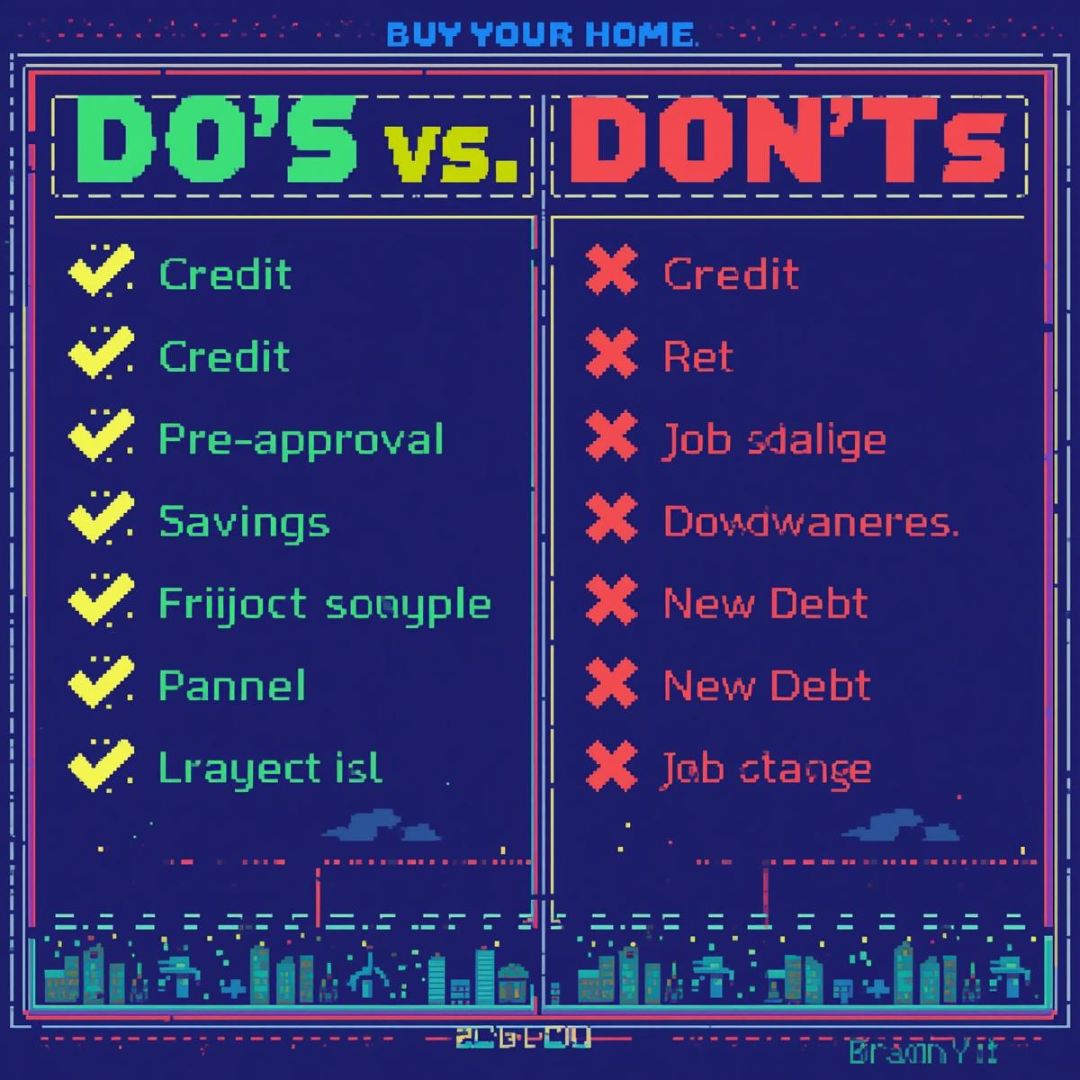
Buying a home in Florida is an exciting milestone, especially for first-time buyers. However, the mortgage application process can feel overwhelming if you’re not prepared. Understanding the do’s and don’ts of applying for a mortgage can save you time, money, and stress—and help you secure the best possible loan terms.
The Do’s of Applying for a Mortgage
Do Check Your Credit Early
Lenders rely heavily on your credit score to determine eligibility and interest rates.
According to Fannie Mae, borrowers with higher credit scores often qualify for lower rates, potentially saving thousands over the life of the loan.
In Florida, where median home prices reached $405,000 in late 2025 (NAR data), even a 0.5% difference in interest rate can significantly impact affordability.
Do Get Pre-Approved
Pre-approval shows sellers you’re a serious buyer and gives you a clear budget.
New credit inquiries can lower your score and raise red flags.
Lenders may see new debt as a risk, especially during underwriting.
Don’t Make Large, Unverified Deposits
Any unexplained deposit can trigger questions about the source of funds.
Always document gifts or transfers with proper paperwork.
Don’t Change Jobs Without Consulting Your Lender
Even a promotion can complicate income verification.
Stability is key—wait until after closing to make career moves.
Don’t Ignore Your Debt-to-Income Ratio (DTI)
Most lenders prefer a DTI below 43%, though FHA may allow slightly higher.
Adding new debt (like financing a car) during the process can push you over the limit.
Don’t Skip Professional Guidance
Mortgage brokers and loan officers can help you compare options.
According to Fannie Mae’s 2024 survey, 71% of buyers said digital mortgage tools made the process easier, but expert guidance remains invaluable.
Florida Market Insights
Florida’s housing market remains competitive, with strong demand in coastal cities and suburban areas.
Rising interest rates in 2025–2026 have cooled some buyer activity, but affordability programs continue to support first-time buyers.
The Federal Reserve noted that mortgage rates averaged 6.7% in late 2025, up from historic lows in 2021. This makes preparation and smart financial moves more critical than ever.
Actionable Tips for Florida Homebuyers
Start early: Check credit and savings at least six months before applying.
Stay consistent: Avoid financial changes until after closing.
Leverage programs: Explore FHA, VA, USDA, and Florida-specific assistance.
Work with experts: Partner with trusted mortgage professionals like Level Mortgage to navigate the process.
Think long-term: Choose a loan that fits both your current budget and future goals.
Conclusion
Applying for a mortgage in Florida doesn’t have to be stressful. By following the do’s—like maintaining stable income, getting pre-approved, and exploring assistance programs—and avoiding the don’ts—like opening new credit or making undocumented deposits—you’ll position yourself for success. With preparation and guidance, you can secure financing confidently and move closer to owning your Florida dream home.
Want personalized assistance? Visit our 'Contact Us' tab and leave your information with one of our experts.
About Us
A group of like-minded seasoned veterans came together to create a company with an employee-focused culture. A culture that values its members both personally and professionally and a company built on the idea that the customer comes first!
We do not share data with third parties for marketing/promotional purposes.
By submitting your phone number to Level Mortgage, you are authorizing a representative of our company to send you text messages and notifications. Message frequency may vary. Message/data rates apply. Reply STOP to unsubscribe to a message sent from us, and HELP to receive help.
Why Waiting for the “Perfect Rate” to Refinance Might Cost You More
The Florida Mortgage Landscape in 2026
Mortgage rates in Florida—and nationwide—have cooled from their 2023 highs but remain in the 6.0–6.2% range for 30-year fixed loans. Freddie Mac reports the average 30-year fixed mortgage at 6.10% as of January 2026, while Fannie Mae forecasts rates to hover near 6.0% through mid-2026.
For Florida homeowners, this means refinancing opportunities are available now. But many hesitate, waiting for the “perfect” rate—often a psychological anchor like 5% or lower. The reality? That wait can cost more than it saves.
The Myth of the “Perfect Rate”
Rate Anchoring Bias
Homeowners often anchor to past rates (like the 3% era of 2020–2021). This creates unrealistic expectations. Rates today are shaped by inflation, Federal Reserve policy, and housing demand—not nostalgia.
Market Timing Fallacy
Trying to predict the exact bottom of mortgage rates is like timing the stock market. Even experts at the Mortgage Bankers Association (MBA) caution that rates fluctuate weekly, and waiting often results in missed savings opportunities.
Why Waiting Can Cost You More
1. Opportunity Cost of Monthly Savings
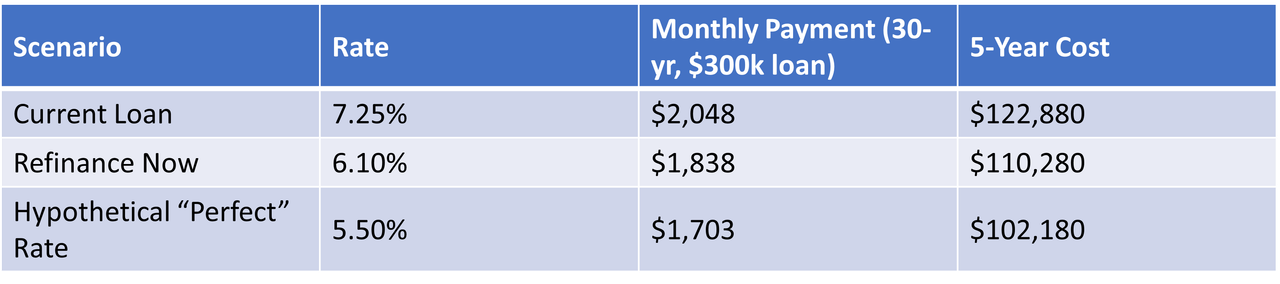
Suppose you have a $300,000 mortgage at 7.25% (a common rate in 2023). Refinancing today at 6.1% saves about $210 per month.
Annual savings: $2,520
5-year savings: $12,600
Waiting for rates to drop to 5.5% might save an extra $100 per month—but if rates never reach that level, you’ve lost years of savings.
2. Long-Term Equity Impact
Lower monthly payments free up cash flow, allowing homeowners to build equity faster or invest elsewhere. Delaying refinancing means slower equity growth and less financial flexibility.
3. Florida-Specific Risks
Florida’s housing market remains competitive, with home prices up 6% year-over-year in 2025 according to MBA data. Rising property values mean waiting could also increase your loan-to-value ratio, potentially limiting refinance options or raising costs.
Real Numbers: Comparing Scenarios
Key takeaway: Waiting for 5.5% could save $8,100 over 5 years—but if rates stay at 6.1%, you lose $12,600 by not refinancing now.
Common Refinance Myths Debunked
Myth 1: “Rates will always go lower.”
Reality: Rates are influenced by inflation and Fed policy. The Federal Reserve has signaled cautious cuts, not dramatic drops.
Myth 2: “It’s better to wait until I hit the bottom.”
Reality: No one can consistently predict the bottom. Even professional forecasts vary within a 0.5% range.
Myth 3: “Refinancing isn’t worth it unless I save 1%.”
Reality: The CFPB notes that even a 0.5% reduction can yield significant long-term savings, especially on larger loans.
Psychological Traps to Avoid
Anchoring: Comparing today’s rates to pandemic-era lows.
Loss Aversion: Fear of missing out on a lower rate keeps borrowers stuck.
Overconfidence: Believing you can outsmart the market.
Recognizing these biases helps homeowners make rational, financially sound decisions.
Why Acting Now Makes Sense in Florida
Rates are stable around 6.0–6.2%, offering predictable refinance opportunities.
Home values are rising, meaning equity gains can be locked in sooner.
Demand is strong—refinance applications surged 40% in January 2026.
Florida homeowners who act now can secure savings and avoid the uncertainty of waiting.
The Advisor’s Perspective
As a trusted mortgage advisor with Level Mortgage, I’ve seen countless clients wait for the “perfect” rate—only to regret missing years of savings. The smarter move is to evaluate your refinance options today, based on your financial goals, not market speculation.
Conclusion
Refinancing in Florida at current rates can deliver immediate monthly savings, long-term equity growth, and financial flexibility. Waiting for the “perfect” rate is a gamble that often costs more than it saves.
Want personalized assistance? Visit our 'Contact Us' tab and leave your information with one of our experts.
About Us
A group of like-minded seasoned veterans came together to create a company with an employee-focused culture. A culture that values its members both personally and professionally and a company built on the idea that the customer comes first!
We do not share data with third parties for marketing/promotional purposes.
By submitting your phone number to Level Mortgage, you are authorizing a representative of our company to send you text messages and notifications. Message frequency may vary. Message/data rates apply. Reply STOP to unsubscribe to a message sent from us, and HELP to receive help.
What Happens After You’re Pre-Approved for a Mortgage
Getting pre-approved for a mortgage is a major milestone in the home-buying journey. In Florida’s dynamic real estate market, where single-family homes ended 2024 with 4.7 months of supply and condos shifted into a buyer’s market with 8.2 months of supply, pre-approval gives you a competitive edge.
But what happens next? Let’s break down the process step by step.
Mortgage balances account for $13.07 trillion, while HELOC balances rose by $11 billion, marking the 14th consecutive quarterly increase.
Credit card debt is surging, with balances exceeding $1.3 trillion nationwide, driven by inflation and consumer spending.
In Florida, where housing values have risen sharply post-pandemic, homeowners often have significant equity available. This makes HELOCs an attractive option for debt consolidation.
Step 3: Underwriting
The underwriting process verifies your financial documents, employment, and credit history.
Underwriting usually takes 1–2 weeks, depending on complexity.
Step 4: Closing Timeline
Most conventional loans in Florida close in 30–45 days from application to funding.
Closing involves signing final documents, transferring funds, and recording the deed.
Buyers should budget for closing costs between 2–5% of the loan amount.
Florida Market Context (2025)
Average mortgage rate in 2025: 6.25%
Buyer vs. Seller Market:
Single-family homes: 4.7 months of supply (seller’s market)
Condos/townhouses: 8.2 months of supply (buyer’s market)
These dynamics affect negotiation power after pre-approval.
Common Challenges After Pre-Approval
Job changes or new debt can jeopardize approval.
Low appraisals may require renegotiation.
Market competition in Florida means homes often receive multiple offers within days.
Tips for Buyers After Pre-Approval
Avoid major financial changes (new credit cards, car loans).
Respond quickly to lender requests for documentation.
Stay within your pre-approved budget to avoid delays.
Work closely with your real estate agent to navigate Florida’s shifting market conditions.
Conclusion
Pre-approval is just the beginning. From house hunting to closing, the process involves multiple steps—each critical to securing your home. In Florida’s 2025 market, where rates hover around 6.25% and supply varies by property type, being prepared after pre-approval can make the difference between closing smoothly or facing delays.
Want personalized assistance? Visit our 'Contact Us' tab and leave your information with one of our experts.
About Us
A group of like-minded seasoned veterans came together to create a company with an employee-focused culture. A culture that values its members both personally and professionally and a company built on the idea that the customer comes first!
We do not share data with third parties for marketing/promotional purposes.
By submitting your phone number to Level Mortgage, you are authorizing a representative of our company to send you text messages and notifications. Message frequency may vary. Message/data rates apply. Reply STOP to unsubscribe to a message sent from us, and HELP to receive help.
Buying a home is one of the most significant financial decisions most people will ever make. Yet many potential buyers choose to “wait for the right time,” hoping for lower prices or better mortgage rates. But in today’s evolving real estate landscape, waiting often comes with a real financial cost.
Recent data from late 2025 and early 2026 shows that affordability is shifting, mortgage rates are adjusting, and home prices continue to evolve—making timing more important than ever. Below is a comprehensive breakdown of what waiting could cost you based on the latest market information.
Inventory increased in many major metros, giving buyers more options.
Home prices stabilized but did not significantly decline.
Mortgage rates remained elevated compared to pre‑2022 levels.
Homes stayed on the market longer, giving buyers more negotiation power.
Even with these improvements, affordability remained a challenge. Zillow reported that by the end of 2025, mortgage payments were still consuming 32.6% of the median household income, despite being $177 lower than their October 2023 peak.
2. What’s Changing in 2026?
The 2026 housing market is expected to bring slightly better conditions for buyers. Zillow forecasts that 20 of the 50 largest U.S. metros will become affordable by the end of 2026, the highest number since 2022.
2026 Forecast Highlights:
Home values are expected to rise 1.9% in 2026—not a crash, but a moderate increase.
More inventory is entering the market, especially new construction.
Some cities may even see price declines due to increased supply.
However, even with improved affordability, waiting may still cost buyers more in the long run due to rising home values and the compounding effect of mortgage interest.
3. The Real Cost of Waiting: Price Appreciation
Even modest price increases can significantly impact affordability.
Example:
If a $400,000 home appreciates by Zillow’s projected 1.9% in 2026, the same home would cost:
400,000×1.019=407,600
That’s $7,600 more in just one year.
If appreciation continues at similar rates, waiting two years could cost buyers $15,000–$20,000 or more—before even factoring in mortgage interest.
4. Mortgage Rates: The Silent Cost Multiplier
Mortgage rates are one of the biggest factors affecting the cost of waiting.
While rates have eased slightly from their 2023–2024 highs, they remain elevated historically. Even a 0.5% increase in mortgage rates can add tens of thousands of dollars in interest over the life of a loan.
Impact of a 0.5% Rate Increase on a $400,000 Loan:
Difference:
+$133/month
+$48,000 over 30 years
Even if home prices stay flat, rising rates alone can make waiting significantly more expensive.
5. Inventory Growth Doesn’t Always Mean Lower Prices
CNBC reported that by late 2025, homes were sitting longer on the market and builders were offering discounts in some areas due to increased supply. However, this does not guarantee widespread price drops.
Why?
New construction often targets higher‑income buyers.
Demand remains strong due to demographic pressure (Millennials + Gen Z).
Many homeowners are still “locked in” with ultra‑low pre‑2022 mortgage rates, limiting resale inventory.
This means that while buyers may have more choices, prices are unlikely to fall dramatically nationwide.
6. Affordability Is Improving—But Slowly
Zillow’s January 2026 report shows that affordability is improving due to:
Slower price growth
Slightly lower mortgage rates
Rising incomes
However, affordability improvements do not necessarily mean homes will become cheaper. Instead, they mean buyers may be better able to handle current prices.
Waiting for a “big crash” is not supported by current data. In fact, Zillow expects home values to increase in 41 of the 50 largest metros in 2026.
7. The Opportunity Cost of Delayed Homeownership
Waiting to buy a home also means missing out on:
Equity Growth
If a home appreciates even 2% annually, a $400,000 home gains:
400,000×0.02=8,000 per year
That’s $40,000 in equity over five years.
Tax Benefits
Homeowners may deduct:
Mortgage interest
Property taxes
Certain closing costs
Renters receive none of these benefits.
Fixed Housing Costs
Rent typically increases 3–7% per year in many markets. A fixed mortgage payment does not.
8. Florida Market Considerations
While the data above reflects national trends, Florida has unique dynamics:
Strong population growth
High demand from out‑of‑state buyers
Limited land in coastal metros
Strong new construction pipeline
These factors often lead to above‑average price appreciation, making waiting even more costly for Florida buyers.
Final Thoughts: Should You Wait to Buy a Home?
Based on late‑2025 and early‑2026 data, waiting to buy a home can cost you through:
Higher home prices
Higher mortgage rates
Lost equity
Lost tax benefits
Rising rents
While the market is becoming more balanced, the long‑term trend still points toward rising home values and steady demand.
For most buyers—especially in high‑growth states like Florida—the cost of waiting outweighs the potential benefits.
If you’re financially ready, 2026 may be one of the best windows to buy before prices and rates shift again.
Want personalized assistance? Visit our 'Contact Us' tab and leave your information with one of our experts.
About Us
A group of like-minded seasoned veterans came together to create a company with an employee-focused culture. A culture that values its members both personally and professionally and a company built on the idea that the customer comes first!
We do not share data with third parties for marketing/promotional purposes.
By submitting your phone number to Level Mortgage, you are authorizing a representative of our company to send you text messages and notifications. Message frequency may vary. Message/data rates apply. Reply STOP to unsubscribe to a message sent from us, and HELP to receive help.
How to Prepare for Your First Consultation with a Mortgage Professional
Preparing for your first mortgage consultation is one of the most important steps in the homebuying process. Whether you’re purchasing your first home, relocating to Florida, or upgrading your current property, arriving prepared can dramatically improve your loan options, speed up approval, and help you understand your true buying power. According to industry guidance, the first consultation is designed to help you understand your options—not to obligate you to a loan application.
This guide breaks down everything you need to bring, what to expect, and how to position yourself for success in Florida’s competitive real estate market.
Why Your First Mortgage Consultation Matters
Your initial meeting with a mortgage professional sets the tone for your entire homebuying journey. It helps you:
Understand your loan options
Determine your purchasing power
Identify potential credit or financial issues early
Build a strategy for navigating Florida’s fast‑moving housing market
Mortgage experts emphasize that preparing ahead of time leads to a smoother experience from start to finish.
1. Know Your Homeownership Goals
Before your consultation, define what you want to accomplish. This helps the mortgage professional tailor recommendations.
Questions to Ask Yourself
Are you a first‑time buyer or repeat buyer?
Are you upsizing, downsizing, or relocating?
What Florida cities or counties are you targeting?
What is your ideal monthly payment?
How long do you plan to stay in the home?
Florida’s market is diverse—Miami, Tampa, Orlando, and Jacksonville each have different price points and lending dynamics. Knowing your goals helps your lender match you with the right loan program.
The average U.S. credit score is around 715 (FICO).
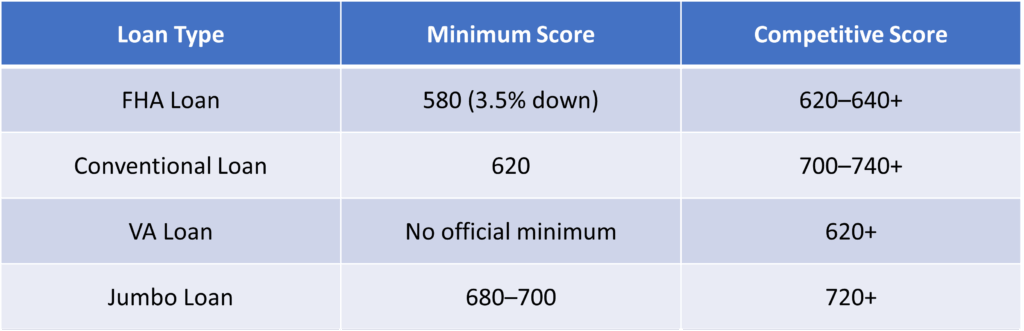
FHA loans allow scores as low as 580, but with higher costs.
Conventional loans typically require 620+.
If your score is lower than expected, your mortgage professional can help you create a plan to improve it before applying.
4. Understand Your Debt‑to‑Income Ratio (DTI)
DTI is a key metric lenders use to determine affordability.
Typical DTI Requirements
Conventional loans: up to 45%
FHA loans: up to 57% with strong compensating factors
VA loans: flexible but typically under 41%
Reducing debt before your consultation can significantly improve your loan options.
5. Research Florida Market Conditions
Florida’s real estate market remains one of the most active in the U.S. Understanding local trends helps you prepare realistic expectations.
Key Florida Market Facts (2025–2026)
Florida remains a top‑3 state for population growth.
Median home prices increased between 3%–6% in major metros year‑over‑year.
Inventory remains tight in coastal counties, increasing competition.
Your mortgage professional will help you understand how these trends affect your buying power.
6. Prepare Questions for Your Mortgage Professional
A consultation is a two‑way conversation. Bring questions that help you understand your options.
Smart Questions to Ask
What loan programs do I qualify for?
What down payment options are available?
What interest rate range should I expect?
What are the estimated closing costs?
How long does the approval process take?
Are there Florida‑specific programs I can use (Hometown Heroes, first‑time buyer grants, etc.)?
7. Understand What Happens During the Consultation
According to mortgage industry guidance, your consultation will typically include:
A review of your financial documents
A discussion of your goals and timeline
A preliminary assessment of your loan eligibility
An explanation of loan types (FHA, VA, USDA, Conventional, Jumbo)
A breakdown of estimated payments and costs
This meeting is designed to empower you with information—not pressure you into a loan.
8. Avoid Common Mistakes Before Your Consultation
Do NOT:
Make large purchases
Open new credit accounts
Transfer large sums between accounts
Change jobs without discussing it with your lender
These actions can negatively impact your loan eligibility.
9. Prepare for a Competitive Florida Market
Florida’s housing market is fast‑paced. Being prepared gives you an advantage.
Competitive Advantages You Gain by Preparing
Faster pre‑approval
Stronger offers
Better negotiation power
Ability to lock rates quickly
In markets like Miami‑Dade, Hillsborough, and Orange County, homes often receive multiple offers within days.
10. Final Checklist Before Your Consultation
Bring:
Financial documents
Credit report
List of questions
Notes about your goals
Proof of funds for down payment
Be Ready To Discuss:
Budget
Employment history
Savings
Timeline
Preferred loan type
Conclusion
Preparing for your first consultation with a mortgage professional is one of the smartest steps you can take as a Florida homebuyer. With the right documents, clear goals, and an understanding of your financial picture, you’ll walk into your meeting confident and ready to take the next step toward homeownership.
Want personalized assistance? Visit our 'Contact Us' tab and leave your information with one of our experts.
About Us
A group of like-minded seasoned veterans came together to create a company with an employee-focused culture. A culture that values its members both personally and professionally and a company built on the idea that the customer comes first!
We do not share data with third parties for marketing/promotional purposes.
By submitting your phone number to Level Mortgage, you are authorizing a representative of our company to send you text messages and notifications. Message frequency may vary. Message/data rates apply. Reply STOP to unsubscribe to a message sent from us, and HELP to receive help.
How Long Does It Take to Build Good Credit for a Mortgage?
Building good credit for a mortgage is one of the most important steps toward homeownership—especially in competitive markets like Florida, where strong credit can mean lower interest rates, smoother approvals, and thousands saved over the life of a loan. But how long does it actually take to build or rebuild credit to a “mortgage‑ready” level?
Below is a complete, Florida‑focused guide with timelines, statistics, and actionable steps.
Understanding What “Good Credit” Means for a Mortgage
Mortgage lenders rely heavily on your FICO® Score, which ranges from 300 to 850. While requirements vary by loan program, here are typical benchmarks:
In Florida’s fast‑moving real estate market—especially in areas like Tampa, Orlando, Miami, and Jacksonville—buyers with 700+ scores often secure the best rates and fastest approvals.
Factors That Influence How Fast You Can Build Credit
Your credit score is calculated using five major components:
1. Payment History (35%)
This is the largest factor. Paying all bills on time—even small ones—has the biggest impact. A single late payment can drop your score by 60–110 points depending on your profile.
2. Credit Utilization (30%)
This is the percentage of credit you’re using. Goal: Keep utilization below 30%, and ideally under 10% for the fastest score gains.
3. Length of Credit History (15%)
The longer your accounts stay open, the better. This is why closing old accounts can hurt your score.
4. Credit Mix (10%)
Lenders like to see a combination of revolving credit (credit cards) and installment loans (auto loans, student loans, etc.).
5. New Credit (10%)
Too many hard inquiries in a short period can temporarily lower your score.
Typical Credit‑Building Timelines Based on Your Situation
If You Have No Credit History
3–6 months to generate a score
6–12 months to reach 620+
12–24 months to reach 680–720
If You Have Fair Credit (580–620)
3–6 months to reach 620–640
6–12 months to reach 660–680
If You Have Good Credit (660–700)
3–12 months to reach 700–740
12–24 months to reach 740–760+
If You Are Rebuilding After Major Derogatory Events
Late payments: 3–12 months for recovery
Collections: 6–24 months
Bankruptcy: 18–48 months
Foreclosure: 24–60 months
Why Credit Matters So Much in Florida’s Mortgage Market
Florida’s mortgage rates are highly sensitive to credit scores. A borrower with a 760 score may receive an interest rate 0.50%–1.00% lower than someone with a 620 score.
On a $400,000 home (Florida’s median price in many counties), that difference can equal:
$150–$300 per month
$54,000–$108,000 over 30 years
This is why building credit before applying is one of the most financially impactful steps you can take.
How to Build Good Credit Faster: Proven Strategies
1. Pay Every Bill on Time
Since payment history is 35% of your score, this is the #1 factor.
2. Lower Your Credit Utilization
If your credit limit is $5,000, try to keep your balance under:
$1,500 (30%)
$500 (10%) for optimal results
3. Become an Authorized User
If a family member has strong credit, this can boost your score in 30–45 days.
4. Use a Secured Credit Card
Perfect for first‑time credit builders.
5. Keep Old Accounts Open
This helps lengthen your credit history.
6. Avoid Applying for Too Much Credit
Each hard inquiry can drop your score by 5–10 points.
7. Dispute Errors on Your Credit Report
The FTC reports that 1 in 5 Americans has an error on their credit report. Fixing these can lead to immediate score increases.
Florida‑Specific Tips for Mortgage‑Ready Credit
1. Prepare for Higher Insurance Costs
Florida homeowners insurance rates are among the highest in the U.S. Lenders consider your debt‑to‑income ratio (DTI), so improving credit helps offset higher insurance premiums.
2. FHA Loans Are Popular in Florida
Many first‑time buyers use FHA loans due to flexible credit requirements (580+). However, a 620+ score often results in better terms and lower mortgage insurance.
3. Jumbo Loans Require Strong Credit
Florida has many high‑value coastal markets. Jumbo loans typically require:
680–700 minimum score
720+ for best rates
Conclusion: How Long Does It Really Take?
Most Florida homebuyers can build or rebuild good credit for a mortgage in 6 to 24 months, with some improvements appearing in 30–45 days. Whether you’re starting from scratch or recovering from past credit challenges, consistent financial habits and strategic planning can put you on the path to homeownership faster than you might think.
Want personalized assistance? Visit our 'Contact Us' tab and leave your information with one of our experts.
About Us
A group of like-minded seasoned veterans came together to create a company with an employee-focused culture. A culture that values its members both personally and professionally and a company built on the idea that the customer comes first!
We do not share data with third parties for marketing/promotional purposes.
By submitting your phone number to Level Mortgage, you are authorizing a representative of our company to send you text messages and notifications. Message frequency may vary. Message/data rates apply. Reply STOP to unsubscribe to a message sent from us, and HELP to receive help.
Using a HELOC to Pay Off Credit Card Debt: Is It Right for You?
Florida homeowners are increasingly turning to Home Equity Lines of Credit (HELOCs)as a way to manage high-interest credit card debt. With credit card APRs averaging over 20% nationally in 2025, the appeal of tapping into home equity—where rates are often in the 6–8% range—is obvious. But is this strategy right for you? Let’s break down the numbers, risks, and opportunities.
What Is a HELOC?
A HELOC is a revolving line of credit secured by your home’s equity.
Unlike a lump-sum home equity loan, HELOCs allow flexible borrowing and repayment, similar to a credit card but with lower rates.
Your home serves as collateral, meaning missed payments could lead to foreclosure.
Mortgage balances account for $13.07 trillion, while HELOC balances rose by $11 billion, marking the 14th consecutive quarterly increase.
Credit card debt is surging, with balances exceeding $1.3 trillion nationwide, driven by inflation and consumer spending.
In Florida, where housing values have risen sharply post-pandemic, homeowners often have significant equity available. This makes HELOCs an attractive option for debt consolidation.
Why Consider a HELOC for Credit Card Debt?
1. Lower Interest Rates
Average credit card APR: 20–24%
Average HELOC rate: 6–8%
Example: $20,000 in credit card debt at 22% costs about $4,400 annually in interest. A HELOC at 7% would reduce that to $1,400 annually, saving $3,000 per year.
2. Flexible Repayment
HELOCs allow interest-only payments during the draw period, easing short-term cash flow.
Borrowers can pay down principal aggressively when finances improve.
3. Potential Tax Benefits
Interest on HELOCs may be tax-deductible if funds are used for home improvements. However, using it for debt consolidation typically does not qualify.
Risks and Trade-Offs
1. Your Home Is Collateral
Defaulting on a HELOC can lead to foreclosure.
Unlike credit card debt, which is unsecured, HELOC debt ties directly to your property.
2. Variable Interest Rates
HELOCs often have adjustable rates. If rates rise, your payments could increase significantly.
While Fed rate cuts in 2025 have lowered HELOC rates to the mid-6% range, future hikes could reverse this trend.
3. Closing Costs and Fees
HELOCs may include appraisal fees, annual fees, and closing costs.
These can offset some of the interest savings if not carefully managed.
4. Discipline Required
Paying off credit cards with a HELOC only works if you stop accumulating new credit card debt.
Otherwise, you risk doubling your debt load—secured and unsecured.
Florida-Specific Considerations
Rising Home Values: Florida’s median home price has increased more than 40% since 2020, giving homeowners substantial equity to tap.
High Credit Card Usage: Florida ranks among the top states for average credit card balances, making HELOCs a popular consolidation tool.
Hurricane Risk: Insurance costs and property risks in Florida can complicate HELOC eligibility and affordability.
Alternatives to HELOCs
Balance Transfer Credit Cards: Introductory 0% APR offers can provide short-term relief but usually last only 12–18 months.
Personal Loans: Fixed-rate loans may offer predictable payments without risking your home.
Debt Management Plans: Nonprofit credit counseling agencies can negotiate lower rates with creditors.
Is It Right for You?
A HELOC can be a smart move if:
You have substantial home equity.
You’re disciplined enough to avoid new credit card debt.
You can handle potential rate fluctuations.
You understand the risk of foreclosure.
It may not be right if:
Your income is unstable.
You’re already struggling with mortgage payments.
You’re prone to overspending on credit cards.
Conclusion
Using a HELOC to pay off credit card debt can save thousands in interest and simplify repayment. But it’s not a one-size-fits-all solution. For Florida homeowners, where equity is abundant but risks like hurricanes and insurance costs loom large, the decision requires careful consideration.
Want personalized assistance? Visit our 'Contact Us' tab and leave your information with one of our experts.
About Us
A group of like-minded seasoned veterans came together to create a company with an employee-focused culture. A culture that values its members both personally and professionally and a company built on the idea that the customer comes first!
We do not share data with third parties for marketing/promotional purposes.
By submitting your phone number to Level Mortgage, you are authorizing a representative of our company to send you text messages and notifications. Message frequency may vary. Message/data rates apply. Reply STOP to unsubscribe to a message sent from us, and HELP to receive help.







-(10).jpg)