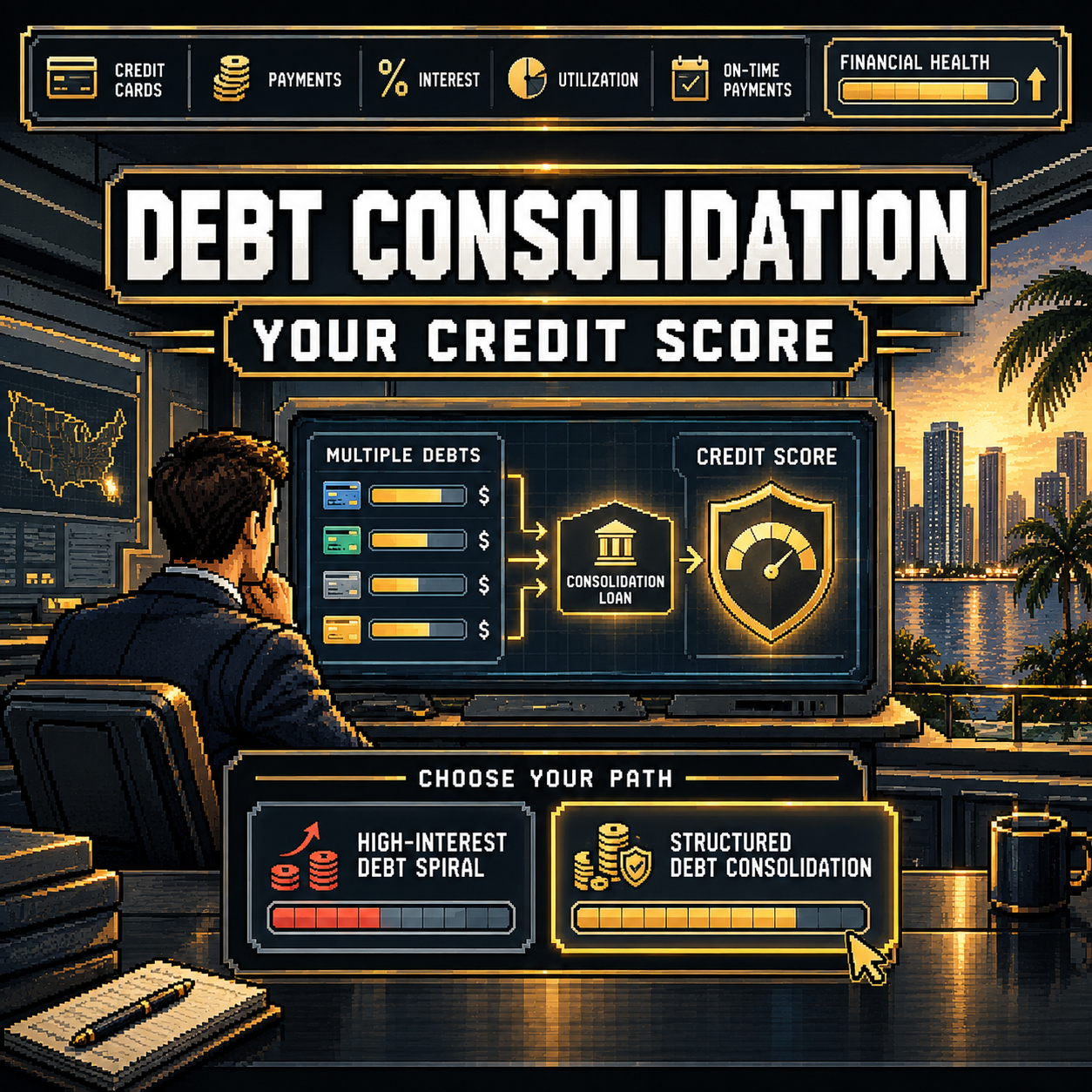
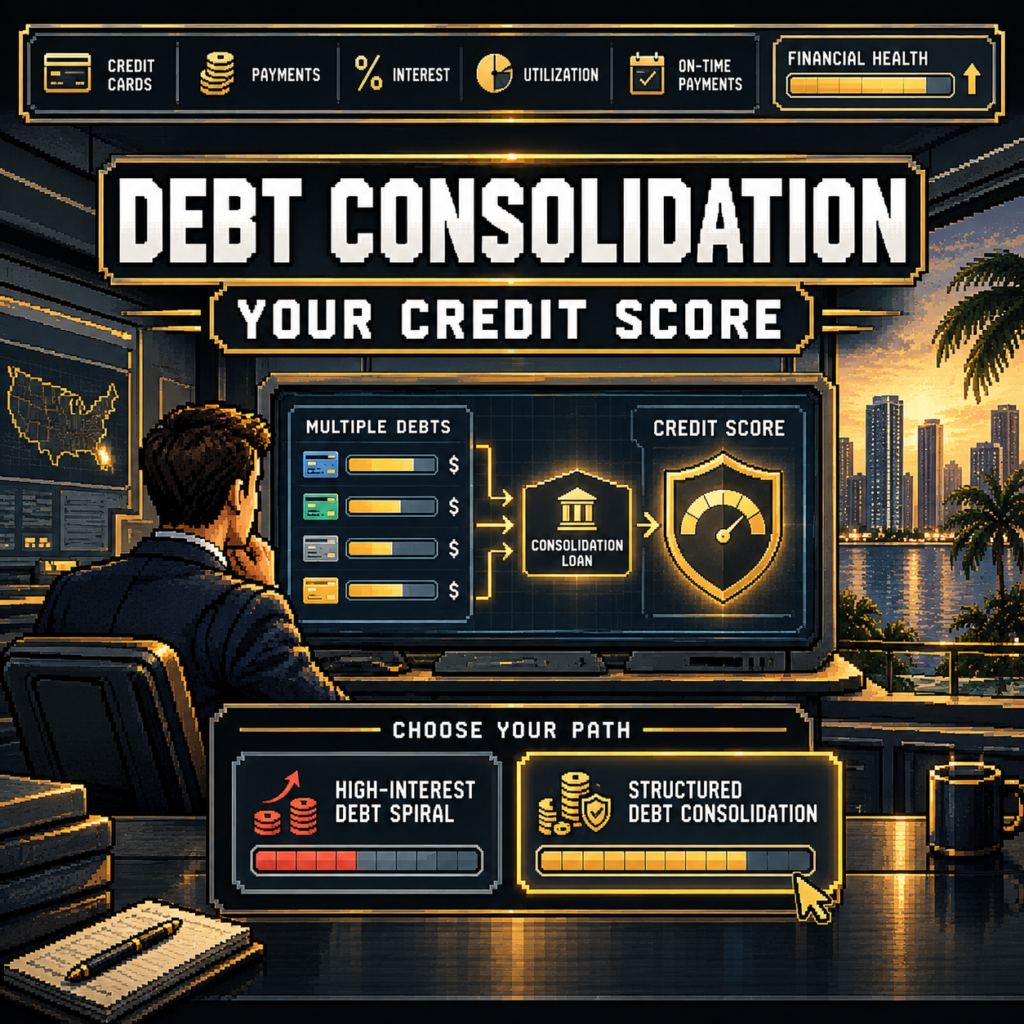
Managing multiple monthly bills with varying interest rates can quickly become overwhelming. For many consumers juggling credit cards, personal loans, and retail accounts, debt consolidation offers a potential path toward financial simplification. However, before applying for a new loan, it is critical to understand how debt consolidation loans and credit score fluctuations interact. Consolidating your debt can influence your credit profile in both positive and negative ways depending on how you manage the process.
What Is a Debt Consolidation Loan?
A debt consolidation loan is a single personal loan used to pay off multiple existing debts. Instead of tracking several monthly payments with different due dates and interest rates, you make one fixed monthly payment toward the new loan. Borrowers frequently consolidate high-interest credit cards, medical bills, or personal loans.
It is important to distinguish consolidation from debt settlement. While a consolidation loan pays your creditors in full, debt settlement involves negotiating with creditors to pay a lesser amount than what you owe, which can severely damage your credit history. With a consolidation loan, you still owe the full principal balance, but you secure a single structured repayment path.
The success of this strategy largely depends on securing a lower interest rate and managing the total repayment cost. If your new loan carries a higher annual percentage rate or extends the repayment term significantly, you could end up paying more over time.
How Debt Consolidation Can Affect Your Credit Score
Your credit score is a dynamic metric that responds to changes in your financial habits. Taking out a consolidation loan will impact your credit profile immediately, often causing a temporary dip before potential long-term improvements emerge.
Potential Benefits for Your Credit
When used responsibly, a debt consolidation loan can support your credit health through several key mechanisms. Paying off revolving credit card balances with an installment loan instantly reduces your credit utilization ratio, which is a major factor in scoring models like FICO and VantageScore. Furthermore, replacing multiple scattered due dates with a single predictable payment helps prevent missed deadlines, protecting your payment history. Consolidating debt can also diversify your credit mix by adding an installment loan alongside your existing revolving accounts. If you want to improve your credit score over time, lowering your utilization is often a powerful step.
Potential Short-Term Credit Score Risks
Despite the potential benefits, consolidation carries short-term risks. Applying for a new loan triggers a hard credit inquiry, which can cause a minor, temporary drop in your score. Opening a new account also lowers the average age of your credit history. Additionally, if you pay off your credit cards but continue to use them, you risk doubling your debt load, which can rapidly damage your credit health and financial stability.
When Debt Consolidation May Help Your Financial Situation
Debt consolidation works best for individuals facing specific financial conditions. It is typically most effective when you have stable income, multiple high-interest debts, a realistic repayment budget, and a consolidation loan that offers a lower interest rate than your current obligations.
To see how this works in practice, consider a hypothetical scenario. Suppose a borrower has $15,000 spread across three credit cards carrying an average interest rate of 22 percent. Their combined monthly minimum payments equal $500, making minimal progress on the principal. By securing a personal loan for $15,000 at a 12 percent interest rate with a fixed three-year term, their monthly payment becomes structured, and the lower rate reduces overall interest accumulation. This illustrative example highlights how lower rates can streamline repayment, though actual terms vary by lender and loan options.
When Debt Consolidation May Not Be the Best Option
Consolidation is not a universal fix for underlying spending habits. If the root cause of the debt is ongoing overspending, a new loan will only mask the problem. Furthermore, borrowers with lower credit scores may be offered high interest rates that eliminate any potential savings. Origination fees and closing costs can also add to the upfront expense. In some cases, structured credit counseling or a debt management plan through a reputable organization monitored by the Consumer Financial Protection Bureau] may be more appropriate.
How to Protect Your Credit Before and After Consolidating Debt
If you decide to move forward, strategic planning helps protect your credit standing. Review your credit reports for errors before applying. Compare offers from multiple lenders to find the best terms, and check whether prequalification uses a soft credit inquiry to avoid unnecessary hard pulls.
Once the loan is funded, set up automatic payments to ensure flawless on-time history. Avoid the temptation to close your old credit card accounts immediately, as closing them can shorten your credit history and spike your overall credit utilization ratio. Keep balances at zero or minimal levels while monitoring your credit profile closely.
What Debt Consolidation Means for Future Mortgage Goals
For many consumers, managing existing debt is a stepping stone toward homeownership. Lenders evaluating your mortgage qualification look carefully at your debt-to-income ratio, which compares your monthly debt obligations to your gross monthly income.
While a consolidation loan can lower your monthly minimum payments and make your debt-to-income ratio look more favorable on paper, underwriters will still examine the new loan balance and your overall credit history. Taking on a new personal loan just before applying for a mortgage can introduce variables that lenders must review. It is always wise to speak with a qualified mortgage professional to understand how your current debts and consolidation efforts affect your readiness to buy a home.
Final Thoughts
Debt consolidation is a financial tool rather than a complete cure for debt. Its success relies heavily on your repayment discipline, the total cost of the loan, and your ongoing credit management habits. If you are balancing multiple obligations and mapping out your financial future, taking a thoughtful approach is essential.
Ready to explore your options or discuss how your financial profile impacts your homeownership plans? Contact LevelMTG today to speak with an experienced professional and review your financing options with confidence.
Want personalized assistance? Visit our 'Contact Us' tab and leave your information with one of our experts.
About Us
A group of like-minded seasoned veterans came together to create a company with an employee-focused culture. A culture that values its members both personally and professionally and a company built on the idea that the customer comes first!
We do not share data with third parties for marketing/promotional purposes.
By submitting your phone number to Level Mortgage, you are authorizing a representative of our company to send you text messages and notifications. Message frequency may vary. Message/data rates apply. Reply STOP to unsubscribe to a message sent from us, and HELP to receive help.