Self-Employed? How Alternative Mortgage Options Could Help
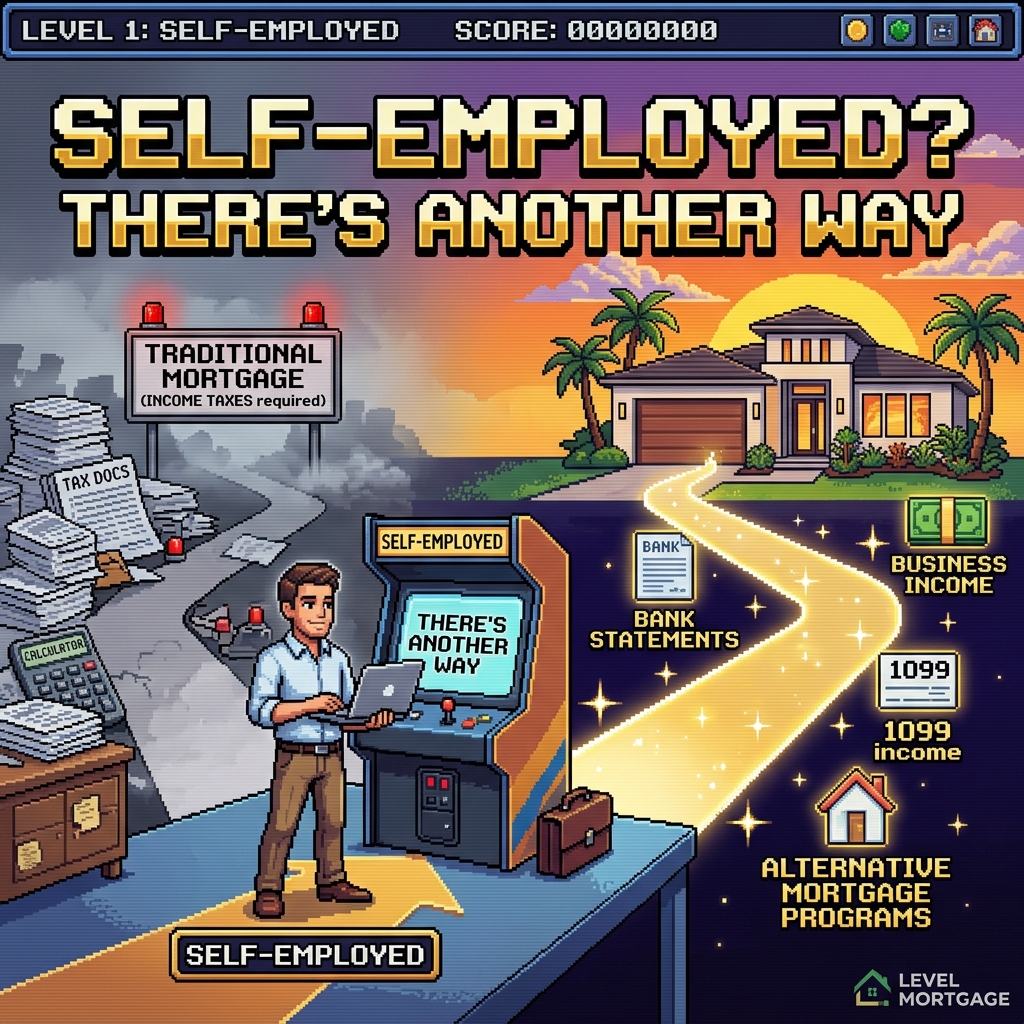
Running your own business, freelancing, or working as an independent contractor offers professional freedom. When it comes to buying a home, however, that same independence can introduce unexpected hurdles. Many self-employed professionals, entrepreneurs, and 1099 workers generate healthy cash flow and operate thriving businesses, yet they appear less financially qualified under traditional underwriting guidelines. This discrepancy happens because conventional mortgage processing relies heavily on taxable net income reported after business write-offs and deductions.
Mortgage lenders do not simply review the total funds entering a business bank account. They must calculate qualifying earnings according to strict agency rules and loan program parameters. Fortunately, being self-employed does not automatically prevent you from securing financing. Understanding alternative mortgage options can open a realistic path to homeownership.
Why Getting a Mortgage Can Be Different When You're Self-Employed
Traditional W-2 employees can easily verify earnings with a standard pay stub and a couple of tax forms. Self-employed borrowers, by contrast, navigate a more complex verification framework. Lenders evaluate multiple factors, including:
Personal and business tax returns
Schedule C net earnings
Corporate or partnership returns and K-1 schedules
Business write-offs and depreciation
Income fluctuations and seasonal revenue cycles
Commission structures and multiple 1099 income streams
Legitimate business deductions legally reduce your taxable income liability, which makes good financial sense for tax purposes. However, those same deductions can lower your net adjusted gross income on paper. This makes standard agency qualification challenging, even if your gross enterprise revenue is substantial. Navigating these complexities requires working closely with a knowledgeable lender who understands Mortgage Options for Self-Employed Borrowers.
How Traditional Mortgage Underwriting Evaluates Self-Employed Income
Tax Returns and Business Income
Conventional and government-backed loan programs typically require two consecutive years of personal and business tax documentation to establish a stable earnings baseline. Lenders examine schedules, corporate structures, and net profitability to determine your baseline qualifying power.
Income History and Stability
Underwriters look for consistency across multiple years. While steady or growing revenue is ideal, fluctuating earnings require deeper documentation to prove ongoing business stability.
Business Financial Health
Beyond individual earnings, lenders assess whether the underlying enterprise maintains sufficient liquidity and operational viability to continue generating reliable cash flow through varying economic cycles, as outlined by 2026 Self-Employed Mortgage Underwriting Guidelines.
Alternative Mortgage Options for Self-Employed Borrowers
When traditional tax returns do not reflect your true financial capacity, alternative mortgage programs provide flexible pathways to approval. These solutions are structured to evaluate borrowers using alternative documentation methods.
Bank Statement Loans
Bank statement programs are designed specifically for entrepreneurs and business owners whose deposits significantly outpace their net taxable income. Instead of tax returns, lenders analyze twelve to twenty-four months of personal or business bank statements to calculate monthly cash flow. Expense factors or percentage formulas are applied to gross deposits to determine qualifying income. While interest rates and down payment requirements can differ from conventional agency loans, these products provide a practical solution for heavy write-off scenarios.
1099 Mortgage Programs
Independent contractors, consultants, freelancers, and commission-based professionals who receive 1099 forms rather than W-2 statements can often qualify through dedicated 1099 loan products. These programs evaluate the stability of your contract earnings over a one-to-two-year period without requiring exhaustive corporate tax schedules.
Non-QM Mortgage Options
Non-QM stands for non-qualified mortgage. These alternative financing products cater to creditworthy borrowers who fall outside standard Consumer Financial Protection Bureau qualified mortgage guidelines. Non-QM options utilize alternative underwriting approaches, such as asset depletion, profit-and-loss statements, or specialized debt-to-income calculations. Buyers should note that Non-QM financing typically features different terms, pricing structures, and down payment minimums compared to conventional loans.
Other Financing Paths
Depending on your objectives, other specialized options may apply. Asset-based qualification programs evaluate liquid reserves and high-value portfolios rather than active employment earnings. For real estate investors, Debt Service Coverage Ratio loans evaluate the income generated by an investment property rather than personal borrower earnings. Keep in mind that investment property financing cannot be utilized to purchase a primary residence.
What Does Your Lender Look At Besides Income?
Income documentation represents only one component of mortgage underwriting. Lenders evaluate your complete financial profile to determine overall risk. Key elements include:
Credit score history and payment performance
Debt-to-income ratio limits
Down payment funds and liquid reserves
Business tenure and industry stability
Property type and intended occupancy
Two self-employed business owners generating identical gross revenues can qualify for entirely different loan amounts depending on their existing debt obligations, credit profiles, and available cash reserves.
How Florida's 2026 Housing Market Affects Self-Employed Buyers
Economic conditions play a major role in how buyers approach purchasing a home. According to statewide data from Florida Realtors, the statewide median sales price for existing single-family homes reached $425,000 in the second quarter of 2026, representing a 2.4 percent increase year-over-year.Meanwhile, existing condo-townhouse sales rose 9 percent during the same quarterly period, reflecting steady buyer engagement even as borrowing costs hovered around 6.5 percent. Additional context on inventory shifts and regional pricing trends can be reviewed via 2026 Florida Housing Market Data.
For self-employed buyers navigating this dynamic market, understanding your financing capacity before touring properties is essential. Establishing a realistic purchasing budget early prevents wasted time and ensures you can move quickly when the right property becomes available.
What Documents Should Self-Employed Borrowers Prepare?
Preparation streamlines the mortgage application process. Depending on the chosen loan program, self-employed applicants should gather:
Personal tax returns with all schedules
Business tax returns, including 1120, 1120-S, or 1065 forms and K-1 schedules where applicable
Business or personal bank statements covering twelve to twenty-four months
Year-to-date profit and loss statements
Proof of business existence, such as a state business license, articles of incorporation, or a CPA verification letter
Asset and investment statements for down payment and reserve verification
Exact documentation checklists vary significantly by lender and loan program, making early consultation vital. Reviewing 2026 Mortgage Lending Requirements can help clarify general industry documentation expectations.
When Does an Alternative Mortgage Make Sense?
Exploring alternative financing is particularly useful if your business generates robust revenue and healthy cash flow, but your tax returns reflect minimal taxable income due to legitimate deductions. It also serves commission-dominant professionals and growing enterprises experiencing rapid expansion.
However, if your tax returns comfortably support the purchase price, conventional financing may offer lower baseline interest rates. Borrowers should always compare overall costs, including annual percentage rates, origination fees, down payment terms, and monthly obligations across multiple programs.
The Bottom Line for Self-Employed Florida Buyers
Being self-employed does not mean you cannot qualify for a home loan. The key is understanding how your business earnings can be documented and selecting a financing program that fits your financial profile.
If you are a self-employed professional in Florida wondering how to navigate the homebuying process, connect with the team at Level Mortgage today. Our experienced mortgage advisors can help you review your financial documentation, explore alternative financing solutions, and determine which mortgage strategy best supports your long-term goals.
Want personalized assistance? Visit our 'Contact Us' tab and leave your information with one of our experts.
About Us
A group of like-minded seasoned veterans came together to create a company with an employee-focused culture. A culture that values its members both personally and professionally and a company built on the idea that the customer comes first!
We do not share data with third parties for marketing/promotional purposes.
By submitting your phone number to Level Mortgage, you are authorizing a representative of our company to send you text messages and notifications. Message frequency may vary. Message/data rates apply. Reply STOP to unsubscribe to a message sent from us, and HELP to receive help.