For many renters, the dream of homeownership often collides with the reality of saving for a down payment, managing credit scores, or navigating a competitive housing market. In the 2026 economic landscape, where home prices and interest rates remain key discussion points for prospective buyers, alternative paths to homeownership frequently attract attention. Among these alternatives is the lease option, commonly discussed under the broader umbrella of rent-to-own arrangements.
Before signing any agreement, it is essential to understand how lease options work, how they differ from traditional purchases, and whether they genuinely solve a financing challenge or simply postpone the mortgage qualification process.
What Is a Lease Option?
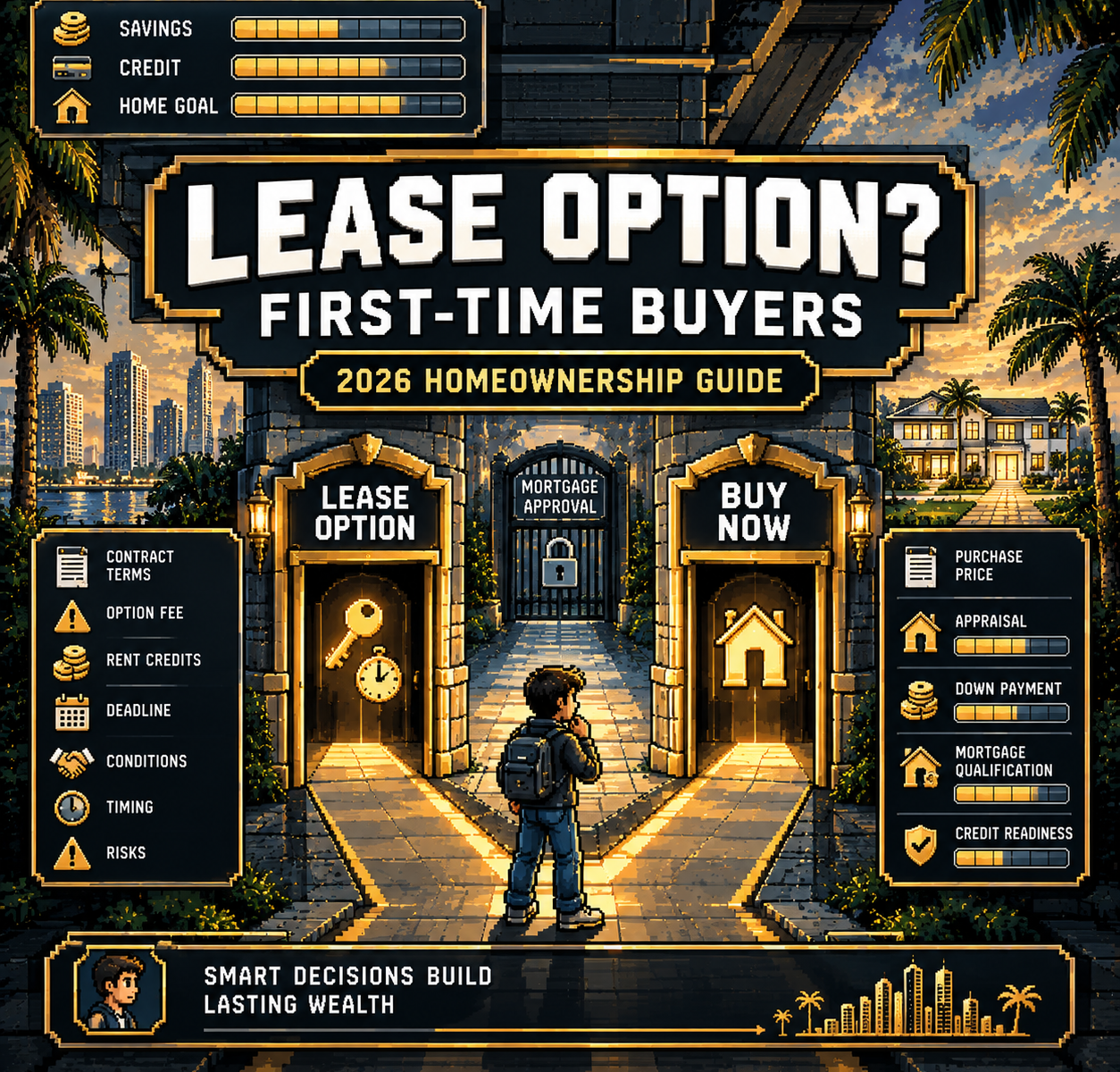
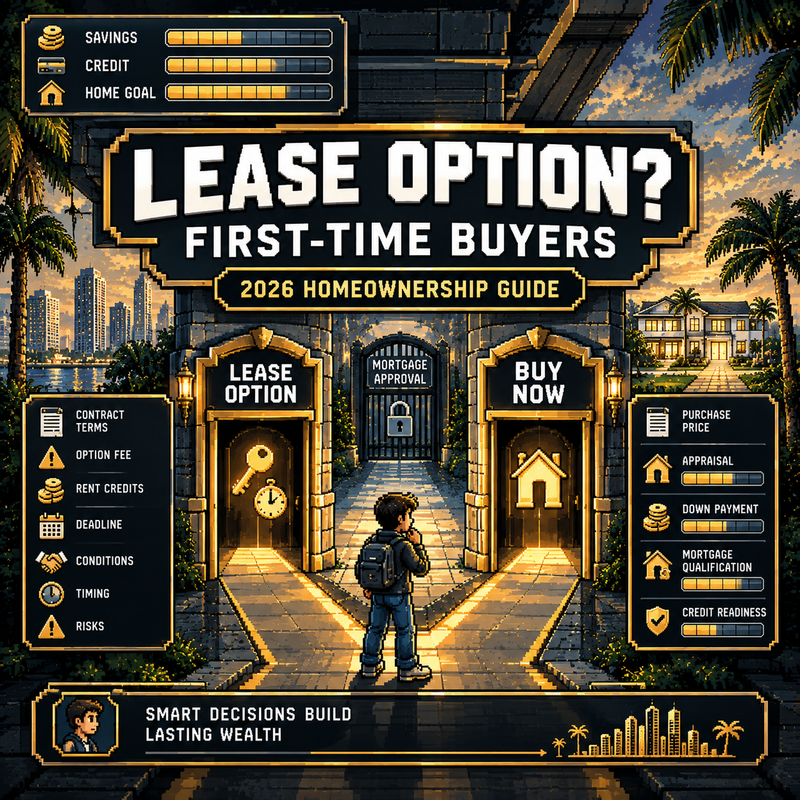
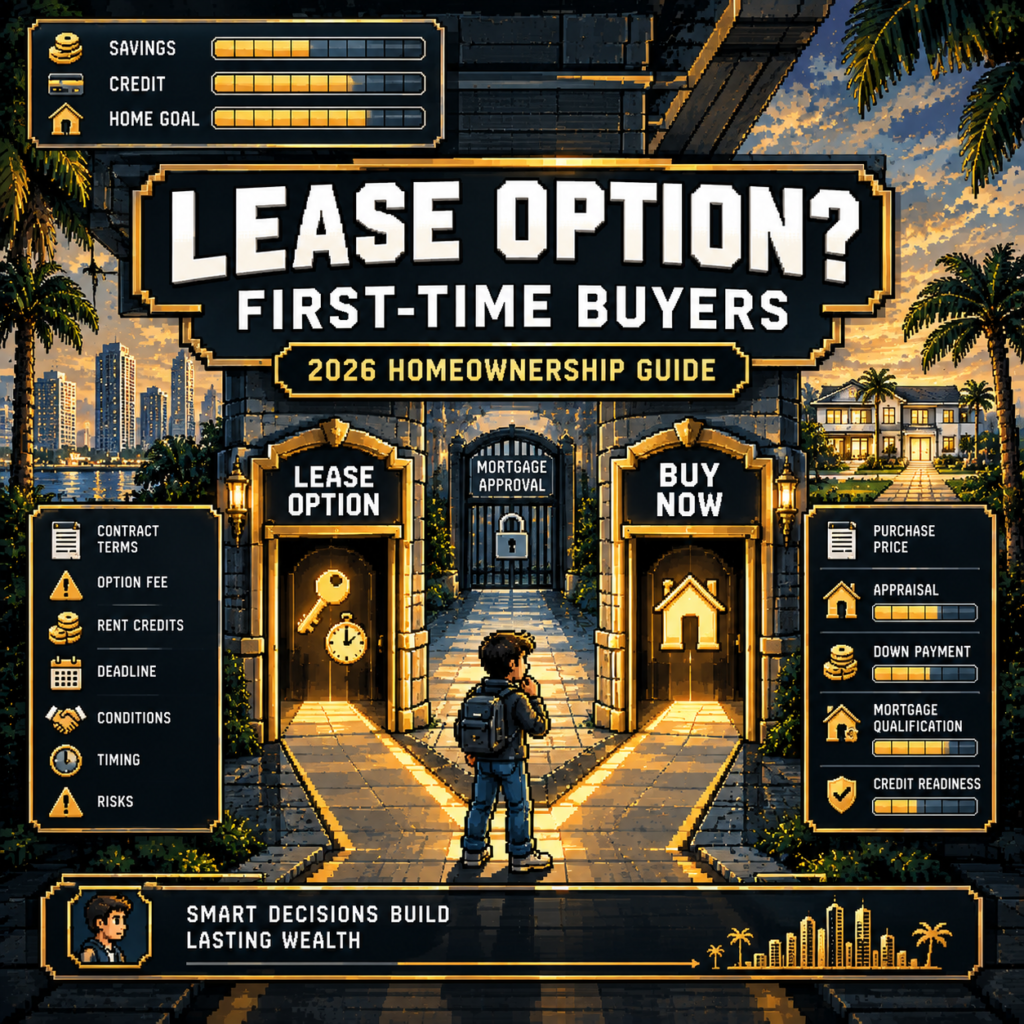
A lease option is a dual agreement consisting of a standard residential lease combined with an option contract. This structure gives the tenant the legal right, but not the obligation, to purchase the property at a predetermined price within a specified timeframe, usually one to three years.
Lease Option vs. Lease Purchase
It is vital to distinguish between a lease option and a lease purchase. Under a lease option, the buyer holds the choice to purchase or walk away when the lease term expires, though they typically forfeit any upfront option fee if they choose not to buy. Conversely, a lease purchase agreement often creates a binding legal obligation for the tenant to buy the property at the end of the term.
How Rent-to-Own Arrangements Work
Rent-to-own is a broad consumer term rather than a standardized financial product. Because every contract is privately negotiated between a buyer and a seller, terms can vary dramatically. Because legal and financial implications are significant, buyers should always have their agreement reviewed by an appropriately qualified real estate attorney before signing. Consulting Florida residential lease and tenancy regulations can also provide valuable context regarding state-specific tenant rights.
Why a Lease Option May Appeal to First-Time Buyers
A lease option can be an attractive strategy for specific buyers who need time rather than an immediate purchase. Potential advantages include:
Time to build savings for a down payment and closing costs.
Opportunity to improve credit scores through consistent on-time rental payments.
The ability to lock in a purchase price in a rising market.
Familiarity with a specific neighborhood before committing to permanent ownership.
However, these potential benefits depend entirely on the specific contract terms and the buyer’s financial discipline.
The Potential Risks of a Lease Option
While lease options offer flexibility, they also carry distinct risks that every first-time buyer must evaluate carefully.
Option Fees and Rent Credits
Buyers usually pay an upfront option fee, which is often non-refundable. Additionally, a portion of monthly rent payments might be designated as a rent credit toward the purchase price. However, buyers must never assume these credits will automatically satisfy lender requirements. Under current mortgage qualification standards, lenders enforce strict documentation rules regarding how option fees and rent credits are sourced and applied.
What Happens If You Cannot Qualify for a Mortgage?
A lease option does not eliminate the need for a mortgage. If the buyer cannot secure financing when the option period expires, they typically lose their option fee, accumulated rent credits, and the home itself. Being approved for a lease option by a private landlord is entirely different from meeting formal mortgage underwriting guidelines.
What If the Home Does Not Appraise at the Agreed Price?
If the agreed purchase price exceeds the home value determined by a future appraisal, securing a mortgage for the full contract amount becomes difficult. Buyers may need to bring additional cash to the closing table to cover the difference.
What First-Time Buyers Should Know About Financing
Securing a lease option is not a substitute for mortgage pre-approval. When the option period ends, the buyer must qualify for a traditional home loan based on their credit history, debt-to-income ratio, employment stability, and verified assets. Reviewing first-time homebuyer loan options early in the process helps buyers understand what lenders expect. Utilizing mortgage calculators can also clarify how future monthly obligations will look. If credit improvement is needed, exploring structured credit preparation guideeresources provides a solid foundation.
Lease Options in the 2026 Housing Market
In the 2026 housing market, affordability pressures and fluctuating inventory prompt some buyers to explore alternative purchasing structures. While 2026 first-time homebuyer housing trends indicate that traditional financing remains the primary path to ownership, lease options occasionally emerge when buyers need extra time to stabilize their financial profiles.
Questions to Ask Before Signing a Lease Option
Before entering into any rent-to-own agreement, buyers should investigate several critical questions:
What is the exact purchase price, and how was it determined?
Is the option fee refundable under any circumstances?
How much of the monthly rent is credited toward the purchase price?
Who is responsible for property taxes, insurance, and major repairs during the lease?
What specific financing milestones must be achieved before closing?
Is the agreement legally recorded to protect the buyer’s interest?
Is a Lease Option Right for You?
Deciding whether to pursue a lease option depends on your current financial readiness. If you have stable income, a clear plan to improve your credit, and need a structured timeline to finalize your savings, a lease option may be worth investigating with professional guidance. If you already meet credit and savings requirements, a traditional purchase often provides greater transparency and market flexibility.
Final Takeaway
A lease option is a complex financial and legal tool rather than a guaranteed shortcut to homeownership. Understanding contract terms, recognizing potential risks, and preparing for future mortgage qualification are essential steps for any prospective buyer. If you want to evaluate your purchasing power or explore your financing options, contact LevelMTG today to speak with an experienced mortgage professional.
Want personalized assistance? Visit our 'Contact Us' tab and leave your information with one of our experts.
About Us
A group of like-minded seasoned veterans came together to create a company with an employee-focused culture. A culture that values its members both personally and professionally and a company built on the idea that the customer comes first!
We do not share data with third parties for marketing/promotional purposes.
By submitting your phone number to Level Mortgage, you are authorizing a representative of our company to send you text messages and notifications. Message frequency may vary. Message/data rates apply. Reply STOP to unsubscribe to a message sent from us, and HELP to receive help.
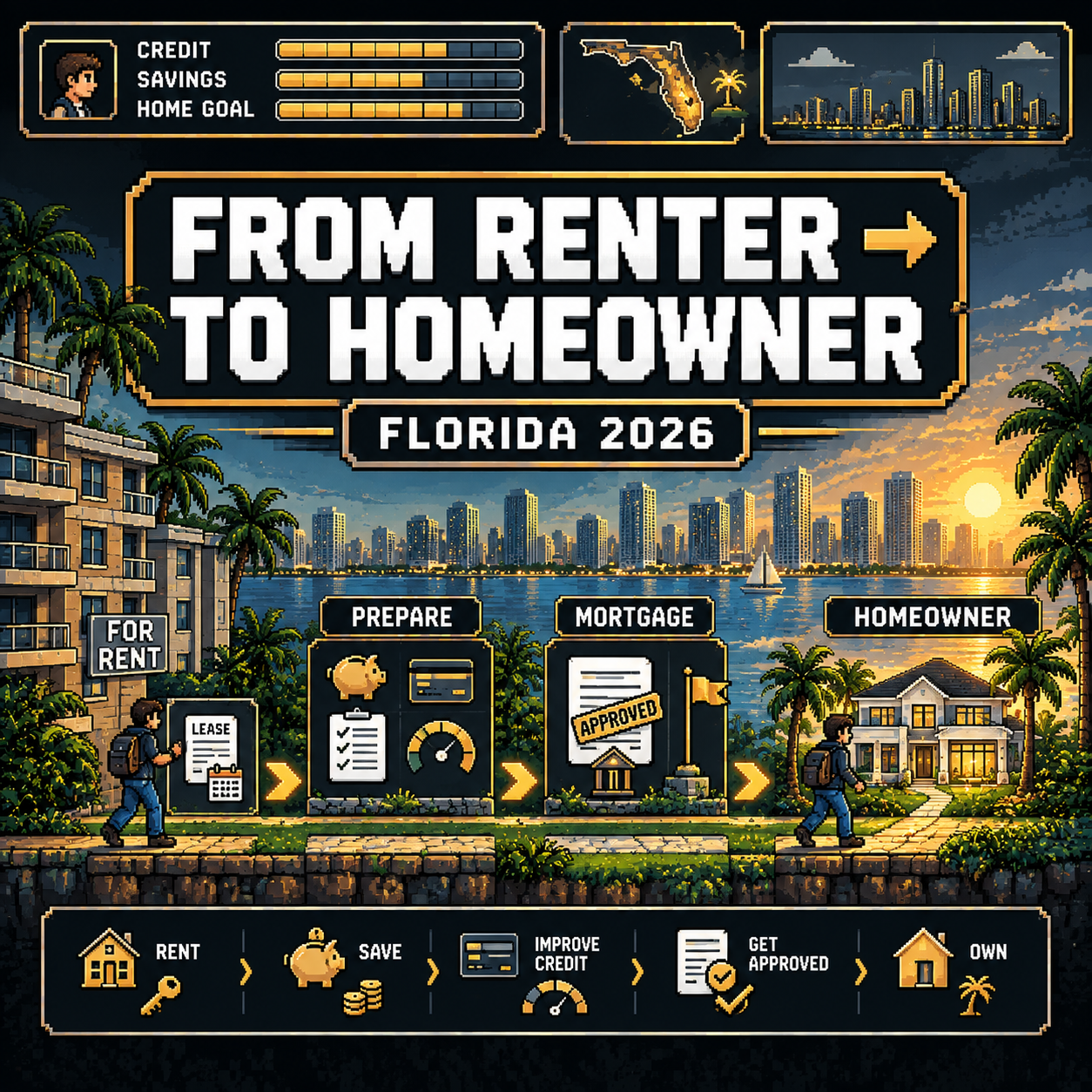
From Renter to Homeowner: Mastering the Lease Transition in Florida (2026)
Deciding whether to sign another lease or take the leap into homeownership is one of the most significant financial choices a renter can face. For many Florida residents, the arrival of a lease renewal notice serves as a natural checkpoint. Navigating this transition requires strategic timing, careful financial evaluation, and an understanding of current market dynamics. By preparing ahead of time, renters can position themselves to secure favorable financing and successfully step into homeownership.
When Should Renters Start Planning to Buy a Home?
Start Before Your Lease Renewal Date
Waiting until thirty days before your lease expires to think about buying a home is a recipe for unnecessary stress. Landlords typically require sixty to ninety days of notice before a lease ends. If you intend to transition from renting to owning, you should begin mapping out your strategy at least six months prior to your lease expiration date. This window gives you adequate time to review your credit profile, build necessary savings, and speak with a lending professional without feeling rushed by a looming moving deadline.
Why Timing Matters for Mortgage Preparation
Mortgage underwriting relies heavily on verified financial history. Lenders look for steady income, consistent employment records, and clean credit reports. Giving yourself a multi-month runway allows you to resolve minor credit report errors, pay down revolving balances, and optimize your debt-to-income ratio. Proper timing ensures that when you find the right property, your financial profile is completely mortgage-ready.
What Renters Need to Do Before Applying for a Mortgage
Review Your Credit
Your credit score directly influences the mortgage interest rate you receive. Most conventional loan programs require a minimum credit score of 620, while government-backed options like FHA loans may accept scores starting at 580 with a three and a half percent down payment. Reviewing your credit reports early allows you to address any inaccuracies and take steps to improve your standing before submitting formal loan applications.
Calculate Your Debt-to-Income Ratio
Mortgage lenders examine your debt-to-income ratio to determine how much housing payment you can comfortably manage. This ratio compares your monthly debt obligations, including car loans, student loans, and credit card minimums, to your gross monthly income. Keeping your debt-to-income ratio within acceptable lender thresholds is essential for successful first-time homebuyer mortgage options.
Build Your Down Payment and Closing-Cost Funds
Purchasing a home involves more than just a down payment. Buyers must also account for closing costs, which typically range from two to five percent of the purchase price. Accumulating a dedicated savings buffer well in advance ensures you are fully prepared for these upfront financial obligations.
Understanding the Florida Homebuying Market in 2026
Home Prices and Inventory
The Florida real estate landscape continues to experience a healthy rebalancing phase. Recent figures show that the median single-family home price in Florida hovers around $415,000, reflecting stable growth compared to previous years according to 2026 Florida housing market data. Meanwhile, housing inventory has adjusted, creating a more balanced environment where buyers have clearer opportunities to negotiate and find properties that align with their long-term goals.
Mortgage Rates and Affordability
Interest rates remain a central consideration for buyers navigating today’s economic climate. Average 30-year fixed mortgage rates hover near 6.95 percent, while 15-year fixed options average closer to 6.28 percent. Because mortgage rates directly impact monthly buying power, prospective homeowners should evaluate their budget carefully and explore various Florida mortgage programs to optimize their monthly payment structure.
From Rent Payment to Mortgage Payment
Transitioning renters often assume that moving from a $2,500 monthly rent payment means they can easily afford a $2,500 mortgage payment. However, a monthly mortgage payment comprises several distinct components. Beyond principal and interest, homeowners must budget for property taxes, homeowners insurance, private mortgage insurance if putting down less than twenty percent, and potential homeowners association or condominium fees. Evaluating the complete monthly housing cost ensures there are no surprises after closing.
Florida Programs That May Help First-Time Buyers
First-time buyers in the Sunshine State have access to several specialized support initiatives. For example, the Florida Hometown Heroes Program provides eligible full-time workers with up to $35,000 in down payment and closing cost assistance through a zero-interest, 30-year deferred second mortgage. Exploring these state and local resources with a knowledgeable professional can significantly reduce your upfront cash requirements.
Your Lease-to-Homeownership Timeline
A structured timeline keeps your transition organized:
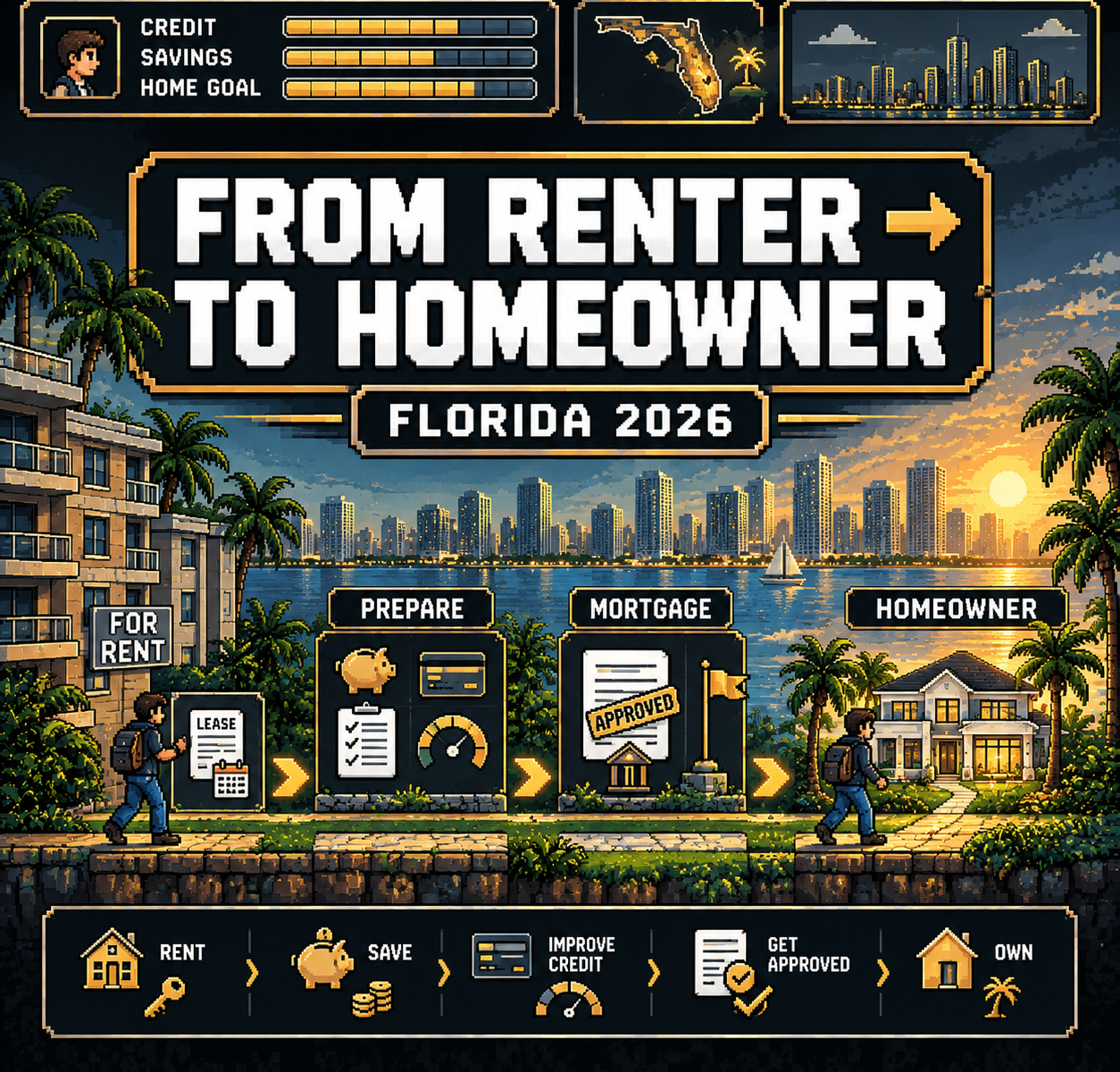
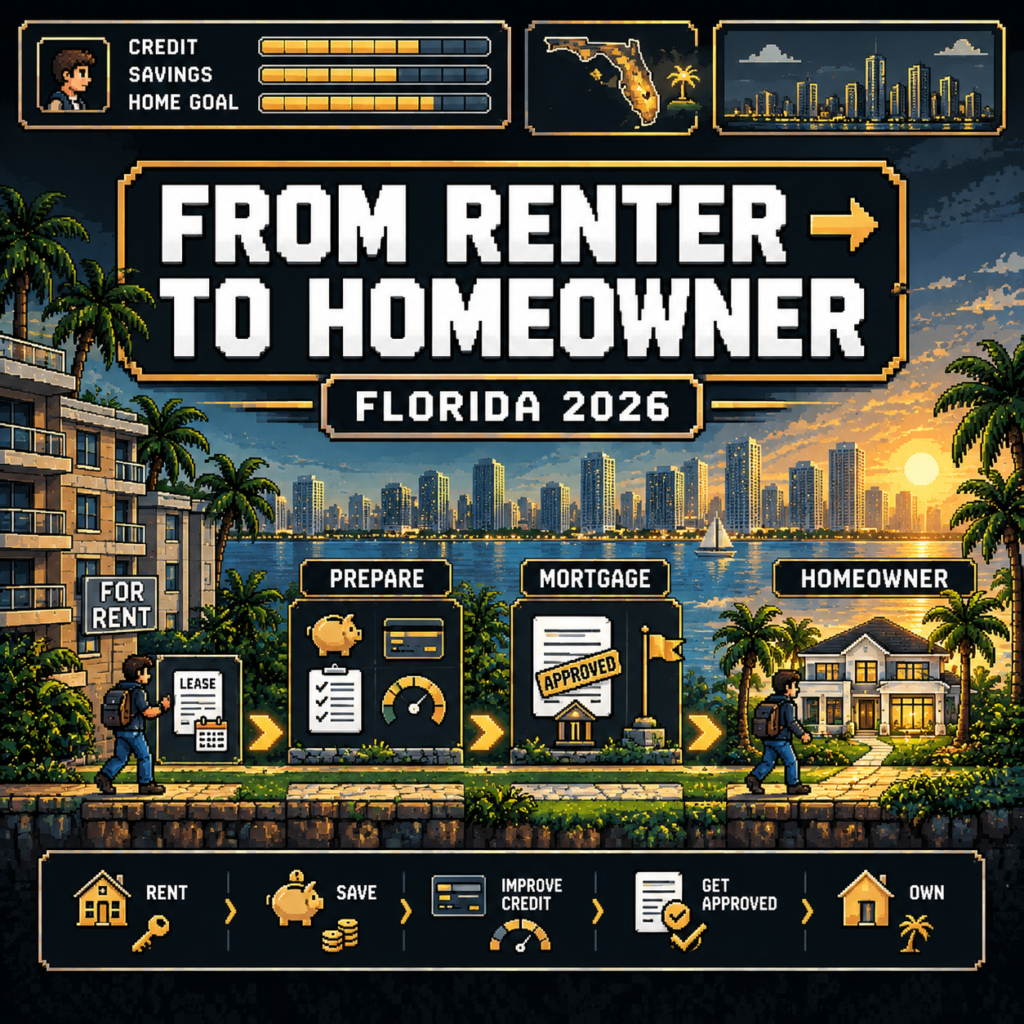
Six to twelve months before lease expiration: Review credit reports, pay down revolving balances, build savings, and establish a realistic purchase budget.
Three to six months before lease expiration: Consult with a mortgage specialist, explore financing options, and secure mortgage pre-approval.
One to three months before lease expiration: Begin actively touring homes, coordinate your purchase closing date with your lease end, and finalize your loan documents.
Should You Renew Your Lease or Prepare to Buy?
Deciding between another year of renting and buying a home depends on a careful assessment of your personal circumstances. Evaluate how long you plan to stay in the area, your current savings, job stability, and local housing inventory. If you value long-term stability, building equity, and customizing your living space, preparing to buy is a compelling path forward.
Final Takeaway
Mastering the lease transition from renting to owning requires foresight, financial preparation, and expert guidance. By understanding your credit, evaluating total housing costs, and exploring available assistance programs, you can approach your lease expiration with confidence. To learn more about your financing options or to start your credit and mortgage preparation, contact LevelMTG today to speak with an experienced mortgage professional.
Want personalized assistance? Visit our 'Contact Us' tab and leave your information with one of our experts.
About Us
A group of like-minded seasoned veterans came together to create a company with an employee-focused culture. A culture that values its members both personally and professionally and a company built on the idea that the customer comes first!
We do not share data with third parties for marketing/promotional purposes.
By submitting your phone number to Level Mortgage, you are authorizing a representative of our company to send you text messages and notifications. Message frequency may vary. Message/data rates apply. Reply STOP to unsubscribe to a message sent from us, and HELP to receive help.
Managing multiple monthly bills with varying interest rates can quickly become overwhelming. For many consumers juggling credit cards, personal loans, and retail accounts, debt consolidation offers a potential path toward financial simplification. However, before applying for a new loan, it is critical to understand how debt consolidation loans and credit score fluctuations interact. Consolidating your debt can influence your credit profile in both positive and negative ways depending on how you manage the process.
What Is a Debt Consolidation Loan?
A debt consolidation loan is a single personal loan used to pay off multiple existing debts. Instead of tracking several monthly payments with different due dates and interest rates, you make one fixed monthly payment toward the new loan. Borrowers frequently consolidate high-interest credit cards, medical bills, or personal loans.
It is important to distinguish consolidation from debt settlement. While a consolidation loan pays your creditors in full, debt settlement involves negotiating with creditors to pay a lesser amount than what you owe, which can severely damage your credit history. With a consolidation loan, you still owe the full principal balance, but you secure a single structured repayment path.
The success of this strategy largely depends on securing a lower interest rate and managing the total repayment cost. If your new loan carries a higher annual percentage rate or extends the repayment term significantly, you could end up paying more over time.
How Debt Consolidation Can Affect Your Credit Score
Your credit score is a dynamic metric that responds to changes in your financial habits. Taking out a consolidation loan will impact your credit profile immediately, often causing a temporary dip before potential long-term improvements emerge.
Potential Benefits for Your Credit
When used responsibly, a debt consolidation loan can support your credit health through several key mechanisms. Paying off revolving credit card balances with an installment loan instantly reduces your credit utilization ratio, which is a major factor in scoring models like FICO and VantageScore. Furthermore, replacing multiple scattered due dates with a single predictable payment helps prevent missed deadlines, protecting your payment history. Consolidating debt can also diversify your credit mix by adding an installment loan alongside your existing revolving accounts. If you want to improve your credit score over time, lowering your utilization is often a powerful step.
Potential Short-Term Credit Score Risks
Despite the potential benefits, consolidation carries short-term risks. Applying for a new loan triggers a hard credit inquiry, which can cause a minor, temporary drop in your score. Opening a new account also lowers the average age of your credit history. Additionally, if you pay off your credit cards but continue to use them, you risk doubling your debt load, which can rapidly damage your credit health and financial stability.
When Debt Consolidation May Help Your Financial Situation
Debt consolidation works best for individuals facing specific financial conditions. It is typically most effective when you have stable income, multiple high-interest debts, a realistic repayment budget, and a consolidation loan that offers a lower interest rate than your current obligations.
To see how this works in practice, consider a hypothetical scenario. Suppose a borrower has $15,000 spread across three credit cards carrying an average interest rate of 22 percent. Their combined monthly minimum payments equal $500, making minimal progress on the principal. By securing a personal loan for $15,000 at a 12 percent interest rate with a fixed three-year term, their monthly payment becomes structured, and the lower rate reduces overall interest accumulation. This illustrative example highlights how lower rates can streamline repayment, though actual terms vary by lender and loan options.
When Debt Consolidation May Not Be the Best Option
Consolidation is not a universal fix for underlying spending habits. If the root cause of the debt is ongoing overspending, a new loan will only mask the problem. Furthermore, borrowers with lower credit scores may be offered high interest rates that eliminate any potential savings. Origination fees and closing costs can also add to the upfront expense. In some cases, structured credit counseling or a debt management plan through a reputable organization monitored by the Consumer Financial Protection Bureau] may be more appropriate.
How to Protect Your Credit Before and After Consolidating Debt
If you decide to move forward, strategic planning helps protect your credit standing. Review your credit reports for errors before applying. Compare offers from multiple lenders to find the best terms, and check whether prequalification uses a soft credit inquiry to avoid unnecessary hard pulls.
Once the loan is funded, set up automatic payments to ensure flawless on-time history. Avoid the temptation to close your old credit card accounts immediately, as closing them can shorten your credit history and spike your overall credit utilization ratio. Keep balances at zero or minimal levels while monitoring your credit profile closely.
What Debt Consolidation Means for Future Mortgage Goals
For many consumers, managing existing debt is a stepping stone toward homeownership. Lenders evaluating your mortgage qualification look carefully at your debt-to-income ratio, which compares your monthly debt obligations to your gross monthly income.
While a consolidation loan can lower your monthly minimum payments and make your debt-to-income ratio look more favorable on paper, underwriters will still examine the new loan balance and your overall credit history. Taking on a new personal loan just before applying for a mortgage can introduce variables that lenders must review. It is always wise to speak with a qualified mortgage professional to understand how your current debts and consolidation efforts affect your readiness to buy a home.
Final Thoughts
Debt consolidation is a financial tool rather than a complete cure for debt. Its success relies heavily on your repayment discipline, the total cost of the loan, and your ongoing credit management habits. If you are balancing multiple obligations and mapping out your financial future, taking a thoughtful approach is essential.
Ready to explore your options or discuss how your financial profile impacts your homeownership plans? Contact LevelMTG today to speak with an experienced professional and review your financing options with confidence.
Want personalized assistance? Visit our 'Contact Us' tab and leave your information with one of our experts.
About Us
A group of like-minded seasoned veterans came together to create a company with an employee-focused culture. A culture that values its members both personally and professionally and a company built on the idea that the customer comes first!
We do not share data with third parties for marketing/promotional purposes.
By submitting your phone number to Level Mortgage, you are authorizing a representative of our company to send you text messages and notifications. Message frequency may vary. Message/data rates apply. Reply STOP to unsubscribe to a message sent from us, and HELP to receive help.
Home Buying Advantages for Federal Employees in Florida
Purchasing a home is a major milestone, and for public servants working within the federal government, navigating the housing market requires a clear understanding of financial strengths and available loan structures. Whether you are stationed in Miami, Orlando, Tampa, Jacksonville, or Tallahassee, Florida offers a dynamic real estate landscape. Understanding how your career intersects with mortgage underwriting can open doors to competitive financing and valuable assistance programs.
Do Federal Employees Get Special Mortgage Benefits?
A common misconception is that federal civilian employment automatically unlocks a proprietary mortgage product designed exclusively for government workers. In reality, federal employment does not create a standalone civilian mortgage program. Instead, federal employees benefit from stable employment history, predictable income documentation, and full eligibility for standard and government-backed loan programs. Furthermore, depending on your specific job classification, veteran status, and location, you may qualify for state-level assistance initiatives or specialized public service programs.
Why Federal Employment Can Strengthen a Mortgage Application
When mortgage underwriters evaluate a file, they look closely at stability, capacity, and capital. Federal employment offers distinct advantages in these categories.
Consistent pay history and stable career structures make it easier for lenders to verify monthly income and project long-term repayment capacity. Documented earnings, regular step increases, and robust federal benefits contribute to a reliable financial profile. Additionally, while lenders do not expect borrowers to liquidate retirement accounts, having established assets and Thrift Savings Plan accounts can strengthen an overall financial picture.
Federal employees frequently experience relocations due to agency transfers, promotions, or new assignments. Managing a relocation involves weighing whether to sell an existing property, rent it out, or purchase a new primary residence in Florida. Evaluating these choices carefully ensures that your real estate decisions align with your broader financial goals.
Mortgage Options for Federal Employees in Florida
Federal workers can choose from several core financing options depending on their financial profile, down payment resources, and property location.
Conventional Loans
Conventional financing remains a popular choice for buyers with strong credit scores and established savings. These loans often feature competitive interest rates and flexible down payment options starting as low as three to five percent for qualified borrowers. Private mortgage insurance applies when putting down less than twenty percent, but it can be removed once sufficient equity is achieved.
FHA Loans
Backed by the Federal Housing Administration, FHA loans provide flexible credit guidelines and accessible down payment structures. Borrowers with a credit score of 580 or higher can qualify for a minimum down payment of 3.5 percent.For 2026, single-family FHA loan limits in Florida start at a baseline of $541,287 and scale higher in designated high-cost counties.
VA Loans
It is important to note that VA loans are not granted simply because someone works as a civilian federal employee. They are reserved for eligible veterans, active-duty servicemembers, and qualifying military personnel. For federal workers who also maintain military service backgrounds, VA financing offers exceptional benefits, including zero percent down payment requirements and the elimination of monthly private mortgage insurance.
USDA Loans
USDA loans offer zero percent down payment financing for eligible properties located in designated rural and suburban areas throughout Florida. Borrowers must meet specific household income limits and ensure the property meets geographic eligibility rules.
Can Federal Employees Qualify for Florida Hometown Heroes?
Many public sector workers wonder if they can access state assistance programs such as the Florida Hometown Heroes Program, managed through the Florida Housing Finance Corporation.While the program is open to a wide range of essential professions, eligibility is not universal for every federal worker.
To qualify under current guidelines, at least one occupying borrower must work full-time for a Florida-based employer and meet specific occupation criteria.Additionally, applicants must be first-time homebuyers who have not owned a primary residence in the past three years, unless exempt as a veteran or purchasing in a federally designated target area.Eligible participants can receive up to five percent of the first mortgage amount, capped at $35,000 with a $10,000 minimum, delivered as a zero percent interest, non-amortizing second Florida Down Payment Assistance program.
Other Programs Worth Exploring
Beyond state assistance, federal employees can explore standard mortgage products and regional grants. Lenders often pair conventional or government-backed loans with First-Time Homebuyer Programsto minimize upfront costs. While profession-based initiatives like Good Neighbor Next Door offer unique opportunities, they require strict adherence to specific job categories and designated revitalization areas rather than general federal employment status.
Documents Federal Employees Should Prepare
Gathering the right documentation early streamlines the Mortgage Pre-Approval process. Borrowers should prepare:
Government-issued identification
Recent pay stubs covering at least thirty days
W-2 forms from the past two years
Federal employment verification records, such as standard SF-50 forms where applicable
Bank statements for all asset and checking accounts
Federal tax returns if self-employed income or complex deductions apply
Mistakes to Avoid Before Applying
Navigating the mortgage market requires careful planning. Avoid assuming that federal employment guarantees instant approval without credit checks. Do not skip comparing multiple loan programs to find the best fit. Avoid making large credit purchases, opening new lines of credit, or changing jobs during the underwriting process, as these actions can disrupt your approval status. Always factor in ongoing costs like property taxes, homeowners insurance, and maintenance when determining your budget.
Final Thoughts
Purchasing a home in Florida is an exciting step, and federal employees possess strong employment credentials that appeal to lenders. By evaluating your financial position, comparing loan options, and working with an experienced mortgage strategist, you can navigate the market with confidence.
Take the next step in your homeownership journey. Connect with a qualified mortgage expert at Level Mortgage today to review your eligibility, compare loan programs, and explore available financing strategies tailored to your goals.
Want personalized assistance? Visit our 'Contact Us' tab and leave your information with one of our experts.
About Us
A group of like-minded seasoned veterans came together to create a company with an employee-focused culture. A culture that values its members both personally and professionally and a company built on the idea that the customer comes first!
We do not share data with third parties for marketing/promotional purposes.
By submitting your phone number to Level Mortgage, you are authorizing a representative of our company to send you text messages and notifications. Message frequency may vary. Message/data rates apply. Reply STOP to unsubscribe to a message sent from us, and HELP to receive help.
Ready to Buy a Home but Worried About a Down Payment?
Many prospective buyers assume that purchasing a property requires saving a massive cash pile. This belief stops many renters from exploring their options. Saving twenty percent of a home purchase price can take years or even decades in a competitive housing market. Fortunately, modern lending standards and state-level programs mean that a large cash savings account is no longer a strict prerequisite for homeownership.
The amount of cash required to buy a home depends on several variables. Your chosen loan program, credit profile, property type, occupancy plans, and household income all shape your initial capital needs. Evaluating your total cash-to-close requirement rather than focusing solely on the down payment provides a clearer picture of your readiness.
Do You Really Need 20% Down to Buy a Home?
The traditional rule suggesting a twenty percent down payment is a helpful savings benchmark, but it is rarely a mandatory requirement. Putting down twenty percent eliminates private mortgage insurance on conventional loans, but many buyers choose lower down payments to preserve their savings.
Lower down payments result in a higher loan balance and monthly mortgage insurance premiums, which adjusts your monthly payment. Balancing your available cash reserves with your monthly housing budget is essential. You do not need to empty your bank accounts to secure a competitive financing structure.
Low Down Payment Mortgage Options in 2026
Qualified borrowers can access several mortgage paths that feature low down payment requirements.
FHA Loans
Backed by the Federal Housing Administration, FHA loans accommodate lower credit profiles and flexible debt parameters. They require a minimum down payment of 3.5 percent for qualifying borrowers. FHA loans include upfront and monthly mortgage insurance premiums, which remain active for the life of the loan in most cases. Understanding FHA Loans and reviewing guidelines via 2026 FHA Mortgage Requirements helps clarify how these guidelines affect your monthly obligations.
Conventional Loans
Conventional financing offers flexible underwriting for buyers with solid credit histories. Many conventional programs permit down payments as low as 3 percent for first-time buyers. Private mortgage insurance applies when putting down less than 20 percent, but borrowers can often cancel this insurance once they reach sufficient equity. Reviewing Conventional Loans provides insight into standard qualification benchmarks.
VA Loans
Eligible veterans, active-duty servicemembers, and surviving spouses can access VA financing with zero down payment options. VA loans do not require monthly mortgage insurance and offer competitive interest rates. VA eligibility is not restricted to first-time buyers, making it one of the most powerful tools available for those who have served. Learn more through VA Loans and official guidelines at 2026 VA Home Loan Requirements.
USDA Loans
For buyers exploring eligible rural or suburban areas across Florida, USDA loans offer zero down payment financing. These loans feature strict geographic eligibility maps and household income caps, ensuring they serve moderate-income households purchasing primary residences in designated communities, verified via 2026 USDA Home Loan Requirements.
Down Payment Assistance Programs in Florida
Down payment assistance programs help eligible buyers reduce the out-of-pocket cash required at closing. Assistance can originate from state housing agencies, county governments, city initiatives, or qualified nonprofits.
The Florida Housing Finance Corporation provides structured programs that pair first-mortgage financing with secondary assistance. It is important to note that assistance is not always a free grant. Programs can be structured as deferred second mortgages, forgivable loans, or repayable loans that require future settlement.
Florida Housing Down Payment Assistance
Current Florida Housing offerings include first-mortgage options paired with secondary assistance like the HFA Preferred and HFA Advantage programs. These can often be paired with second-mortgage assistance providing 3, 4, or 5 percent of the total first mortgage amount, subject to program guidelines and underwriting criteria via [EXTERNAL LINK: 2026 Florida Housing Homebuyer Program Requirements.
Hometown Heroes
The Florida Hometown Heroes program assists working professionals, including educators, healthcare workers, police officers, and firefighters, with purchasing a primary home. Qualifying borrowers can receive assistance ranging from a minimum of $10,000 up to 5 percent of the first mortgage amount, capped at $35,000. This assistance is structured as a zero-interest, non-amortizing, 30-year repayable second mortgage. Reviewing First-Time Homebuyer Programs and learning more through 2026 Florida Hometown Heroes Program Requirements helps buyers understand occupational and income limits.
What If You Have Some Savings, But Not Enough?
Buyers do not have to choose between saving for years and buying immediately. Several tactical approaches bridge the gap. You can combine modest personal savings with down payment assistance or a low-down-payment loan. In certain transactions, buyers can also negotiate seller concessions to cover a portion of closing costs.
Exhausting all your savings to meet a high down payment leaves you vulnerable. Maintaining appropriate cash reserves after closing protects you against unexpected home repairs or financial emergencies.
Remember, the Down Payment Is Not Your Only Upfront Cost
Focusing entirely on the down payment overlooks other essential closing expenses. Your total cash-to-close includes loan origination fees, appraisal charges, title searches, homeowners insurance escrows, property taxes, and initial HOA dues. Evaluating all these factors alongside Closing Costs Guide ensures you arrive at closing day fully prepared.
How Much Should You Actually Save Before Buying?
The ideal savings target varies by household. Instead of aiming for an arbitrary figure, calculate a safe cash cushion that covers your down payment, estimated closing costs, moving expenses, and post-closing emergency reserves. Securing Mortgage Pre-Approval early in the process helps you determine exact numbers based on your financial profile.
How to Find Out Which Option Is Right for You
Navigating low-down-payment options requires a structured approach:
Review your credit reports and check for accuracy.
Calculate your monthly debt-to-income ratio.
Determine your comfortable monthly housing payment.
Estimate your available liquid cash reserves.
Explore state and local down payment assistance programs.
Compare FHA, conventional, VA, and USDA financing terms.
Consult a licensed mortgage professional to review your options.
Final Thoughts
Not having a twenty percent down payment saved does not mean you cannot buy a home. Multiple financing structures and assistance initiatives exist to make homeownership attainable for qualified buyers. The right strategy balances your upfront cash outlay, monthly payment comfort, mortgage insurance costs, and long-term financial stability.
Ready to explore your options? Connect with Level Mortgage today to speak with an experienced loan officer and review what financing strategies align with your goals.
Want personalized assistance? Visit our 'Contact Us' tab and leave your information with one of our experts.
About Us
A group of like-minded seasoned veterans came together to create a company with an employee-focused culture. A culture that values its members both personally and professionally and a company built on the idea that the customer comes first!
We do not share data with third parties for marketing/promotional purposes.
By submitting your phone number to Level Mortgage, you are authorizing a representative of our company to send you text messages and notifications. Message frequency may vary. Message/data rates apply. Reply STOP to unsubscribe to a message sent from us, and HELP to receive help.
Purchasing a first home in Florida can feel like a complex milestone. Rising home prices, competitive inventory, shifting mortgage rates, and upfront closing costs mean that preparation is essential.
Fortunately, first-time buyers have access to a variety of specialized financing, loan structures, and down payment assistance programs designed to make homeownership more accessible. Eligibility depends entirely on your financial profile, household size, property type, and specific program guidelines.
What Qualifies as a First-Time Homebuyer?
When exploring mortgage options, many buyers wonder how programs define a first-time homebuyer. Being a first-time buyer does not automatically mean you have never owned real estate in your lifetime.
Most state and federal programs utilize a three-year ownership rule.Under this guideline, you generally qualify as a first-time buyer if you have not owned and lived in a primary residence during the previous three years. If you owned a home four years ago but have been renting since then, you may still meet first-time buyer criteria. Individual loan products can have unique definitions or exemptions, so verifying program specifics early is critical.
Florida Housing Programs for First-Time Buyers
The Florida Housing Finance Corporation provides statewide resources designed to assist eligible buyers through participating lenders. These initiatives bridge the gap between traditional underwriting guidelines and the upfront capital required to purchase a home.
Eligible borrowers may gain access to 30-year fixed-rate mortgage options, structured down payment assistance, and closing-cost support. Program availability and terms depend on current funding allocations and regional parameters.
Florida Housing Homebuyer Loan Program
The flagship Florida Housing Homebuyer Program offers first-mortgage financing paired with secondary assistance options. Key guidelines include:
A minimum credit score requirement of 640.
Compliance with county-specific household income limits.
Adherence to maximum purchase-price restrictions set by county.
Mandatory completion of an approved pre-purchase homebuyer education course.
Requirement to occupy the property as a primary residence.
Upfront cash requirements often present the biggest barrier to homeownership. Down payment and closing-cost assistance programs help mitigate out-of-pocket expenses.Assistance can be structured as deferred second mortgages, forgivable loans, or low-interest repayment options.
Assistance funds are structured loans or grants with specific performance requirements rather than unconditional gifts. For instance, some second-mortgage programs are forgivable only if you maintain primary occupancy for a set number of years. Reviewing 2026 Mortgage Program Requirements helps clarify these distinctions.
Florida Hometown Heroes in 2026
The Florida Hometown Heroes program assists working professionals within the state, such as law enforcement officers, educators, healthcare workers, firefighters, and active-duty military personnel, with purchasing a primary home.
Key program parameters include:
First-time homebuyer status under the three-year rule, with exemptions for qualified military veterans.
Full-time employment with a Florida-based employer.
County-specific income restrictions, with limits reaching up to $214,950 depending on household size and location.
A minimum credit score of 640 for all borrowers.
Assistance structured as a zero-interest, non-amortizing, 30-year repayable second mortgage providing up to 5% of the first mortgage amount, capped at $35,000 with a $10,000 minimum.
This second mortgage is repayable upon sale, refinancing, transfer, or when the home ceases to be your primary residence. Learn more about occupational qualifications via 2026 Florida Hometown Heroes Program Requirements.
FHA, Conventional, VA and USDA Options
First-time buyers are not restricted to a single financing category. Multiple mortgage products cater to different financial profiles.
Down Payments
FHA loans are backed by the Federal Housing Administration and offer accessible qualification standards. They feature flexible credit guidelines and low down payment options starting at 3.5% for qualifying borrowers. Learn more about program structures through FHA Loans.
Conventional Loans
Conventional financing remains a popular choice for buyers with solid credit histories and stable income. Certain conventional programs allow down payments as low as 3% for qualified first-time buyers, though private mortgage insurance applies when putting down less than 20%. Explore financing structures via Conventional Loans.
VA Loans
Eligible veterans, active-duty servicemembers, and surviving spouses can utilize VA financing. VA loans offer zero down payment options and competitive interest rates without monthly mortgage insurance. VA eligibility does not require first-time homebuyer status. Review options through VA Loans.
USDA Loans
For buyers looking in eligible rural or suburban areas across Florida, USDA loans offer 100% financing options. Location, household income caps, and property eligibility criteria apply.
How Much Down Payment Do You Really Need?
Many renters assume buying a home requires a 20% down payment. In reality, most first-time buyers put down significantly less. Down payment requirements vary depending on your chosen loan program, credit profile, and lender guidelines.
While lower down payments reduce initial cash requirements, they can increase your monthly payment through mortgage insurance and higher loan balances. Balancing your available cash reserves with monthly affordability is essential.
What Other Costs Should First-Time Buyers Expect?
The down payment represents only part of your initial financial outlay. Closing costs typically range from 2% to 5% of the loan amount and cover loan origination fees, appraisals, title searches, homeowners insurance, and initial property tax escrows. Evaluating your total cash-to-close ensures you are fully prepared for closing day. Read more about budgeting for these expenses via Closing Costs.
What Credit Score Do You Need to Buy a Home in Florida?
Credit score requirements vary across loan products, lenders, and overall financial risk profiles. While some government-backed loans accommodate lower credit scores, conventional options often require stronger credit histories for optimal pricing. For a deeper dive into credit benchmarks, review Credit Score Requirements.
How Much Income Do You Need to Buy a Home?
Lenders evaluate more than your base salary. Underwriters assess your debt-to-income ratio, employment consistency, monthly financial obligations, and available assets. Two buyers earning identical salaries may qualify for different loan amounts depending on their existing debt loads and monthly expenses.
Florida's 2026 Housing Market and First-Time Buyers
Housing market conditions directly influence buying power. Statewide data from Florida Realtors shows that the median sales price for single-family homes hovered around $425,000, while mortgage rates averaged near 6.70%.
Inventory shifts across different regions mean buyers must act strategically. Tracking current market indicators helps you set realistic expectations. Review broader metrics via Florida Housing Market Statistics.
How to Choose the Right First-Time Homebuyer Program
Selecting the right program requires evaluating your complete financial picture. Compare:
Interest rates and annual percentage rates
Upfront down payment and closing-cost demands
Monthly payment obligations and mortgage insurance costs
Program assistance repayment terms and income caps
The program offering the largest upfront assistance is not automatically the most cost-effective option over the life of the loan.
Final Thoughts
Navigating Florida first-time homebuyer options in 2026 opens the door to numerous financial pathways. Program rules, income limits, and funding availability can change, making personalized guidance essential.
Ready to evaluate your options? Contact Level Mortgage today to speak with an experienced advisor and determine which first-time homebuyer program fits your financial goals.
Want personalized assistance? Visit our 'Contact Us' tab and leave your information with one of our experts.
About Us
A group of like-minded seasoned veterans came together to create a company with an employee-focused culture. A culture that values its members both personally and professionally and a company built on the idea that the customer comes first!
We do not share data with third parties for marketing/promotional purposes.
By submitting your phone number to Level Mortgage, you are authorizing a representative of our company to send you text messages and notifications. Message frequency may vary. Message/data rates apply. Reply STOP to unsubscribe to a message sent from us, and HELP to receive help.
Self-Employed? How Alternative Mortgage Options Could Help
Running your own business, freelancing, or working as an independent contractor offers professional freedom. When it comes to buying a home, however, that same independence can introduce unexpected hurdles. Many self-employed professionals, entrepreneurs, and 1099 workers generate healthy cash flow and operate thriving businesses, yet they appear less financially qualified under traditional underwriting guidelines. This discrepancy happens because conventional mortgage processing relies heavily on taxable net income reported after business write-offs and deductions.
Mortgage lenders do not simply review the total funds entering a business bank account. They must calculate qualifying earnings according to strict agency rules and loan program parameters. Fortunately, being self-employed does not automatically prevent you from securing financing. Understanding alternative mortgage options can open a realistic path to homeownership.
Why Getting a Mortgage Can Be Different When You're Self-Employed
Traditional W-2 employees can easily verify earnings with a standard pay stub and a couple of tax forms. Self-employed borrowers, by contrast, navigate a more complex verification framework. Lenders evaluate multiple factors, including:
Personal and business tax returns
Schedule C net earnings
Corporate or partnership returns and K-1 schedules
Business write-offs and depreciation
Income fluctuations and seasonal revenue cycles
Commission structures and multiple 1099 income streams
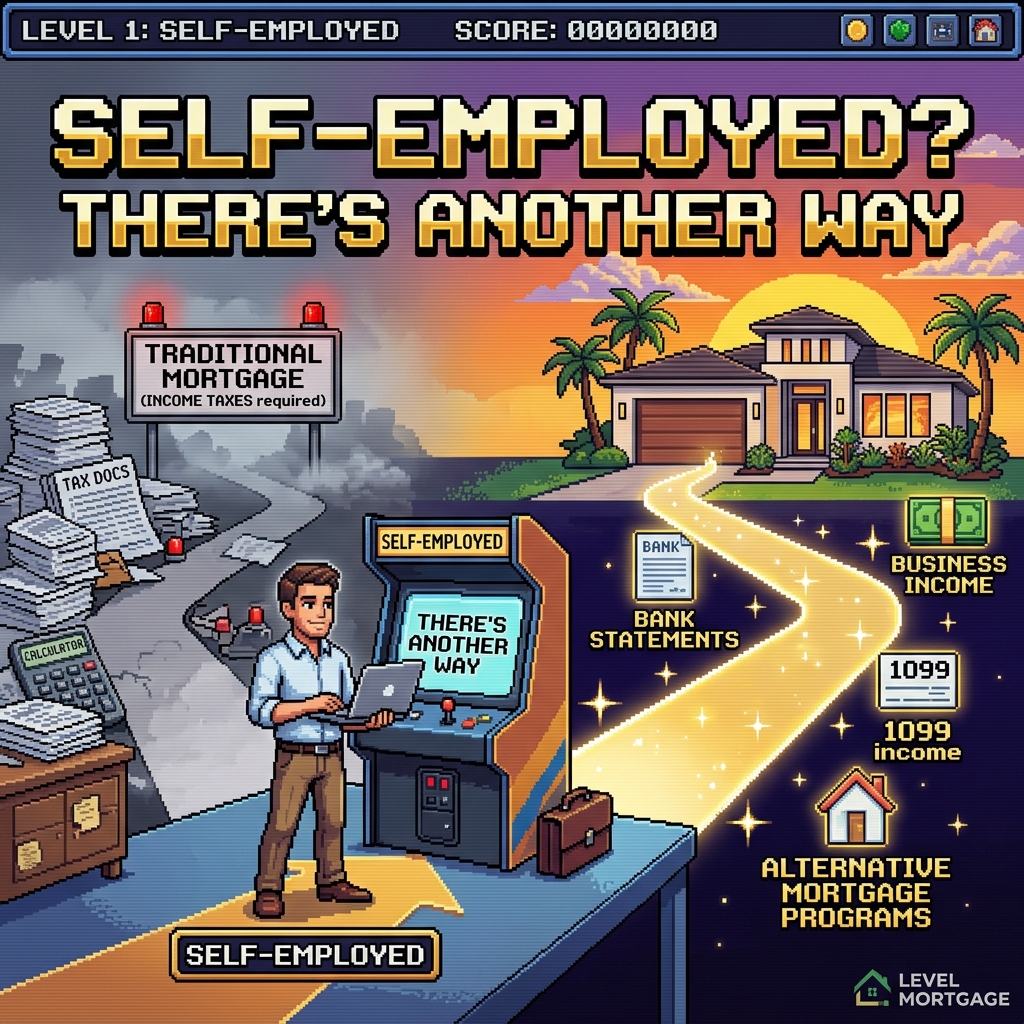
Legitimate business deductions legally reduce your taxable income liability, which makes good financial sense for tax purposes. However, those same deductions can lower your net adjusted gross income on paper. This makes standard agency qualification challenging, even if your gross enterprise revenue is substantial. Navigating these complexities requires working closely with a knowledgeable lender who understands Mortgage Options for Self-Employed Borrowers.
How Traditional Mortgage Underwriting Evaluates Self-Employed Income
Tax Returns and Business Income
Conventional and government-backed loan programs typically require two consecutive years of personal and business tax documentation to establish a stable earnings baseline. Lenders examine schedules, corporate structures, and net profitability to determine your baseline qualifying power.
Income History and Stability
Underwriters look for consistency across multiple years. While steady or growing revenue is ideal, fluctuating earnings require deeper documentation to prove ongoing business stability.
Business Financial Health
Beyond individual earnings, lenders assess whether the underlying enterprise maintains sufficient liquidity and operational viability to continue generating reliable cash flow through varying economic cycles, as outlined by 2026 Self-Employed Mortgage Underwriting Guidelines.
Alternative Mortgage Options for Self-Employed Borrowers
When traditional tax returns do not reflect your true financial capacity, alternative mortgage programs provide flexible pathways to approval. These solutions are structured to evaluate borrowers using alternative documentation methods.
Bank Statement Loans
Bank statement programs are designed specifically for entrepreneurs and business owners whose deposits significantly outpace their net taxable income. Instead of tax returns, lenders analyze twelve to twenty-four months of personal or business bank statements to calculate monthly cash flow. Expense factors or percentage formulas are applied to gross deposits to determine qualifying income. While interest rates and down payment requirements can differ from conventional agency loans, these products provide a practical solution for heavy write-off scenarios.
1099 Mortgage Programs
Independent contractors, consultants, freelancers, and commission-based professionals who receive 1099 forms rather than W-2 statements can often qualify through dedicated 1099 loan products. These programs evaluate the stability of your contract earnings over a one-to-two-year period without requiring exhaustive corporate tax schedules.
Non-QM Mortgage Options
Non-QM stands for non-qualified mortgage. These alternative financing products cater to creditworthy borrowers who fall outside standard Consumer Financial Protection Bureau qualified mortgage guidelines. Non-QM options utilize alternative underwriting approaches, such as asset depletion, profit-and-loss statements, or specialized debt-to-income calculations. Buyers should note that Non-QM financing typically features different terms, pricing structures, and down payment minimums compared to conventional loans.
Other Financing Paths
Depending on your objectives, other specialized options may apply. Asset-based qualification programs evaluate liquid reserves and high-value portfolios rather than active employment earnings. For real estate investors, Debt Service Coverage Ratio loans evaluate the income generated by an investment property rather than personal borrower earnings. Keep in mind that investment property financing cannot be utilized to purchase a primary residence.
What Does Your Lender Look At Besides Income?
Income documentation represents only one component of mortgage underwriting. Lenders evaluate your complete financial profile to determine overall risk. Key elements include:
Credit score history and payment performance
Debt-to-income ratio limits
Down payment funds and liquid reserves
Business tenure and industry stability
Property type and intended occupancy
Two self-employed business owners generating identical gross revenues can qualify for entirely different loan amounts depending on their existing debt obligations, credit profiles, and available cash reserves.
How Florida's 2026 Housing Market Affects Self-Employed Buyers
Economic conditions play a major role in how buyers approach purchasing a home. According to statewide data from Florida Realtors, the statewide median sales price for existing single-family homes reached $425,000 in the second quarter of 2026, representing a 2.4 percent increase year-over-year.Meanwhile, existing condo-townhouse sales rose 9 percent during the same quarterly period, reflecting steady buyer engagement even as borrowing costs hovered around 6.5 percent. Additional context on inventory shifts and regional pricing trends can be reviewed via 2026 Florida Housing Market Data.
For self-employed buyers navigating this dynamic market, understanding your financing capacity before touring properties is essential. Establishing a realistic purchasing budget early prevents wasted time and ensures you can move quickly when the right property becomes available.
What Documents Should Self-Employed Borrowers Prepare?
Preparation streamlines the mortgage application process. Depending on the chosen loan program, self-employed applicants should gather:
Personal tax returns with all schedules
Business tax returns, including 1120, 1120-S, or 1065 forms and K-1 schedules where applicable
Business or personal bank statements covering twelve to twenty-four months
Year-to-date profit and loss statements
Proof of business existence, such as a state business license, articles of incorporation, or a CPA verification letter
Asset and investment statements for down payment and reserve verification
Exact documentation checklists vary significantly by lender and loan program, making early consultation vital. Reviewing 2026 Mortgage Lending Requirements can help clarify general industry documentation expectations.
When Does an Alternative Mortgage Make Sense?
Exploring alternative financing is particularly useful if your business generates robust revenue and healthy cash flow, but your tax returns reflect minimal taxable income due to legitimate deductions. It also serves commission-dominant professionals and growing enterprises experiencing rapid expansion.
However, if your tax returns comfortably support the purchase price, conventional financing may offer lower baseline interest rates. Borrowers should always compare overall costs, including annual percentage rates, origination fees, down payment terms, and monthly obligations across multiple programs.
The Bottom Line for Self-Employed Florida Buyers
Being self-employed does not mean you cannot qualify for a home loan. The key is understanding how your business earnings can be documented and selecting a financing program that fits your financial profile.
If you are a self-employed professional in Florida wondering how to navigate the homebuying process, connect with the team at Level Mortgage today. Our experienced mortgage advisors can help you review your financial documentation, explore alternative financing solutions, and determine which mortgage strategy best supports your long-term goals.
Want personalized assistance? Visit our 'Contact Us' tab and leave your information with one of our experts.
About Us
A group of like-minded seasoned veterans came together to create a company with an employee-focused culture. A culture that values its members both personally and professionally and a company built on the idea that the customer comes first!
We do not share data with third parties for marketing/promotional purposes.
By submitting your phone number to Level Mortgage, you are authorizing a representative of our company to send you text messages and notifications. Message frequency may vary. Message/data rates apply. Reply STOP to unsubscribe to a message sent from us, and HELP to receive help.
Will Your Credit Score Stop You From Buying a Home in Florida?
Many potential homebuyers in Florida feel anxious about their credit history. They often worry that a single digit on a report will permanently lock them out of the housing market. If you are asking whether your credit score will prevent you from buying a home, the short answer is that while your credit health is significant, it is rarely the only factor that determines your eligibility.
Mortgage qualification involves a comprehensive review of your financial profile. While lenders look at your credit score, they also evaluate your income, debt levels, assets, and the type of loan program you choose. Because different mortgage products have different guidelines, a score that might be disqualifying for one loan could be perfectly acceptable for another.
What Credit Score Do You Need to Buy a Home in Florida in 2026?
There is no single magic number required to purchase property in the state. Requirements often fluctuate based on the specific loan program and the individual lender. Trusted 2026 Mortgage Credit Score Data provides a breakdown of how various profiles move through the approval process.
Conventional Loans
Conventional mortgages generally favor higher credit scores. While some lenders may accept scores as low as 620, borrowers with scores in the mid-700s often receive the most competitive pricing. Credit Score Requirements for Buying a Home can help you understand where your profile stands.
FHA Loans
FHA loans remain a popular choice for Florida residents because they often offer more flexibility. For borrowers who meet certain criteria, scores as low as 580 may allow for a down payment as low as 3.5 percent. Some lenders may even work with lower scores if there are compensating factors in your financial file, as outlined in 2026 FHA Credit Requirements.
VA Loans
Veterans and active military personnel often enjoy the most flexible lending options. There is no federally mandated minimum credit score for a VA loan, though individual lenders set their own requirements based on their internal risk policies. You can learn more about how these guidelines function in 2026 VA Loan Guidelines.
USDA Loans
For buyers looking in eligible rural or suburban areas, USDA loans offer a pathway to homeownership with no down payment. These programs typically look for a stable credit history, often targeting a score of 640 or higher to streamline the underwriting process.
Does a Higher Credit Score Mean a Lower Mortgage Rate?
Yes, your score influences your interest rate through a process called risk-based pricing. Lenders use loan-level pricing adjustments to calculate the risk of a loan. A higher credit score signals lower risk, which can lead to a lower interest rate and a smaller monthly payment.
For example, a borrower with a 760 score might secure a rate that results in a lower monthly obligation compared to a borrower with a 660 score. Over the life of a loan, this difference can amount to thousands of dollars in interest savings. Understanding these variables is key when reviewing Mortgage Pre-approval options.
What If Your Credit Score Is Below the Typical Requirement?
If your score is not quite where you want it to be, you are not out of options. You can take proactive steps to improve your profile before applying for a loan.
Check Your Credit Report
Obtain your free credit reports from the major bureaus. Look for inaccuracies, such as incorrect balances or accounts that do not belong to you, and dispute them immediately.
Pay Down Credit Card Balances
High credit utilization is a common reason for lower scores. Reducing your balances relative to your limits can have a positive impact on your score.
Avoid New Credit
Applying for new loans or credit cards right before a mortgage application can trigger hard inquiries and lower your score. It is best to keep your financial profile stable during the home search.
Manage Debt
Lenders look at your debt-to-income ratio. Reducing your existing debt obligations can strengthen your overall application and improve your borrowing power.
Your Credit Score Isn't the Only Thing Lenders Look At
A credit score is just one piece of the puzzle. Lenders also review your income stability, your employment history, and your liquid assets. If your score is lower, you might compensate by having a larger down payment or lower overall monthly debt obligations. FHA Loans can often accommodate borrowers who have a strong payment history despite a lower numerical score.
How Florida's 2026 Housing Market Changes the Conversation
The Florida market in 2026 remains competitive. With shifting home prices and fluctuating inventory, buyers must be prepared. 2026 Florida Housing Market Datasuggests that demand remains steady, meaning buyers should know their budget and their borrowing capacity early. Getting a clear picture of your finances is the first step toward finding a home that fits your lifestyle. You can read more about the current landscape in First-time Homebuyers guides.
When Should You Check Your Credit Before Buying?
You should check your credit long before you begin touring properties. Reviewing your reports six months to a year in advance allows you time to correct errors or pay down debts. Speaking with a mortgage professional at Level Mortgage can help you determine if you are ready or if you need more time to prepare your profile.
The Bottom Line
A lower-than-perfect credit score does not automatically disqualify you from buying a home in Florida. With careful planning and the right loan program, many families reach their goal of homeownership every year.
If you are concerned about your financing, we invite you to reach out to our team. At Level Mortgage, we help you review your financial profile, explain your options, and identify the loan programs that match your goals. Start your journey by learning more about Florida Mortgage Programs and see how we can assist you.
Want personalized assistance? Visit our 'Contact Us' tab and leave your information with one of our experts.
About Us
A group of like-minded seasoned veterans came together to create a company with an employee-focused culture. A culture that values its members both personally and professionally and a company built on the idea that the customer comes first!
We do not share data with third parties for marketing/promotional purposes.
By submitting your phone number to Level Mortgage, you are authorizing a representative of our company to send you text messages and notifications. Message frequency may vary. Message/data rates apply. Reply STOP to unsubscribe to a message sent from us, and HELP to receive help.
Florida's Hometown Heroes Program Officially Has Funding for 2026
What Is the Florida Hometown Heroes Program?
Purchasing a home in the Sunshine State is an exciting milestone, but high home prices and rising interest rates can present significant financial hurdles for everyday workers. The Florida Hometown Heroes Housing Program is designed to bridge that gap. Administered by the Florida Housing Finance Corporation, the program provides vital financial relief to local professionals who serve their communities every single day. By offering assistance with down payments and closing costs, the program continues to stand out as one of the most valuable homeownership initiatives in the state. Exploring options like Down Payment Assistance Programs can help you understand how these initiatives make homeownership achievable.
What's New for the 2026 Program?
Verified program documentation confirms that official funding has been re-established for the 2026 calendar year, injecting fresh capital into the state housing market. According to official 2026 housing program guidance, the initiative continues to adapt to regional economic shifts, featuring updated income limits and streamlined approval pathways designed to handle strong applicant volume. Because state funding is allocated on a first-come, first-served basis, staying informed on current updates is essential for prospective buyers. Official Florida Housing Program Update provides continuous tracking on state legislative allocations and pool balances.
Who Qualifies in 2026?
Eligible Occupations
The program is tailored specifically for workers who form the backbone of Florida communities. Based on official 2026 guidelines, eligible professions include full-time workers across dozens of vital sectors. Qualifying individuals include teachers, healthcare professionals, registered nurses, licensed practical nurses, emergency medical technicians, paramedics, firefighters, law enforcement officers, active-duty military personnel, veterans, correctional officers, and childcare professionals. Many other public service and civil support roles are also included on the official roster.
Income Requirements
Income eligibility is a core component of the program. Limits are established on a county-by-county basis to reflect local economic conditions and median income levels. Household income calculations account for all contributing wage earners on the loan application. Current 2026 limits are structured to accommodate moderate-income working families across both rural and metropolitan counties.
Homebuyer Requirements
To participate, applicants must purchase a primary residence located within the state of Florida. Borrowers must meet standard credit expectations for their chosen mortgage loan, satisfy occupancy rules by moving into the home within a specified timeframe. If you are preparing for your initial purchase, reviewing our Florida First-Time Homebuyer Guide can provide helpful foundational insights.
Financial Benefits Available Through the Program
The primary advantage of the Hometown Heroes Program lies in its robust financial backing. Eligible buyers receive assistance to cover upfront expenses, significantly reducing the cash required to close. Homeownership Assistance Program Data highlights how this support lowers barriers to entry. The assistance is typically structured as a deferred second mortgage, which requires no monthly payments and is repaid only when the home is sold, refinanced, or transferred.
Which Loan Programs Can Be Combined With Hometown Heroes?
Flexibility is a major advantage of the program, as it can be paired with several primary mortgage options. Buyers can seamlessly combine Hometown Heroes assistance with conventional financing, as well as government-backed products. Reviewing our guides on FHA Loan Guide, VA Loan Programs, and Conventional Loan Options can help you determine which underlying mortgage best suits your long-term financial goals.
Why the Program Matters in the 2026 Housing Market
Navigating the current housing market requires strategic planning. 2026 Mortgage Market Report points to stabilizing mortgage rates alongside elevated home prices across Florida. Florida Housing Affordability Analysis and Florida Housing Market Statistics indicate that inventory levels and high demand continue to challenge buyers, making down payment assistance a vital tool for overcoming affordability gaps. Keeping an eye on Current Mortgage Rates ensures you time your application effectively.
Common Misunderstandings About the Program
"It's Only for First-Time Buyers"
A widespread misconception is that applicants must never have owned a home before. In reality, many repeat buyers who meet the occupation and income guidelines can qualify, provided they do not currently own any other residential property.
"Only Teachers Can Apply"
While educators form a large portion of participants, dozens of other professions in healthcare, public safety, and infrastructure qualify for the program.
"The Funding Never Runs Out"
State funding is finite and subject to high demand. Once the allocated pool is fully reserved for the year, the program closes until fresh funding is approved. Acting promptly is critical.
"Everyone Automatically Qualifies"
Qualifying requires meeting strict income caps, credit standards, and approved employment verification criteria. Working with a knowledgeable lender ensures all boxes are checked correctly.
How to Apply for Florida's Hometown Heroes Program
Determine Eligibility: Verify that your occupation and household income align with current county guidelines.
Obtain Mortgage Pre-Approval: Secure your baseline financing by following our Mortgage Pre-Approval Guide.
Work with an Approved Lender: Partner with a specialized lending institution authorized to originate Hometown Heroes loans.
Reserve Available Funding: Your lender will lock in your assistance funds concurrently with your mortgage loan application.
Complete the Purchase Process: Navigate inspections, appraisals, and closing using our Home Buying Checklist.
How Level Mortgage Can Help
At Level Mortgage, we specialize in helping Florida professionals navigate complex assistance programs. Our team reviews your eligibility, compares mortgage options, coordinates your financing, and manages your Hometown Heroes application from start to finish. We provide personalized mortgage guidance tailored to your unique financial situation.
Final Thoughts
The re-establishment of funding for 2026 presents a golden opportunity for Florida’s workforce to achieve sustainable homeownership. Because funds are limited, acting early is essential. Partnering with experienced mortgage professionals ensures your application is handled accurately and efficiently, giving you the best chance of securing assistance before allocations run out.
Ready to claim your 2026 Hometown Heroes assistance?
Contact Level Mortgage today to verify your eligibility, obtain mortgage pre-approval, explore financing options, and begin your homebuying journey with expert guidance before available funding is exhausted.
Want personalized assistance? Visit our 'Contact Us' tab and leave your information with one of our experts.
About Us
A group of like-minded seasoned veterans came together to create a company with an employee-focused culture. A culture that values its members both personally and professionally and a company built on the idea that the customer comes first!
We do not share data with third parties for marketing/promotional purposes.
By submitting your phone number to Level Mortgage, you are authorizing a representative of our company to send you text messages and notifications. Message frequency may vary. Message/data rates apply. Reply STOP to unsubscribe to a message sent from us, and HELP to receive help.
Should You Talk to a Lender or Real Estate Agent First?
Embarking on the journey to buy a home is an exciting milestone, but it often brings a common dilemma. Should you call a real estate agent to start touring dreamy neighborhoods, or should you sit down with a mortgage lender to discuss numbers?
While both professionals are essential to a successful purchase, the order in which you contact them matters. Understanding the ideal sequence can save you time, protect your financial boundaries, and strengthen your negotiating power. Level Mortgage is here to help you navigate this decision with absolute confidence.
Why the First Step Matters
The sequence of your initial steps dictates the flow of your entire home search. Consulting a professional too early without a clear plan can lead to misaligned expectations, heartbreak over homes outside your financial reach, or lost opportunities in fast-moving markets.
National Housing Market Report highlights that current inventory dynamics require buyers to move with clarity and speed. When you align your financing before touring properties, your budget planning becomes concrete, your negotiating power rises, and your closing timeline stays on track.
What Does a Mortgage Lender Do?
Determines Your Buying Power
A mortgage lender evaluates your financial profile to determine how much home you can comfortably afford. This process involves a comprehensive look at your income verification, credit score evaluation, and debt-to-income ratio.
Through mortgage pre-approval, a lender calculates your estimated monthly payment and loan program eligibility. Understanding a realistic budget upfront helps buyers avoid disappointment and focus only on properties they can secure. You can start exploring your baseline numbers by checking out our Mortgage Calculator.
Explains Available Loan Programs
Lenders do more than check credit scores. They match you with the right mortgage vehicle for your specific situation. This includes reviewing conventional loans, FHA loans, VA loans, USDA loans, jumbo loans, and down payment assistance programs. Accessing the right financing strategy can significantly expand your purchasing opportunities, especially if you qualify for specialized options like our FHA Loan Guide or VA Loan Programs.
What Does a Real Estate Agent Do?
Finds the Right Property
Once your financing parameters are established, a real estate agent takes the lead on property searches. They provide invaluable neighborhood guidance, perform comparative market analysis, schedule home tours, and help you craft a winning offer strategy.
Guides the Transaction
An experienced real estate agent acts as your advocate through complex negotiations. They coordinate home inspections, navigate appraisal challenges, handle contract negotiations, and manage every detail up to the final closing table.
Should You Speak With the Lender First?
While you can technically start your journey with either professional, many industry experts strongly recommend beginning with a mortgage consultation.
Starting with a lender offers several distinct benefits:
Understanding Affordability: You shop with exact numbers rather than guesses.
Strengthening Offers: Sellers take you seriously when you bring a pre-approval letter.
Faster Home Search: You avoid wasting time on homes that do not fit your financial framework.
Increased Confidence: Financial clarity reduces stress throughout the search.
Avoiding Financing Surprises: Any credit or income hurdles are ironed out before you fall in love with a property.
If you are a first-time buyer wanting a foundational overview of the entire path, our First-Time Homebuyer Guide provides a comprehensive roadmap.
How Mortgage Pre-Approval Strengthens Your Position
Stronger Purchase Offers
Sellers and listing agents view pre-approved buyers as serious, qualified candidates. In competitive environments, a verified pre-approval letter gives your offer priority over unvetted buyers.
Faster Decision Making
Knowing your exact financing limits means you can write an offer immediately when the right home hits the market. Hesitation can cost you a property in fast-paced conditions.
Competitive Markets
Mortgage Application Statistics shows that pre-approval volume shifts alongside market adjustments, proving that prepared buyers consistently secure better positioning. To see where rates stand today, review our Current Mortgage Rates.
Why Your Lender and Agent Should Work Together
A successful purchase relies heavily on collaboration between your mortgage lender, real estate agent, title company, and insurance provider. When your lender and agent communicate seamlessly, you experience better communication, fewer transactional delays, and a vastly smoother closing process.
Homebuying Trends in 2026
Current market conditions in 2026 emphasize the need for early preparation. [EXTERNAL SOURCE LINK: Homebuyer Trends Report] indicates that while buyer demand remains steady, shifts in inventory and regional pricing require disciplined budgeting. Mortgage Rate Analysis points to a stabilizing rate environment, making proactive financial alignment more rewarding than ever. Furthermore, Housing Affordability Study notes that first-time homebuyer activity is adapting through creative financing and strategic planning.
Final Thoughts
Deciding whether to talk to a lender or real estate agent first comes down to preparation. While both professionals play indispensable roles, beginning your journey with a mortgage lender provides the financial clarity you need to shop effectively. When your lender and agent collaborate seamlessly, your entire homebuying experience transforms into a smooth, confident journey.
Ready to start your homebuying journey the right way?
Contact Level Mortgage today for expert mortgage pre-approval, personalized financing guidance, and comprehensive loan program comparisons. Let us help you build a winning homebuying strategy from day one.
Want personalized assistance? Visit our 'Contact Us' tab and leave your information with one of our experts.
About Us
A group of like-minded seasoned veterans came together to create a company with an employee-focused culture. A culture that values its members both personally and professionally and a company built on the idea that the customer comes first!
We do not share data with third parties for marketing/promotional purposes.
By submitting your phone number to Level Mortgage, you are authorizing a representative of our company to send you text messages and notifications. Message frequency may vary. Message/data rates apply. Reply STOP to unsubscribe to a message sent from us, and HELP to receive help.